Sunday, 5th April 2026

Khabor Wala Desk
Published: 5th March 2026, 9:08 AM
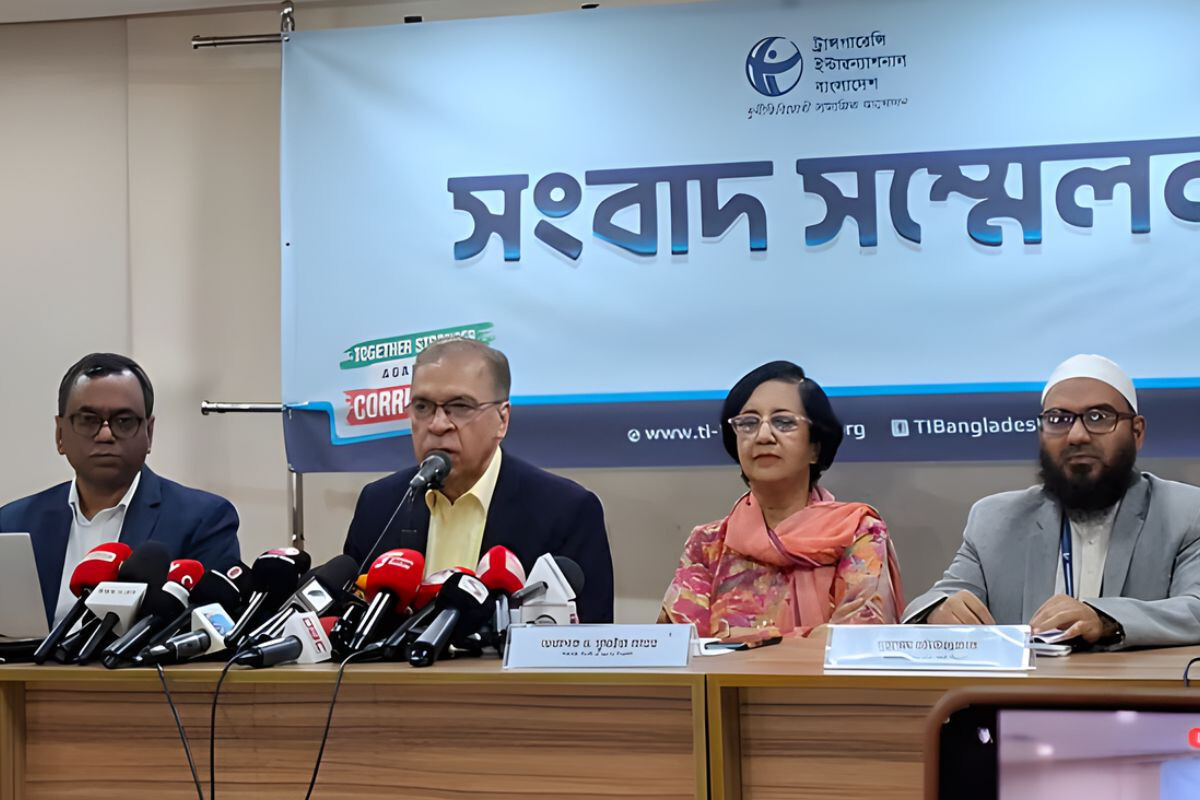
Transparency watchdog Transparency International Bangladesh (TIB) has urged the government to reconsider and cancel the recent appointment of the new governor of Bangladesh Bank, arguing that the selection raises serious concerns over potential conflicts of interest and institutional independence.
The remarks were made by Iftekharuzzaman, the executive director of TIB, during a press conference held at the organisation’s office in Dhanmondi on Thursday morning. The event was organised to present a set of governance and anti-corruption recommendations to the country’s newly formed administration.
According to Iftekharuzzaman, the appointment of the new governor may create a strong conflict of interest that could undermine the central bank’s role as an independent financial regulator. He warned that if such concerns remain unaddressed, Bangladesh Bank may fail to perform its crucial oversight responsibilities effectively.
“The central bank must operate with complete institutional integrity and independence,” he said. “If the leadership itself faces questions of conflict of interest, the institution’s credibility and its ability to regulate the banking sector will be severely compromised. Leaving the central bank under such leadership for the next five years cannot be considered acceptable.”
During the briefing, journalists also raised questions about the alleged links between the appointment and the controversial businessman S Alam, whose business activities have previously drawn scrutiny in connection with banking sector irregularities.
Responding to the query, Iftekharuzzaman said that if there were any attempt to benefit specific interest groups or individuals through such an appointment, the issue would be even more alarming. He called on the government to conduct a completely impartial investigation and take necessary corrective measures if irregularities are found.
He further warned that reinstating individuals or institutions that were allegedly responsible for large-scale financial mismanagement would be detrimental to the country’s economic governance.
“If the process of appointment ultimately returns authority to those who played a role in financial plundering, it will not serve the interests of the state,” he said.
TIB has therefore formally urged the government to cancel the current appointment and initiate a new, transparent process for selecting the governor of Bangladesh Bank. The organisation stressed that the credibility of the country’s financial regulatory system depends heavily on the integrity of the central bank’s leadership.
The anti-corruption watchdog also expressed concern about broader developments within the public administration. Responding to questions about forced transfers and reshuffles in government positions, Iftekharuzzaman cautioned against a culture of political retaliation.
He referred to what he described as an “our turn now” mentality in governance, warning that if such practices are not curbed, they could ultimately harm the government itself by providing political opponents with grounds for criticism.
While acknowledging that some of the government’s recent steps have generated public optimism, he said several developments remain worrying. Among these were controversial remarks by a government minister allegedly legitimising extortion, the controversy surrounding the central bank governor’s appointment, and the resignation of the chairman and commissioners of the Anti-Corruption Commission Bangladesh.
| Issue | Concern raised by TIB | Suggested Action |
|---|---|---|
| Governor appointment | Potential conflict of interest | Cancel appointment and begin transparent selection |
| Banking sector oversight | Risk of weakened regulatory independence | Ensure credible leadership at Bangladesh Bank |
| Possible business influence | Alleged connection with controversial business figures | Conduct impartial investigation |
| Administrative reshuffles | Risk of political retaliation in governance | Promote merit-based appointments |
Iftekharuzzaman concluded by emphasising that Bangladesh currently stands at a crossroads. While the new administration has an opportunity to strengthen democratic governance and accountability, he warned that missteps in key institutions could equally create significant risks.
“The country is facing both promise and peril,” he said. “What matters now is whether the government chooses transparency and accountability over short-term political convenience.”



Comments