Sunday, 5th April 2026

Khabor Wala Desk
Published: 23rd December 2025, 3:47 AM
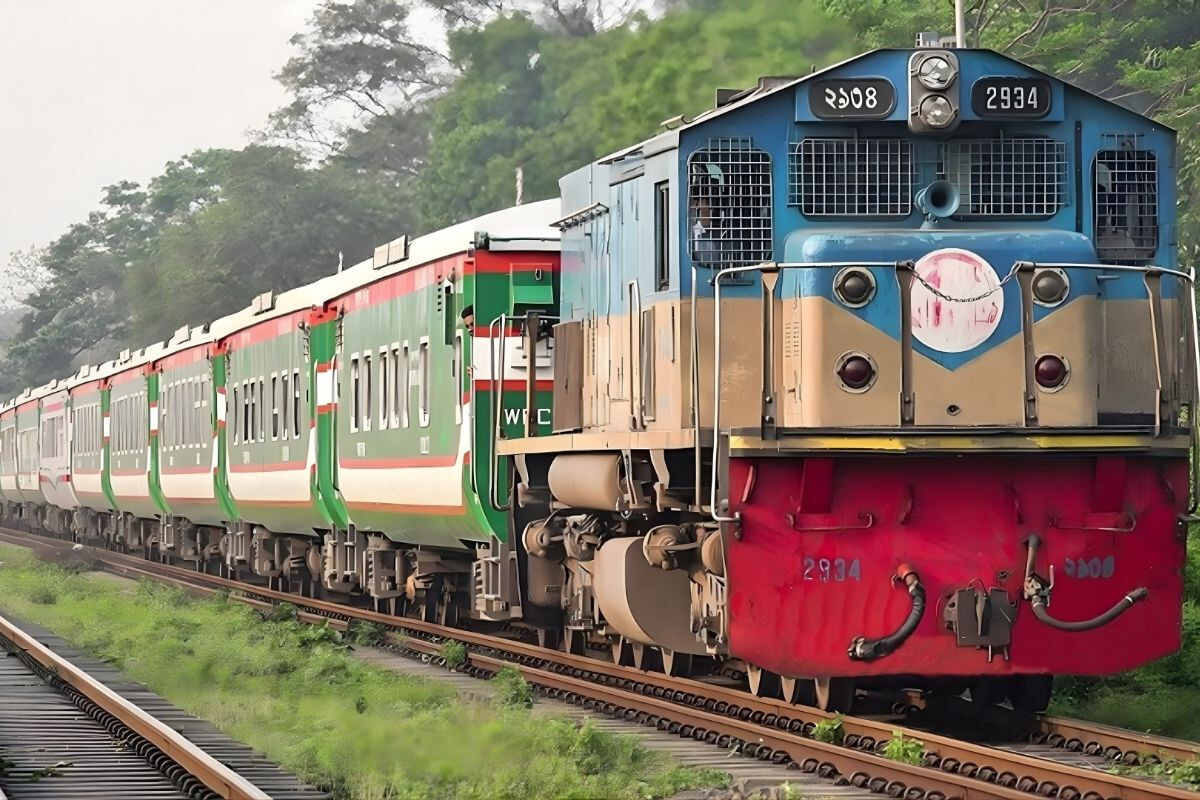
Bangladesh is set to take a significant step towards faster and more seamless rail connectivity, as a major upgrade to the Chattogram–Dohazari railway section will enable trains to run directly from Dhaka to Cox’s Bazar without stopping at Chattogram station. The initiative is being financed through a substantial loan from the Asian Development Bank (ADB), reflecting growing regional and international confidence in the country’s transport infrastructure ambitions.
Under the project, ADB will provide approximately USD 690 million, equivalent to around BDT 82.8 billion, to modernise a critical 35-kilometre stretch of railway between Chattogram and Dohazari. A key component of the scheme is the construction of a 2.5-kilometre railway bypass, which will allow long-distance trains to avoid congestion at Chattogram station. This bypass is expected to dramatically cut travel time on the Dhaka–Cox’s Bazar route and improve operational efficiency across the network.
The development forms part of the “Conversion of Chattogram–Dohazari Metre Gauge Railway Line into Dual Gauge” project. Implemented by Bangladesh Railway under the Ministry of Railways, the project aims to establish uninterrupted rail connectivity along the Dhaka–Chattogram–Cox’s Bazar corridor. This corridor is widely regarded as one of the country’s most economically vital transport arteries.
A formal loan agreement was signed on Monday at the Economic Relations Division (ERD) office in Sher-e-Bangla Nagar, Dhaka. The agreement was executed by ERD Secretary Shahriar Kader Siddiky on behalf of the Government of Bangladesh and ADB Country Director Hoe Yun Jeong. Senior officials from both sides attended the signing ceremony. According to official statements, the loan will be repayable over 25 years, including a five-year grace period.
ADB officials emphasised that the project would play a transformative role in strengthening rail connectivity between the capital and the country’s premier tourist destination. By encouraging a shift from road to rail transport, the project is expected to reduce pressure on highways, improve safety, and lower environmental impacts. Moreover, enhanced rail services are likely to stimulate economic activity along the corridor, particularly in tourism, fisheries, and logistics.
Beyond the bypass, the project has several wider objectives. These include converting approximately 52 kilometres of track between Chattogram and Dohazari into a dual-gauge system, linking the existing Dhaka–Chattogram corridor with the under-construction Dohazari–Cox’s Bazar line, increasing permissible train speeds, procuring spare parts to replace ageing locomotives, and acquiring 30 new locomotives to meet rising passenger and freight demand.
According to ADB, the Dhaka–Chattogram–Cox’s Bazar corridor, which forms part of the Trans-Asian Railway Network, already accounts for about 32 per cent of total rail passenger traffic and 55 per cent of freight movement in Bangladesh. The planned upgrades are therefore expected to deliver nationwide economic benefits well beyond the immediate project area.



Comments