Sunday, 5th April 2026


Politics

Trump Agrees to Minor Reduction in Philippine Tariffs Following White House Talks

Khabor Wala Desk

Published: 23rd July 2025, 1:51 PM
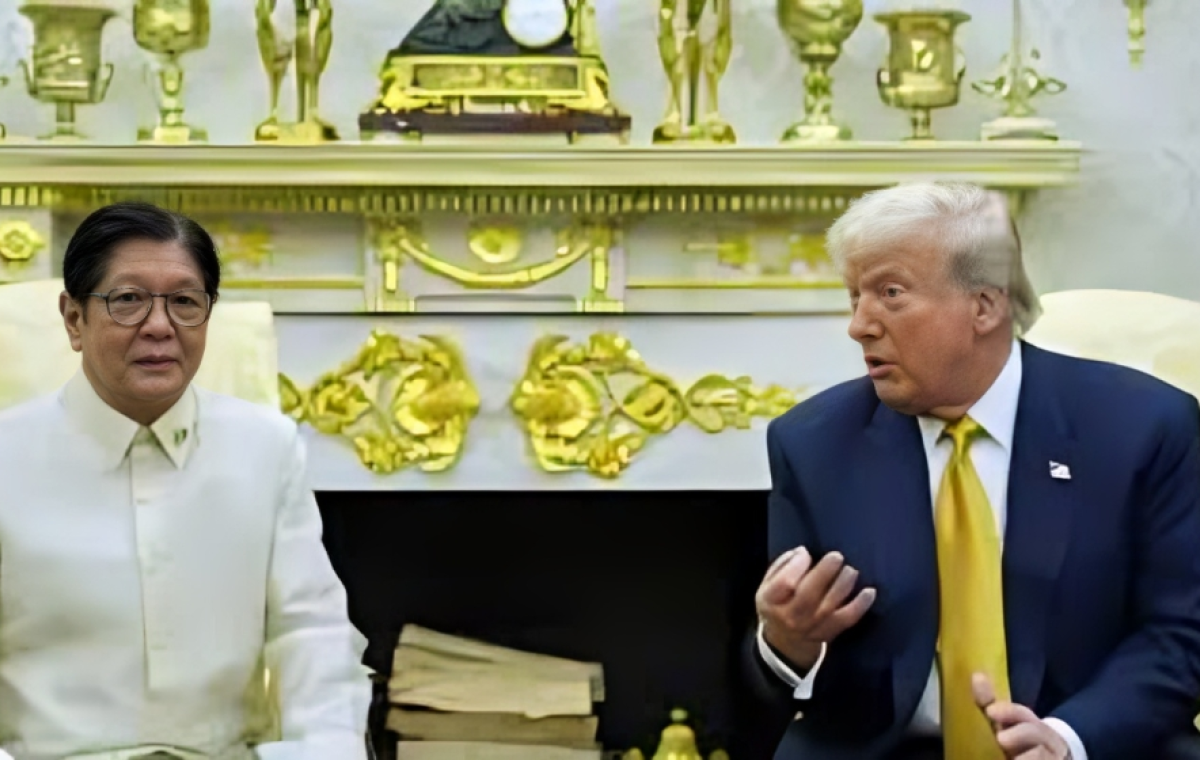
Trump Agrees to Minor Reduction in Philippine Tariffs Following White House Talks

US President Donald Trump has agreed to reduce his previously threatened tariff rate on imports from the Philippines to 19 percent, following a White House meeting on 22 July with Filipino President Ferdinand Marcos Jr. This represents a modest one-point drop in tariffs amid ongoing trade discussions.

Summary of New Trade Arrangement

Element Details
US tariff on Philippine exports 19 percent (down from 20 percent, above the 17 percent initially threatened)
Philippine tariff on US imports Zero per cent (under proposed “open market” agreement)
US–Philippines trade deficit Approx. US $4.9 billion (2024)
Previous threatened tariffs 17 percent in April, later 20 percent in July
Broader context One of multiple “deal letters” aimed at tariff adjustments ahead of 1 August deadline


Key Highlights from the White House Event

  • President Trump described Marcos as a “very tough negotiator” and expressed optimism over concluding “a big trade deal”.
  • In a post on his Truth Social platform, Trump emphasised:

“The Philippines is going OPEN MARKET with the United States, and ZERO Tariffs.”

  • The Philippines becomes one of the first nations to benefit from this new trade framework, which mirrors similar deals with Japan and Indonesia.

Economic and Security Dimensions

Despite trade tensions, defence collaboration between the two nations remains strong:

  • The US has deployed ground-launched missiles to the Philippines (under the Biden administration).
  • Plans include ammunition manufacturing in the Philippines.
  • Philippines officials reiterated reliance on the 1951 Mutual Defence Treaty, confirmed by meetings between Marcos and US officials Pete Hegseth and Marco Rubio.

President Marcos, speaking alongside Trump, said:

“We are essentially concerned with the defence of our territory and the exercise of our sovereign rights. Our strongest, closest, most reliable ally has always been the United States.”

Trump’s Strategic Balance with China

  • Trump dismissed tensions over Marcos’s relations with China, stating:

“I don’t mind if he gets along with China very well… because we’re getting along with China very well.”

  • He hinted at visiting China soon, at Xi Jinping’s invitation, underscoring his effort to manage both US–China and US–Philippines relations judiciously.

Implications for the Philippines

  • The revised tariff structure is a trade-off: Tariffs have reduced slightly, but they remain significant on Philippine exports.
  • The deal may influence future arms acquisitions, such as discussions over F‑16 jets, with US officials signalling strong defence ties.
  • Manila’s ambassador estimated a trade surplus of US $4.8 billion in 2024, and noted the 19 percent tariff could affect defence budgets.

Broader Geopolitical Context

  • The agreement comes amid rising South China Sea tensions, where the Philippines and China remain at odds.
  • Trump’s visit and the trade pact form part of a wider strategy, with similar deals announced with Japan (15 percent tariffs), Indonesia (19 percent), and pending agreements with the EU and India.
  • Analysts view these moves as pre-emptive measures ahead of Trump’s planned tariff implementation on 1 August, giving affected nations scope to negotiate improved rates.

This trade “deal” illustrates a carefully calibrated balance between economic diplomacy and strategic alliances, as the US deepens its regional presence while reassuring allies like the Philippines of its continued commitment.


 

Comments