Sunday, 5th April 2026

Khabor Wala Desk
Published: 16th April 2025, 9:30 PM
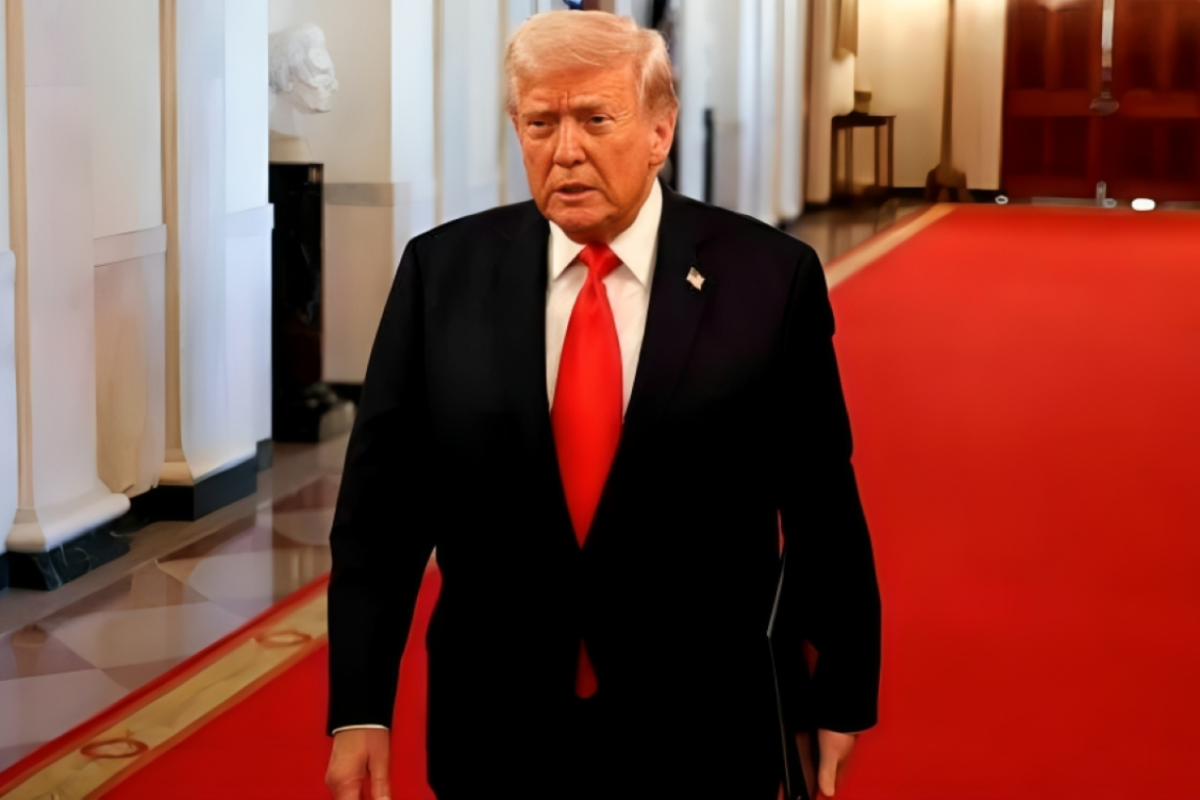
Washington, 16 April 2025 (BSS/AFP) – US President Donald Trump has stated that the onus is now on China to re-engage in trade negotiations, following a renewed flare-up in the long-running tariff dispute between the two economic giants. The comments come in the wake of Trump’s accusation that Beijing has reneged on a significant agreement with American aerospace manufacturer Boeing.
“The ball is in China’s court. China needs to make a deal with us. We don’t have to make a deal with them,” said a statement from President Trump, read aloud by White House Press Secretary Karoline Leavitt during a media briefing on Tuesday.
Leavitt added, “There’s no difference between China and any other country, except they are much larger,” reflecting the administration’s uncompromising stance as tensions escalate.
Trump’s remarks follow a Bloomberg report suggesting that the Chinese government has instructed domestic airlines to suspend further deliveries of Boeing aircraft – a move seen as a direct response to the increasing economic hostility. Boeing, which has long considered China a vital market, declined to comment on the report, while Chinese authorities have yet to issue a formal statement.
Since returning to office earlier this year, Trump has reintroduced a raft of tariffs, hitting both allies and rivals. However, China remains the principal target, with new levies reaching as high as 145 percent on various Chinese imports. These measures follow an earlier trade pact negotiated during Trump’s first term – one he now accuses China of failing to honour, claiming they purchased only a fraction of what was agreed.
The renewed trade friction comes amid a surprisingly robust economic performance by China, which reported 5.4 percent year-on-year growth for the first quarter of 2025. Analysts attribute this in part to a surge in exports ahead of anticipated US tariffs. Yet, senior Chinese officials have acknowledged that the new duties pose “certain pressures” on trade and the broader economy.
In a symbolic gesture of protest, Hong Kong’s postal service announced it would cease shipping parcels bound for the United States, denouncing Washington’s tariff policy as “bullying”.
Among the other consequences of Trump’s tariff crackdown is the elimination of the “de minimis” exemption that previously allowed goods under $800 in value to enter the US duty-free. This change is expected to hit Chinese-founded e-commerce platforms such as Shein and Temu particularly hard, as they have thrived on low-cost, small-scale shipments to American consumers.
The impact of the US tariffs is being felt beyond China. Japan and South Korea, both major exporters, are actively engaging in talks to mitigate the fallout. Japan’s trade envoy Ryosei Akazawa, scheduled to meet US Treasury Secretary Scott Bessent, expressed hope for a “win-win” outcome, while South Korean Finance Minister Choi Sang-mok noted that his priority was to minimise uncertainty and delay reciprocal tariffs that could impact Korean firms operating globally.
In Europe, European Commission President Ursula von der Leyen stated that the EU is clearly communicating its position, while also acknowledging the US stance. Meanwhile, Canada has introduced tariff relief for domestic automakers in an effort to prevent a shift in production to the United States.
President Trump has defended his strategy as essential to protecting American industries, particularly farmers, who he claims are unfairly caught in the middle of trade skirmishes. He also took aim at the Biden administration, accusing it of allowing China to act with “zero respect”.
On the technology front, chip manufacturers across Asia faced setbacks after US firm Nvidia projected a $5.5 billion loss due to tighter licensing restrictions on chip exports to China. Washington has also launched a fresh investigation that could result in tariffs on critical minerals and rare earth elements – sectors in which China holds significant sway over global supply chains. Beijing, in turn, has imposed export controls on key rare earth materials.
The unfolding developments signal that the US-China economic confrontation is set to intensify further, with far-reaching implications for global markets, supply chains, and geopolitical stability.




Comments