Sunday, 5th April 2026

Khabor Wala Desk
Published: 19th October 2025, 8:06 AM
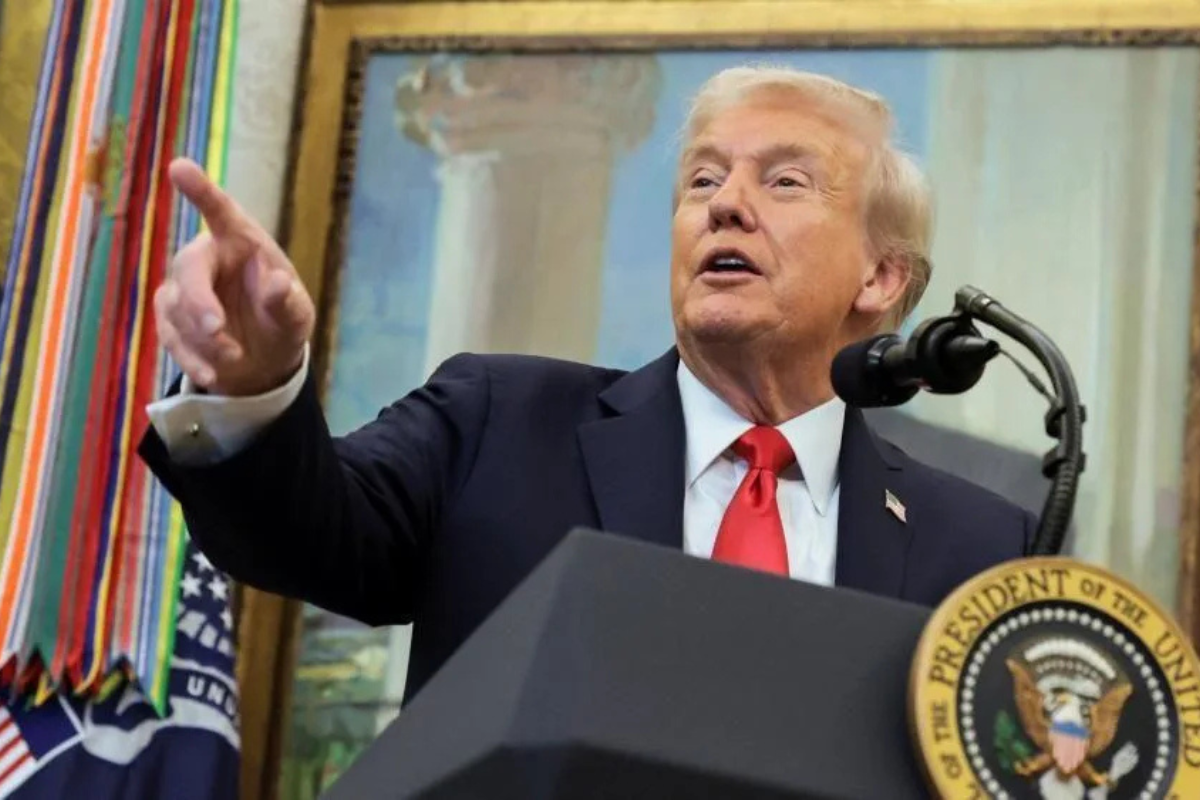
Washington D.C., 19 October — U.S. President Donald Trump announced on Saturday that two surviving suspects from a “drug-smuggling submarine” destroyed by American forces in the Caribbean Sea are being repatriated to their home countries, Ecuador and Colombia, for detention and prosecution. The strike reportedly killed two others aboard the vessel.
In a post shared on Truth Social, President Trump wrote: “It was my great honour to destroy a very large drug-carrying submarine that was navigating towards the United States on a well-known narcotrafficking route.”
He added that the submarine had been “loaded with fentanyl and other drugs”, and claimed: “Two of the terrorists were killed. The two surviving terrorists are being returned to their countries of origin, Ecuador and Colombia, for detention and prosecution.”
Trump’s announcement came a day after he publicly disclosed the U.S. military strike, describing it as part of a broader campaign to stem the flow of narcotics from Latin America into the United States.
The recent strike is part of what Trump has termed an “unprecedented anti-drug campaign”, launched to dismantle trafficking networks operating across the Caribbean Basin.
According to reports, at least six vessels — primarily high-speed boats — have been targeted by U.S. forces since September 2025, with Venezuela alleged as the departure point for several of these crafts.
However, Washington has not released specific evidence regarding the identities of those killed, nor has it confirmed whether all of the 27 people reportedly killed in similar operations were in fact narcotics traffickers.
| Key Details of the Operation | Information |
| Strike Location | Caribbean Sea (exact coordinates undisclosed) |
| Type of Vessel | Semi-submersible “narco-submarine” |
| Fatalities | 2 dead, 2 survivors |
| Survivors’ Nationalities | Ecuadorian and Colombian |
| Primary Cargo (claimed) | Fentanyl and other narcotics |
| Repatriation Destination | Ecuador & Colombia |
| Operation Period | Since September 2025 |
| Estimated Death Toll (campaign-wide) | At least 27 individuals |
While Washington has portrayed these strikes as decisive blows to international drug trafficking, no verifiable evidence has been provided to substantiate the claims that those killed were indeed smugglers.
Legal experts and human rights observers have expressed concern over the legality of such summary killings, even if the individuals involved were confirmed narcotics traffickers. Under international law, extrajudicial executions are considered unlawful without due process or transparent investigation.
The use of semi-submersible vessels, commonly known as “narco-subs,” has become a frequent tactic among drug cartels operating in South America. These low-profile boats are designed to evade radar detection while transporting cocaine and synthetic drugs from Colombia and Ecuador towards Central America or Mexico, often via the Pacific Ocean or, less frequently, through the Caribbean.
Such vessels are typically constructed in secret jungle shipyards, using lightweight materials and crude technology, yet are capable of carrying up to several tonnes of drugs undetected across vast stretches of open sea.
The Trump administration has presented these maritime operations as a strategic escalation in the “War on Drugs,” with a focus on militarised intervention beyond U.S. borders.
However, critics argue that these aggressive tactics — especially lethal strikes without trial — risk violating international law, sovereign waters, and human rights conventions, while doing little to address the underlying demand for narcotics within the United States itself.
The Pentagon and U.S. Southern Command have declined to release further operational details, including the submarine’s origin, cargo confirmation, or engagement rules, citing “security reasons.”
As the debate intensifies, observers warn that the Caribbean may become an emerging flashpoint in America’s expanded counter-narcotics warfare, with potential diplomatic repercussions across Latin America.



Comments