Sunday, 5th April 2026

Khabor Wala Desk
Published: 14th February 2026, 11:14 PM
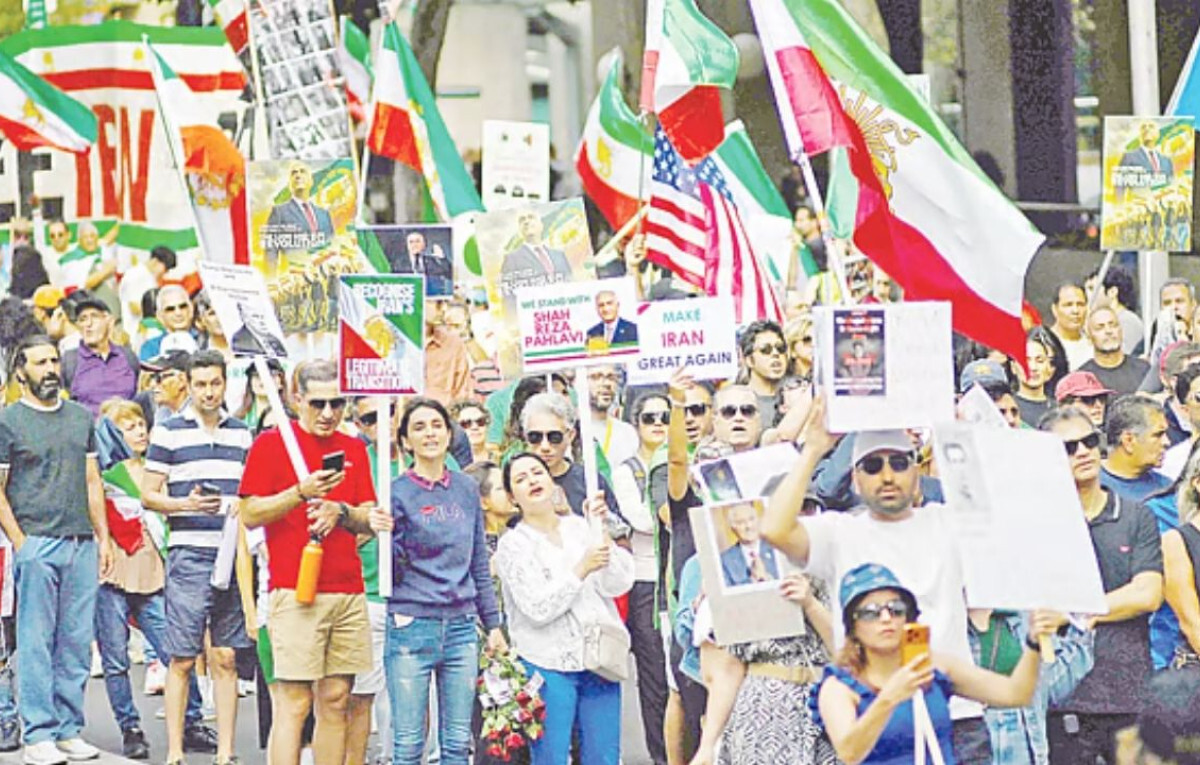
United States President Donald Trump has overtly endorsed the concept of “regime change” in Tehran, describing it as the “best possible path” forward. This hardening of rhetoric arrives amidst a significant escalation of American naval power in the Middle East, with the White House announcing the deployment of a second aircraft carrier strike group to the region to intensify military pressure on the Islamic Republic.
Speaking to reporters on Friday at the Fort Bragg military base in North Carolina, the President was pointedly asked if he sought a change in the Iranian government. Trump replied succinctly: “I think that would be the best thing.”
These remarks represent the most explicit public call by the Trump administration to date for the removal of Iran’s clerical leadership. The timing is particularly delicate, as the administration simultaneously attempts to coerce Tehran into a restrictive new nuclear agreement through a policy of “maximum pressure.”
To bolster this diplomatic coercion with military threat, the President confirmed that the USS Gerald R. Ford—the world’s largest and most advanced warship—will soon depart for the Middle East. “If we cannot reach a deal, we are going to need this,” Trump asserted, linking the naval deployment directly to the success or failure of nuclear negotiations.
The deployment of the Ford will double the US carrier presence in the region, joining the USS Abraham Lincoln, which is already stationed in Middle Eastern waters.
| Vessel Name | Class | Current/Recent Location | Status |
|---|---|---|---|
| USS Gerald R. Ford | Ford-class | Caribbean Sea (post-Venezuela ops) | En route to Middle East |
| USS Abraham Lincoln | Nimitz-class | Arabian Sea / Persian Gulf | Currently Stationed |
| USS Ronald Reagan | Nimitz-class | Indo-Pacific | Standby |
The geopolitical tension is mirrored by severe domestic instability within Iran. The Iranian Rial recently suffered a record-breaking devaluation against the US Dollar, sparking widespread protests among merchants and shopkeepers in Tehran that quickly evolved into a nationwide movement.
Significantly, US Treasury Secretary Scott Bessent reportedly indicated to Al Jazeera that the sudden dollar shortage in Iran was a calculated strategic move by Washington. By restricting Tehran’s access to foreign currency, the US effectively triggered the inflationary crisis that fuelled the December 28th protests.
While the protests have quieted slightly, the human cost has been high. Human rights organisations claim that thousands have been killed in the ensuing crackdown. Reza Pahlavi, the son of the late Shah, has called for “humanitarian intervention” at the Munich Security Conference to prevent further loss of life.
Simultaneously, US military officials, speaking on condition of anonymity, revealed that the Pentagon is drafting plans for a multi-week military campaign against Iran. Should President Trump issue the order, the scale of the conflict is expected to far exceed any previous engagement between the two nations.
Despite the absence of formal diplomatic ties since 1979, the two nations did hold talks in Oman last week regarding the nuclear issue. However, with the threat of a “weeks-long” aerial campaign looming and a second carrier strike group on the horizon, the prospects for a peaceful diplomatic resolution remain precariously balanced.

Comments