Sunday, 5th April 2026

Khabor Wala Desk
Published: 16th March 2026, 7:53 AM
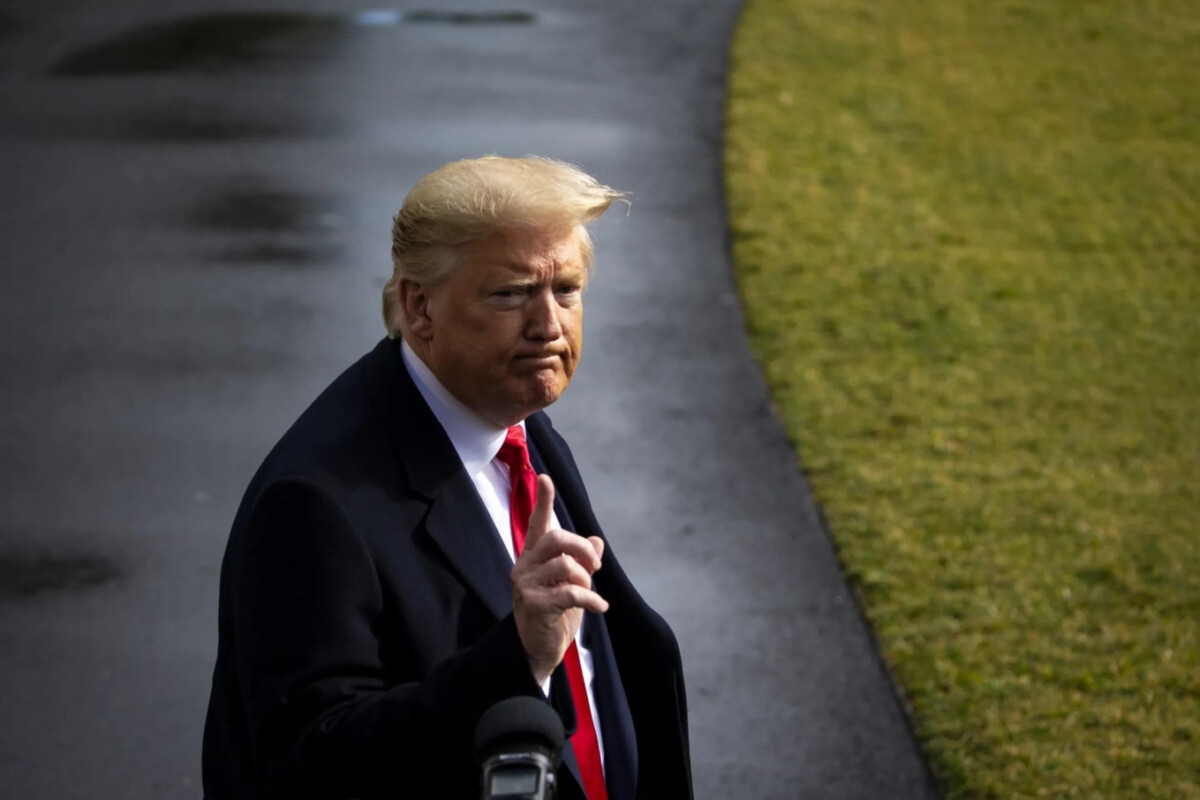
United States President Donald Trump has issued a stern warning to countries he believes are reluctant to support a proposed multinational maritime security initiative aimed at safeguarding shipping through the strategically vital Strait of Hormuz. The narrow passage, which connects the Persian Gulf with the Gulf of Oman, is one of the world’s most critical energy corridors.
Speaking to journalists aboard Air Force One on Sunday, President Trump confirmed that Washington is currently engaged in discussions with at least seven countries to establish an international naval “policing” arrangement designed to ensure safe passage for commercial vessels, particularly oil tankers.
Trump emphasised that the United States would closely monitor which countries respond positively to the call for cooperation and which decline to participate. “This is a very small effort,” he remarked, suggesting that countries benefiting from the route should contribute to protecting it. The President added that Washington would “remember” those nations that choose not to assist, a comment widely interpreted as a veiled warning to allies that hesitate to support the initiative.
The Strait of Hormuz is widely regarded as one of the most sensitive maritime chokepoints in global energy trade. A significant portion of the world’s crude oil and liquefied natural gas passes through the narrow channel each day. Any disruption to shipping in the strait could have immediate consequences for global energy markets, affecting fuel prices and economic stability.
Security concerns in the region have intensified in recent years amid tensions involving Iran and Western powers, as well as incidents involving tanker seizures and attacks on commercial vessels. These developments have prompted renewed discussions among maritime powers about coordinated patrols to deter threats and ensure uninterrupted navigation.
| Key Indicator | Estimated Value |
|---|---|
| Average daily oil shipments | Around 20 million barrels |
| Share of global oil trade | Approximately one-fifth |
| Width of navigable shipping lanes | Roughly 3 km each direction |
| Major oil exporters using the route | Saudi Arabia, Iraq, UAE, Kuwait, Qatar |
Countries across Asia and Europe rely heavily on oil transported through the strait, making its security a matter of international concern rather than a purely regional issue.
Trump’s remarks are widely viewed as an attempt to increase pressure on allied nations—particularly those that depend heavily on Middle Eastern energy supplies—to shoulder a greater share of maritime security responsibilities. Analysts say the United States has long argued that many of its partners benefit from American naval protection while contributing comparatively little to maintaining regional stability.
Among the nations believed to be involved in the discussions are traditional US security partners in the Indo-Pacific and Europe. Observers are particularly watching the positions of Australia and Japan, both of which import significant quantities of energy from the Gulf and have previously participated in international maritime security operations.
While several governments have expressed general support for maintaining freedom of navigation, some remain cautious about joining a security mission that could heighten regional tensions. Participation in a US-led maritime patrol could potentially complicate diplomatic relations with countries in the Middle East.
For now, Washington appears determined to move forward with building a coalition. Whether additional partners will ultimately commit naval resources remains uncertain. What is clear, however, is that the Trump administration intends to closely track which nations stand beside the United States in safeguarding one of the world’s most important energy lifelines.


Comments