Sunday, 5th April 2026

Khabor Wala Desk
Published: 12th January 2026, 11:53 PM
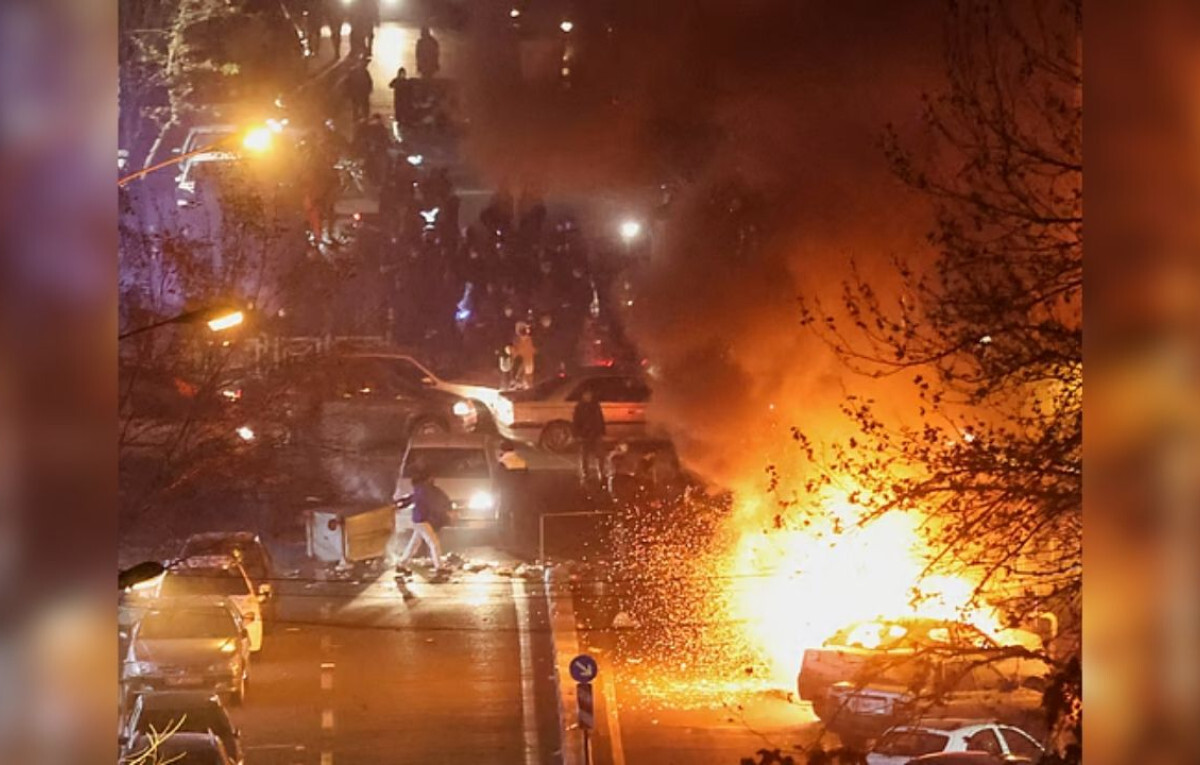
In a significant escalation of Middle Eastern tensions, President Donald Trump is scheduled to convene with his senior security advisors today, Tuesday, 13 January 2026, to determine a response to the Iranian government’s violent crackdown on domestic protesters. As civil unrest enters its third week, the White House has signalled that “all options,” including direct military intervention, are currently on the table.
The protests, described as the most formidable challenge to the Iranian establishment since the 1979 Islamic Revolution, have been met with lethal force. Human rights organisations have provided harrowing data on the scale of the state’s response over the last 16 days.
| Reporting Organisation | Fatalities Reported | Detentions Reported |
|---|---|---|
| Iran Human Rights (Norway) | 648 (Protesters) | — |
| HRANA (US-based) | — | 10,500+ |
| Tehran Official Sources | 109 (Security Forces) | Undisclosed |
President Trump, speaking to reporters aboard Air Force One, suggested that Tehran has “started to cross” a red line by killing its own citizens. “The United States military is watching this very closely,” Trump remarked, adding that “harsh measures” are being considered.
The Wall Street Journal reports that the Pentagon has presented a spectrum of responses to the President. These range from intensified economic sanctions and cyber warfare to targeted strikes against the Revolutionary Guard Corps (IRGC).
However, analysts warn of catastrophic civilian casualties. Unlike isolated desert facilities, many of Iran’s elite military bases are situated within densely populated urban areas. US lawmakers, including Republican Senator Rand Paul and Democrat Mark Warner, have urged caution, citing the historical precedent of the 1953 US-backed coup as a cautionary tale of interventionist blowback.
Tehran has reacted with defiance. Foreign Minister Abbas Araghchi stated that while Iran does not seek war, it is “fully prepared” for one. More pointedly, Parliament Speaker Mohammad Baqer Qalibaf warned that any US strike would make American bases across the Middle East “legitimate targets.”
The geographical reality of US presence in the region creates a complex defensive challenge. Iran possesses a significant arsenal of short-range missiles capable of striking hubs in Kuwait, Qatar, and the UAE.
US Permanent Bases Surrounding Iran:
Bahrain, Egypt, Iraq, Jordan, Kuwait, Qatar, Saudi Arabia, and the UAE.
In a surprising revelation to Al Jazeera, Araghchi confirmed ongoing communication with Trump’s special envoy, Steve Witkoff. While Tehran remains open to nuclear discussions, they insist such talks cannot occur under the shadow of military threats. “We do not believe Washington is ready for fair negotiations yet,” Araghchi noted, while acknowledging that US proposals are currently under review.
As the international community watches—with the EU Parliament already banning Iranian diplomats and China warning against foreign interference—the decision made in the Oval Office today will likely define the geopolitical landscape of 2026.

Comments