Sunday, 5th April 2026

Khabor Wala Desk
Published: 8th February 2026, 12:00 AM
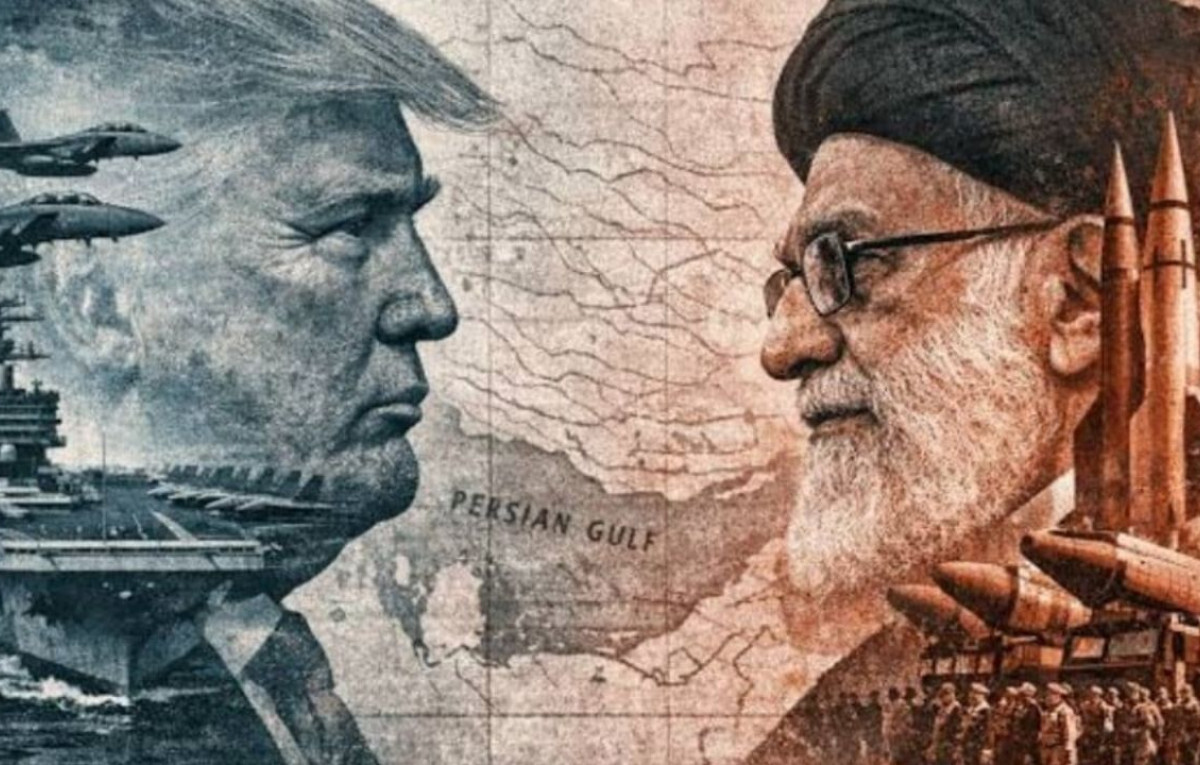
While the corridors of Muscat, Oman, hum with the hushed tones of high-stakes diplomacy, a more ominous reality is taking shape in the waters of the Indian Ocean. A massive deployment of the United States Navy is currently congregating, signalling a shift from dialogue to posturing. Buoyed by recent political shifts in Venezuela, President Donald Trump has adopted an uncompromising stance against Tehran. Diplomatic circles suggest that the White House has presented five conditions so stringent they constitute a “mission impossible” for the Iranian leadership.
According to reports from the Israeli newspaper Ma’ariv, Washington’s primary demands go far beyond traditional non-proliferation. The ultimatum requires a total surrender of Iran’s strategic sovereignty.
| Condition | Strategic Impact on Iran |
|---|---|
| Uranium Handover | Immediate transfer of 400kg of enriched uranium to international custody. |
| Nuclear Dismantlement | Complete destruction of all nuclear infrastructure, including underground facilities. |
| Missile Disarmament | Eradication of all ballistic missile capabilities and production lines. |
| Regional Retraction | Total cessation of support for allied groups (Hezbollah, Houthis, etc.) across the Middle East. |
| Total Access | Unfettered, unannounced inspections of all military and civilian sites. |
Analysts argue that these are not terms for negotiation but a televised ultimatum for surrender. President Trump, speaking to NBC News, remarked that Supreme Court Leader Ayatollah Ali Khamenei should be “very worried.” However, experts caution that comparing Iran to Venezuela is a grave geopolitical miscalculation. Unlike Caracas, Tehran has spent forty-five years fortifying its “strategic depth” and asymmetric warfare capabilities specifically for this confrontation.
Bronwen Maddox, Director of Chatham House, notes that ballistic missiles represent Iran’s sole deterrent. “To abandon the missile programme is to stand defenceless before Israeli air superiority and American stealth bombers,” she observed. For any Iranian administration, accepting these terms would be viewed as national suicide.
The rhetoric on the ground is rapidly evolving from defensive to offensive. Major General Abdolrahim Mousavi, Chief of Staff of Iran’s Armed Forces, confirmed that their military doctrine has shifted to a proactive stance, favouring asymmetric responses that target regional vulnerabilities.
Meanwhile, Israeli Prime Minister Benjamin Netanyahu and his cabinet remain deeply sceptical of the Omani talks. Israeli Energy Minister Eli Cohen dismissed the value of any diplomatic accord with Tehran, while Hezbollah leader Sheikh Naim Qassem warned that his forces would not remain neutral in a wider conflict, framing the coming struggle as “existential.”
US Secretary of State Marco Rubio continues to press for a total dismantling of Iran’s “regional network,” but Tehran remains recalcitrant. While Iran has hinted at a willingness to cap uranium enrichment at 3.67%, they have flatly rejected any compromise on their military hardware.
Observers believe the “impossible” five demands were designed specifically to be rejected. With domestic political pressures mounting in Washington, a conflict with a long-standing adversary may be viewed as a strategic diversion. If these diplomatic channels fail, as the White House suggests they might, the alternative is a military conflagration that could plunge the entire Middle East into an unprecedented crisis.



Comments