Sunday, 5th April 2026

Khabor Wala Desk
Published: 30th September 2025, 12:32 PM
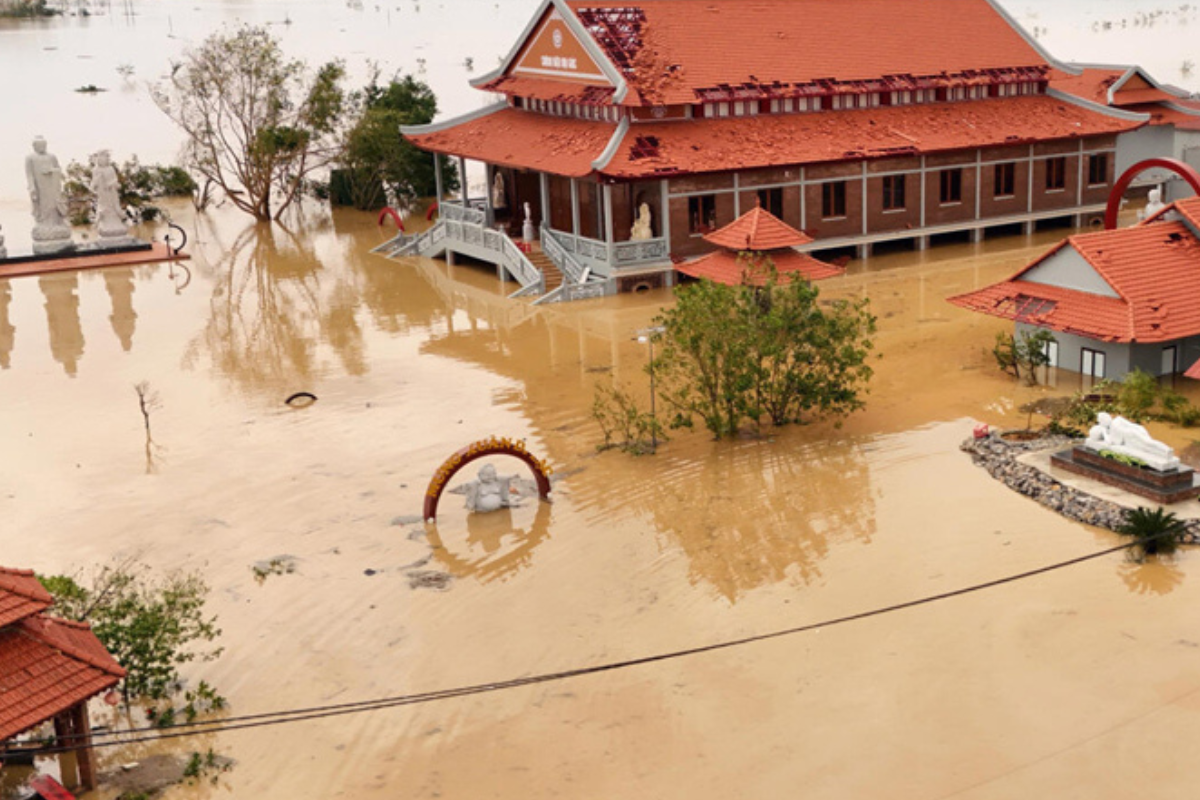
Vietnam faced widespread devastation on Tuesday as Typhoon Bualoi, a long-lasting and powerful storm, swept through the country, leaving floods in its wake. The typhoon killed 19 people, damaged homes, infrastructure, and farmland, and displaced thousands.
Bualoi made landfall in central Vietnam late on Sunday, bringing winds of 130 km/h (80 mph) and remaining over land for nearly 12 hours, an unusually long duration for typhoons in the region.
“This typhoon — the tenth to strike Vietnam this year — was a serious natural disaster, combining strong winds, flash floods, and widespread inundation,” said Mai Van Khiem, head of the National Centre for Hydro-Meteorological Forecasting.
The prolonged storm, coupled with a whirlwind in northern Vietnam on Monday, left more than 80 injured and prompted search operations for 21 missing persons, including fishermen whose vessels were swept away.
Impact on People and Property
| Affected Area | Damage/Impact |
| Houses | Over 100,000 homes damaged; around 2,700 families stranded in Ha Tinh province |
| Agriculture | 225 sq km of rice and other crops destroyed |
| Forestry | More than 10,000 trees uprooted |
| Infrastructure | Electrical poles downed, causing widespread power outages |
| Human Casualties | 19 dead, over 80 injured, 21 missing |
Local residents reported severe flooding. Le Hong Luyen, 62, from Nghe An province, said: “I have not experienced such a strong typhoon in several decades. My house and garden are completely flooded.”
Vietnamese authorities issued continuous alerts for rising river levels and possible landslides in mountainous regions. Disaster management teams are actively coordinating rescue and relief operations for affected families.
The country typically faces up to 10 storms per year, but forecasters predict two to three more typhoons before the year ends.
Typhoon Bualoi has exacerbated Vietnam’s mounting storm-related losses. The General Statistics Office (GSO) reported that storms caused $371 million in damage from January to August, three times higher than the same period last year.
Last September, Typhoon Yagi killed hundreds and caused economic losses of $3.3 billion. Scientists warn that human-driven climate change is intensifying extreme weather events, making storms more destructive and deadly.
Even the capital Hanoi experienced heavy rainfall from Monday evening, with flooding disrupting traffic and damaging property. Resident Tran Thanh Huong recounted:
“The floodwater reached almost the top of my motorbike. It was a terrible morning. My bike got damaged, and I could not reach my office after nearly two hours of trying.”
Typhoon Bualoi also affected the Philippines last week, hitting small islands in the central region. The storm caused floods, 27 deaths, and forced the evacuation of 400,000 people.
This article highlights not only the human cost of Typhoon Bualoi but also the escalating economic and environmental risks faced by Southeast Asia due to increasingly severe climate events.




Comments