Monday, 6th April 2026

Khabor Wala Desk
Published: 5th November 2025, 10:46 AM
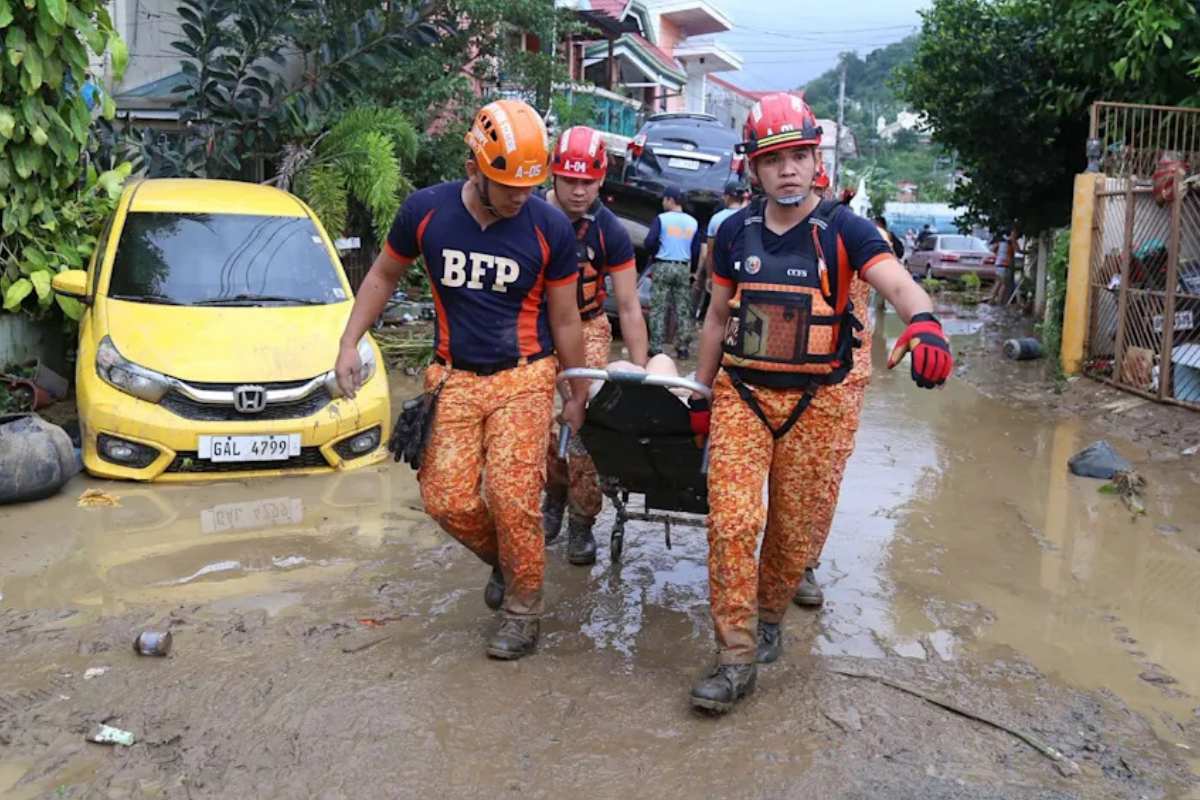
The death toll from Typhoon Kalmaegi in the central Philippines climbed past 100 on Wednesday, as the full impact on Cebu province became clearer following the worst flooding in recent memory.
Floodwaters described as unprecedented had swept through towns and cities the previous day, carrying away cars, riverside shanties, and even massive shipping containers.
Cebu spokesman Rhon Ramos told AFP that 35 bodies had been recovered from flooded areas of Liloan, a town in the metropolitan area of Cebu City. This brought the total for Cebu to 76.
On neighbouring Negros Island, at least 12 people were reported dead and another 12 missing after heavy rain from Kalmaegi triggered volcanic mudflows, which buried homes in Canlaon City, police Lieutenant Stephen Polinar said.
“Eruptions of Kanlaon volcano since last year deposited volcanic material on its upper sections. When the rain fell, those deposits rumbled down onto the villages,” he told AFP.
Earlier government figures had recorded 17 deaths outside Cebu, including six crew members of a military helicopter that crashed during a typhoon relief mission.
AFP reporters spoke to residents in Cebu’s hardest-hit areas as they began clearing streets that had become rivers just a day before.
“Around four or five in the morning, the water was so strong that you couldn’t even step outside,” said Reynaldo Vergara, 53, adding that everything in his small shop in Mandaue had been destroyed when a nearby river overflowed.
“Nothing like this has ever happened. The water was raging.”
In Talisay, where an informal settlement along a riverbank was washed away, 26-year-old Regie Mallorca was already at work rebuilding his home.
“This will take time because I don’t have the money yet. It will take months,” he said, mixing cement and sand atop the rubble.
The area around Cebu City was deluged with 183 millimetres (seven inches) of rain in the 24 hours before Kalmaegi’s landfall, far exceeding the 131-millimetre monthly average, according to weather specialist Charmagne Varilla.
On Tuesday, provincial governor Pamela Baricuatro described the situation as “unprecedented” and “devastating.”
Scientists warn that storms are becoming more powerful due to human-driven climate change. Warmer oceans allow typhoons to strengthen rapidly, while a warmer atmosphere holds more moisture, leading to heavier rainfall.
Nearly 800,000 people were moved from the typhoon’s path.
The catastrophic loss of life in Cebu comes amid public outrage over a scandal involving so-called “ghost” flood-control projects believed to have cost taxpayers billions of pesos.
Governor Baricuatro suggested a possible link between the corruption scandal and what her spokesman later called “unusual” flooding in several subdivisions.
“You begin to ask the question why we’re having terrible flash floods here when you have Ph26.6 billion ($452 million) for flood control projects in the national budget,” she told local outlet ABS-CBN.
“Definitely we have seen projects here… that I would say are ghost projects,” she added, noting her inspection team had not seen a single structure built to government standards.
A spokesperson from the Department of Public Works and Highways, the government body at the centre of the scandal, told AFP that department head Vince Dizon was already in Cebu inspecting typhoon damage.
“After his inspection there, maybe he will comment,” the spokesperson said.
The Philippines is hit by an average of 20 storms and typhoons each year, routinely affecting disaster-prone areas where millions live in poverty.
With Kalmaegi, the country has already reached that annual average, and at least “three to five more” storms are expected before December, according to Varilla.
In September, the Philippines faced two major storms, including Super Typhoon Ragasa, which destroyed roofs and killed 14 people in nearby Taiwan.
By 5 pm on Wednesday, Kalmaegi was moving westwards over the South China Sea towards Vietnam, where authorities have warned it could compound a week of flooding that has already killed dozens



Comments