Sunday, 5th April 2026

Khabor Wala Desk
Published: 30th July 2025, 6:18 PM
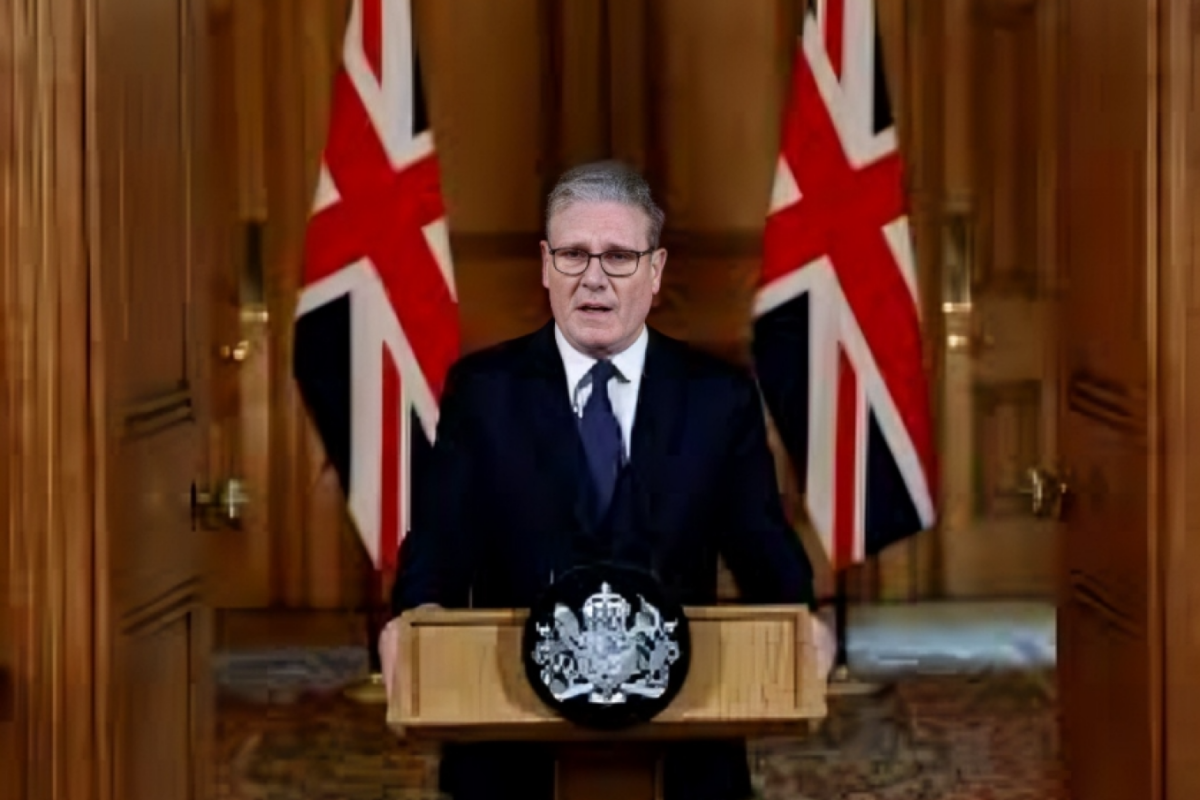
Prime Minister Keir Starmer has declared that the United Kingdom will officially recognise the State of Palestine in September unless Israel undertakes a series of “substantive steps,” including agreeing to a ceasefire in Gaza.
This potentially historic move is part of Starmer’s broader strategy for a “lasting peace” in the Middle East. It follows an emergency recall of his cabinet from recess to address the deteriorating humanitarian situation in Gaza.
The United Kingdom, alongside France—which has also pledged to recognise Palestinian statehood during the upcoming UN General Assembly—would become the first G7 nations to take such a stance.
In a nationally televised address from Downing Street following the cabinet meeting, Starmer stated:
“The UK will recognise a Palestinian state if Israel fails to meet the conditions we have outlined by the time the United Nations General Assembly convenes in September.”
These conditions include:
Statement from Prime Minister Starmer
“I’ve always said that we will recognise a Palestinian state as a meaningful contribution to a genuine peace process, at a moment of maximum impact for the two-state solution,” Starmer affirmed.
“With that solution now in jeopardy, this is the moment to act.”
International and Domestic Responses
Israeli Reaction
Israeli Prime Minister Benjamin Netanyahu strongly rejected the announcement, stating:
“Starmer rewards Hamas’s monstrous terrorism and punishes its victims.
A jihadist state on Israel’s border today will threaten Britain tomorrow.
Appeasement of jihadist terrorists always fails. It will fail you too. It will not happen.”
Israel’s Foreign Ministry echoed the sentiment, denouncing the UK’s recognition as a “reward for Hamas” that undermines ceasefire efforts.
Palestinian Authority
Palestinian President Mahmoud Abbas “welcomed” the UK’s move following a direct conversation with Starmer.
UK’s Conditions for Hamas
Starmer also outlined clear expectations for Hamas:
Diplomatic Engagement
Starmer personally spoke with both Netanyahu and Abbas. A Downing Street spokesperson said:
“The Prime Minister told Mr Netanyahu that the situation in Gaza was intolerable and urged him to lift all restrictions on aid access.”
At the same time, Foreign Secretary David Lammy, attending a UN summit co-hosted by France and Saudi Arabia in New York, stated:
“With the hand of history on our shoulders, we proceed—given Britain’s historic role in the region dating back to the 1917 Balfour Declaration.”
International Support and Momentum
French Foreign Minister Jean-Noël Barrot welcomed the UK’s alignment with France, saying:
“London joins the momentum created by France to stop the endless cycle of violence.”
More than 140 countries already recognise the State of Palestine. However, the recognition by Britain and France—both nuclear-armed states and permanent members of the UN Security Council—would carry considerable diplomatic weight.
Domestic Pressure on Starmer
The UK Prime Minister has faced rising pressure at home, including:
Humanitarian Crisis and Aid Efforts
The UK has intensified its humanitarian response amid escalating suffering in Gaza. On Tuesday, Britain airdropped lifesaving supplies into Gaza in cooperation with Jordan. Starmer personally thanked King Abdullah II for his assistance.
However, both leaders agreed that land-based aid convoys remain essential:
“Air drops cannot substitute for overland truck deliveries, which are crucial to meeting urgent food and medical needs,” said a government spokesperson.
Looking Ahead
Starmer concluded by affirming that the UK government will assess progress in September, judging whether parties involved have met the outlined conditions. He reiterated:
“No one should have a veto over our decision.”
This move, if implemented, would signal a fundamental shift in British foreign policy and may mark a new chapter in the push for peace in the Middle East.


Comments