Sunday, 5th April 2026

Khabor Wala Desk
Published: 23rd July 2025, 2:41 PM
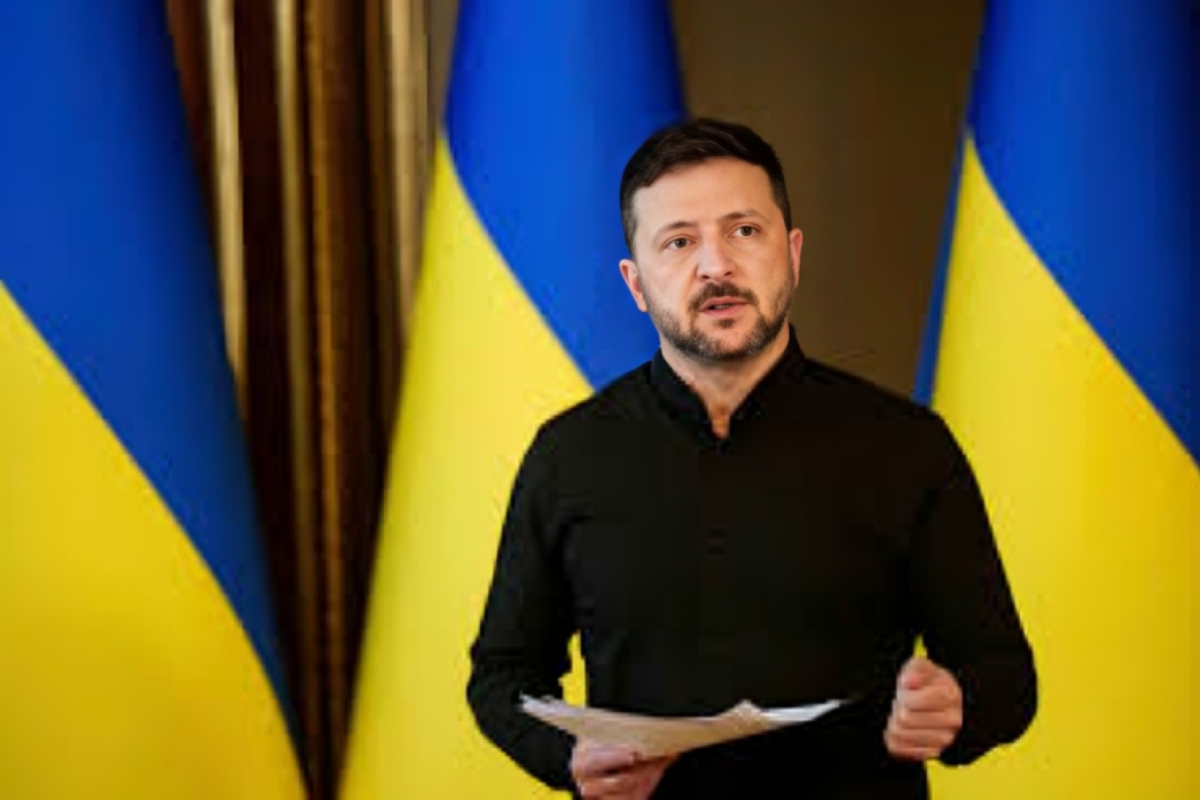
Ukrainian President Volodymyr Zelensky has signed a controversial bill revoking the autonomy of two key anti-corruption institutions, prompting rare protests in Kyiv and sparking concern among international partners. The move is widely criticised as a step backwards in Ukraine’s long battle against systemic corruption and its ambitions to join the European Union.
The new legislation transfers the National Anti-Corruption Bureau of Ukraine (NABU) and the Specialised Anti-Corruption Prosecutor’s Office (SAPO) under the direct authority of the Prosecutor General—an official appointed by the President.
Immediate Domestic and International Response
| Stakeholder | Reaction |
| Protesters in Kyiv | Hundreds rallied; chanted “veto the law” |
| European Union (EU) | Called it a “serious step back”; warned of harm to Ukraine’s EU hopes |
| Transparency International | Described the law as undermining post-revolution institutions |
| NGOs (e.g., Anti-Corruption Action Center) | Claimed the law makes agencies ineffective and politically manipulated |
| Former Foreign Minister Dmytro Kuleba | Called it a “bad day for Ukraine” |
| European Diplomat (anonymous) | “Is it a setback? Yes. A point of no return? No.” |
The European Union, which views anti-corruption reform as a core requirement for Ukraine’s EU accession path, reacted swiftly. EU Enlargement Commissioner Marta Kos posted on X (formerly Twitter),
“Seriously concerned over today’s vote. The dismantling of key safeguards protecting NABU’s independence is a serious step back.”
Lawmakers and the New Law
The bill passed through Ukraine’s parliament with 263 votes in favour and just 13 against, largely supported by members of Zelensky’s own ruling party. It was signed into law shortly after by the President, despite immediate backlash.
| Legislative Outcome | Detail |
| Parliament Vote | 263 in favour, 13 opposed |
| Zelensky’s Party | Majority of support |
| Signed into Law | Yes (confirmed by senior official) |
Critics argue that the new law centralises control, allowing the President’s appointee—the Prosecutor General—to interfere in sensitive corruption investigations.
In response, Zelensky stated in a national address on Wednesday:
“NABU and SAPO will work regardless of the changes… Our anti-corruption infrastructure needs to be cleared of Russian influences.”
He added,
“The Prosecutor General is determined to ensure that punishment is inevitable in Ukraine.”
However, watchdogs like the Anti-Corruption Action Center warned that the law could render these institutions powerless, suggesting that the Prosecutor General may now suppress cases involving allies of the President.
Public Outcry and Protests
Kyiv witnessed rare scenes of public dissent, with demonstrators gathering in central squares to demand a presidential veto of the bill. This marked one of the most visible displays of anti-government sentiment since Russia’s full-scale invasion began.
“The bill is being rushed through,” said Anastasia, a 26-year-old game designer at the protest.
“It is clear that this is a targeted effort.”
After Zelensky signed the bill into law, protestors were seen jeering and booing—an unusual scene in wartime Ukraine.
NABU and SAPO
| Institution | Role | Established |
| National Anti-Corruption Bureau (NABU) | Investigates high-level corruption in state institutions | 2015 |
| Specialised Anti-Corruption Prosecutor’s Office (SAPO) | Prosecutes major corruption cases uncovered by NABU | 2015 |
NABU was established in the aftermath of Ukraine’s 2014 pro-European revolution, intended as a pillar of democratic reform. Since then, it has exposed significant corruption, including among officials in Zelensky’s own administration.
Geopolitical and Legal Ramifications
The legislative change arrives amid heightened scrutiny of Ukraine’s governance. The country’s anti-corruption record is closely tied to continued Western aid and EU integration. Investigators say corruption remains a critical issue despite recent improvements.
On Monday—just a day before the bill’s signing—Ukrainian authorities conducted a large-scale raid at NABU, arresting one employee on suspicion of spying for Russia. Transparency International described the operation as an attempt to “undermine the independence” of post-revolution anti-corruption institutions.
| Transparency International Index (Ukraine) |
| 2024 Ranking: 105th out of 180 |
| 2013 Ranking: 144th out of 180 |
Although Ukraine has improved its standing in global anti-corruption rankings since 2013, critics now fear that such legislative rollbacks may undo a decade’s worth of institutional progress.
Future Uncertain
The chair of the parliamentary anti-corruption committee, Anastasia Radina, openly opposed the bill, stating it contradicts Ukraine’s EU accession trajectory. The President now faces a critical juncture.
“Now the President has a choice — to stand on the side of the people or not,” said former foreign minister Dmytro Kuleba.
The controversy has drawn a sharp dividing line between those who support centralised wartime governance and others who see the new law as a threat to democratic accountability and Western alignment




Comments