Sunday, 5th April 2026

Khabor Wala Desk
Published: 18th October 2025, 12:33 PM
The United Nations’ aid chief, Tom Fletcher, has described the immense scale of the challenge facing international relief efforts in Gaza, as the enclave lies in ruins after two years of relentless bombardment and conflict. His visit came as Israel received the remains of another hostage taken during the October 7 attacks, while the fragile ceasefire entered its second week.
Travelling in a small convoy of white UN vehicles, Fletcher, the UN’s Relief Coordinator, and his team navigated through the shattered streets and twisted metal of Gaza City to inspect the Sheikh Radwan wastewater treatment plant, one of many vital infrastructures left devastated.
“I drove through here seven to eight months ago when most of these buildings were still standing,” Fletcher told AFP.
“To see the devastation now — this vast part of the city has become a wasteland. It’s absolutely heartbreaking.”
Once densely populated and home to over two million Palestinians, Gaza’s urban areas have been reduced to rubble, leaving residents struggling to reclaim even the most basic necessities such as clean water, electricity, and sanitation.
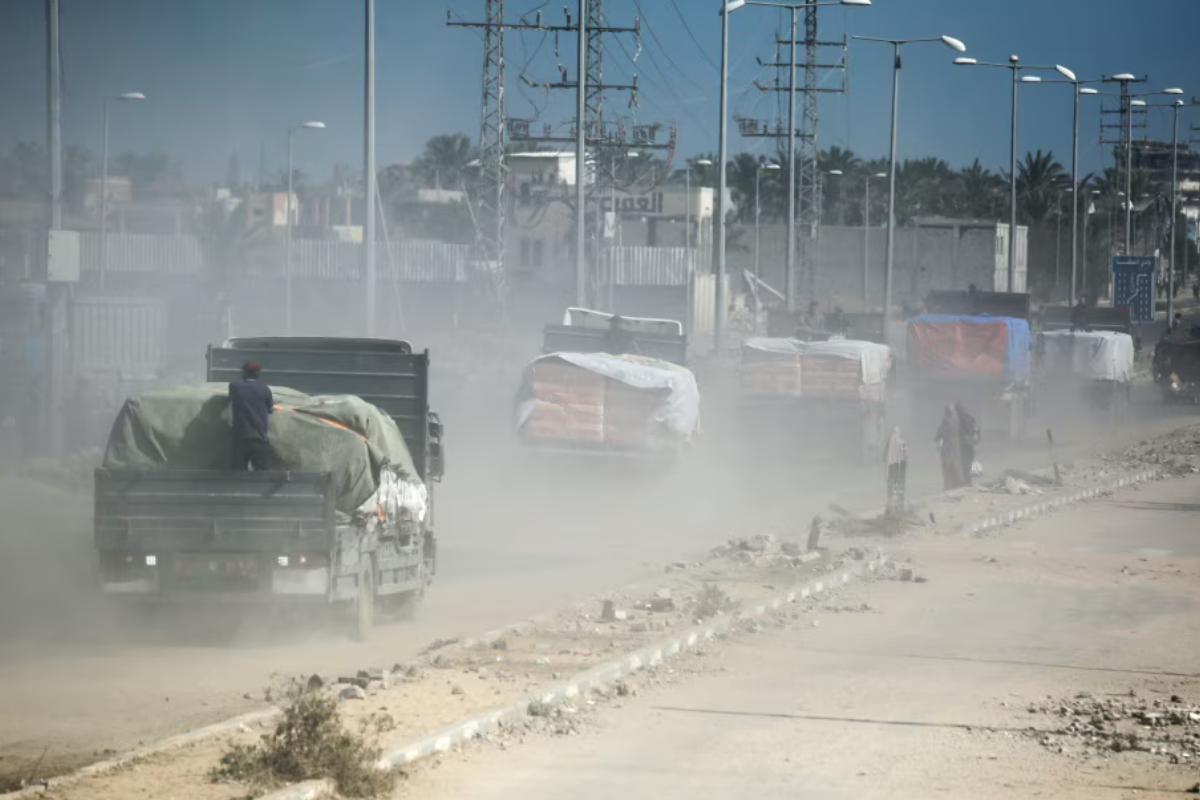
The ceasefire, brokered just over a week ago with the mediation of US President Donald Trump, has allowed limited humanitarian access. However, the Rafah crossing into Egypt remains closed, forcing all aid deliveries to pass through Israeli checkpoints.
According to the UN Humanitarian Office, data from Israel’s Civil Affairs Agency indicates that 950 trucks carrying food, fuel, and commercial supplies entered Gaza on Thursday alone.
Fletcher noted that the road to recovery was long and complex, describing the coming months as a “massive, massive job.”
At the Sheikh Radwan site, he observed destroyed pumping stations and vast pools of untreated sewage, symbolising the scale of the infrastructure collapse.
“Residents are digging latrines in the ruins,” Fletcher said.
“They’re telling me they want dignity above all else. We’ve got to get power back on to restart the sanitation system.”
He outlined a 60-day emergency plan focused on immediate recovery:
| UN Humanitarian 60-Day Plan for Gaza | Objectives |
| Food Supply | Deliver 1 million meals per day |
| Health Sector | Rebuild essential medical infrastructure |
| Shelter | Provide tents and winter protection |
| Education | Enable hundreds of thousands of children to return to school |
| Utilities | Restore electricity and sanitation systems |
Meanwhile, Turkey has deployed a rescue team to the Egyptian border, awaiting permission to enter Gaza to assist in the recovery of bodies trapped beneath the rubble.
While humanitarian efforts continue, the issue of hostages remains deeply sensitive in Israel. On Friday night, Hamas returned the remains of Eliyahu Margalit, a 75-year-old farmer abducted during the October 2023 attack that sparked the current conflict.
Margalit, affectionately known as “Churchill” at the Nir Oz kibbutz, had been feeding his horses when he was captured. He was part of the “Riders of the South”, a horse-riding community that had shared their passion for more than 50 years.
“He was a cowboy at heart, and for many years managed the cattle and horse stables of Nir Oz,” said the Hostages and Missing Families Forum, a group supporting the victims’ relatives.
Margalit leaves behind his wife, three children, and three grandchildren. His daughter Nili Margalit, also kidnapped on October 7, was freed during the first brief truce in November 2023.
Prime Minister Benjamin Netanyahu’s office confirmed the identification and repatriation of Margalit’s remains, reiterating Israel’s stance:
“We will not compromise and will spare no effort until we return all of the fallen abductees, down to the last one.”
The ceasefire agreement, negotiated by Trump and regional mediators, has so far seen Hamas return all 20 surviving hostages and the remains of 10 out of 28 deceased captives.
Hamas spokesman Hazem Qassem stated on Friday that the group remains committed to the truce and intends to “complete the full prisoner exchange process.”
However, domestic pressure continues to mount on Netanyahu to maintain restrictions on Gaza until all remaining bodies of Israeli hostages are recovered.
As the ceasefire holds tenuously, and with entire districts in ruins, the UN and its partners face what Fletcher called “one of the largest humanitarian reconstruction efforts of our generation.”



Comments