Sunday, 5th April 2026

Khabor Wala Desk
Published: 4th December 2025, 11:09 PM
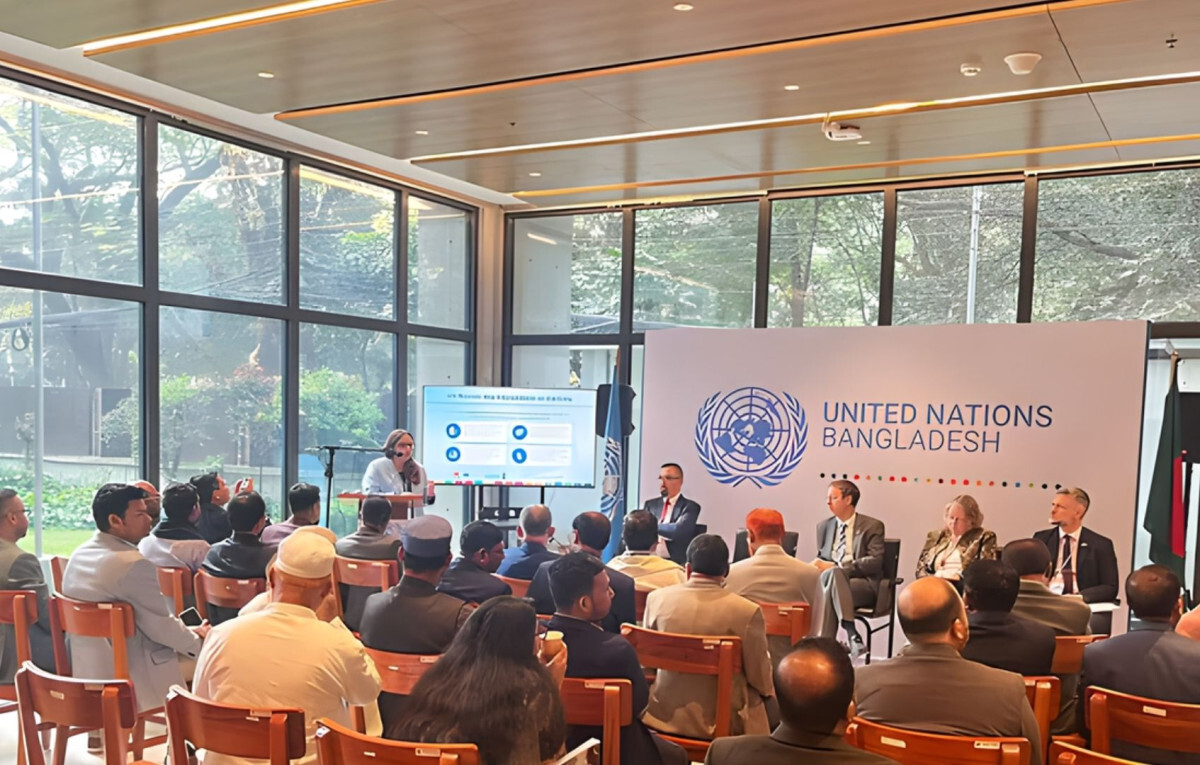
The United Nations office in Dhaka has formally briefed Bangladesh’s political parties on the nature and extent of electoral assistance it is providing ahead of the country’s upcoming national election. The briefing, held earlier this week, was confirmed in an official statement issued by the UN office on Thursday.
According to the statement, representatives from the UN presented a detailed overview of the technical support being extended to the Bangladesh Election Commission. The session concluded with a question-and-answer segment, allowing political parties to seek clarification and raise concerns regarding the UN’s involvement in the electoral process.
At the centre of this cooperation is the UN-managed Ballot Project, an initiative designed to strengthen the operational capacity of the Election Commission. The project is contributing in several key areas: training for commission officials, improved voter and civic education programmes, logistical support, and the provision of essential electoral materials. A major focus of the support is ensuring inclusivity, transparency, and accuracy in all stages of the electoral process.
The UN emphasised during the briefing that its assistance is strictly technical in nature. It aims to bolster institutional efficiency rather than influence political outcomes. The organisation highlighted the importance of enabling citizens to participate in a credible and inclusive election—one where voters have access to accurate information and electoral officers have the necessary skills to manage the vast logistical demands of a national vote.
The statement also revealed notable progress in voter registration. Since the launch of the Ballot Project in May 2025, authorities have been able to incorporate around eight million new voters into the electoral roll, in addition to the previously registered 120 million. Among the newly registered voters, more than 3.8 million are men, while the number of newly listed women voters exceeds four million—a trend the UN described as encouraging for gender-inclusive participation.
The UN noted that improvements in digital registration tools and field-level coordination have contributed significantly to expanding the voter database. The project’s efforts aim to ensure that every eligible citizen, including marginalised and hard-to-reach groups, can exercise their democratic right without facing administrative barriers.
Participants from the political parties reportedly welcomed the briefing, although some privately expressed concerns about whether the Election Commission can fully implement the recommended reforms within the tight timeline. Observers note that Bangladesh is entering a politically sensitive period, where transparency and trust in the electoral system will be vital for a peaceful and credible election.
Political analysts argue that the UN’s involvement reflects both international expectation and domestic demand for a more structured and reliable electoral process. With political tensions often surfacing around election periods, the added technical support aims to reduce administrative errors and promote public confidence.
The UN, however, reiterated that the overall conduct of the election remains the sovereign responsibility of Bangladesh. Its role, it emphasised, is to assist—not to intervene. As preparations intensify in the coming months, the Ballot Project is expected to continue working closely with the Election Commission and civil society stakeholders to strengthen democratic participation.

Comments