Sunday, 5th April 2026

Khabor Wala Desk
Published: 28th November 2025, 2:07 AM
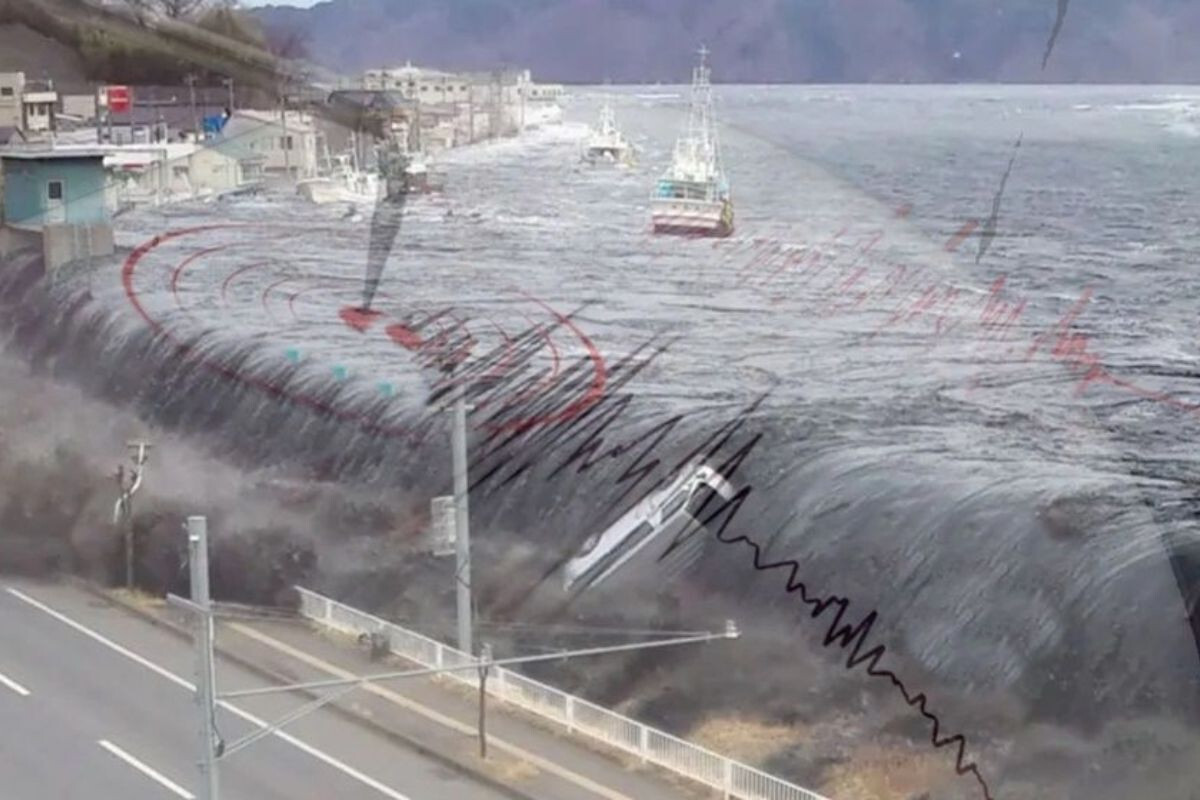
Over the past week, Bangladesh has experienced several earthquakes. Among these, a four-magnitude earthquake struck the Bay of Bengal on Wednesday night, 26 November. The next day, a 6.6-magnitude earthquake occurred in Indonesia, though no major tsunami was reported. However, experts warn that if a major earthquake occurs in Indonesia or around the Andaman–Nicobar region, Bangladesh could face tsunami risks. According to the BBC, such concerns are not unfounded.
In 2004, a 9.1-magnitude earthquake in Indonesia triggered a tsunami that killed more than 200,000 people and reached as far as the African coast. Bangladesh also felt its impact, with reports of two fatalities.
Earthquakes and Tsunamis
Farzana Sultana, Assistant Meteorologist at the Earthquake Observation and Research Centre, explained that tsunami service providers assess whether an undersea earthquake exceeding magnitude 6.5 could trigger a tsunami. They issue alerts regarding likely impact zones and expected wave heights. She noted that small earthquakes frequently occur in the Bay of Bengal, and quakes of magnitude 4 or lower generally pose no significant threat.
Experts also observe that even major inland earthquakes could potentially trigger risks of coastal tsunamis.
Why Do Undersea Earthquakes Occur?
The Earth’s crust is divided into tectonic plates that are constantly moving. Some plates collide, some slide past each other, and some are forced beneath others. These interactions cause earthquakes. Volcanic eruptions can also create tremors, whether on land or under the sea.
Scientists believe that 230 to 280 million years ago, all continents were joined as one landmass known as Pangaea. Continuous tectonic movement eventually broke it into separate continents. Evidence includes the Mid-Atlantic Ridge, the world’s longest underwater mountain range, with only 10 percent visible above sea level—clearly observable in Iceland.
How Are Tsunamis Formed?
Tsunamis resemble massive tidal surges. Not all earthquakes generate tsunamis. A strong earthquake in relatively shallow waters is typically required. If the seabed is displaced upward or downward, causing a large volume of water to shift suddenly, a tsunami may form.
How Vulnerable Is Bangladesh?
The Pacific Ring of Fire is the most seismically active region on Earth, home to major tsunami-generating subduction zones. These are far from Bangladesh. The country lies at the junction of two major tectonic plates stretching from Chattogram–Arakan to the Andaman region.
Many experts believe that the likelihood of a major undersea earthquake close to Bangladesh is low.
Farzana Sultana said that Bangladesh generally faces no severe tsunami threats from typical earthquakes. However, the Andaman–Nicobar region remains a potential source, so preparedness measures are continually practised.
Historical data show that a powerful tsunami struck the region following an 8.5-magnitude earthquake on the Arakan coast in 1962. Professor Dr Syed Humayun Akhter from the Department of Geology said that if this tectonic plate ruptures again, a major tsunami could occur, though such an event is unlikely in the near future. He noted that tectonic plates often require 500 to 900 years to accumulate enough energy for another major quake, meaning the next one may be 200 to 250 years away.
Records indicate that the 1962 tsunami travelled far inland across coastal areas. Although population density was low and losses were limited, rising river levels in Dhaka reportedly caused around 500 deaths.
Professor Akhter also told the BBC that Bangladesh’s geographical ‘funnel shape’ means that a major tsunami in the Andaman or Indian Ocean could still impact the country, though not as devastatingly as in Indonesia.
Experts state that although earthquakes cannot be predicted long in advance, tsunamis can be forecast shortly after an undersea earthquake occurs. However, for Bangladesh, the risk of major inland earthquakes is currently a greater concern than undersea quakes.
Khaborwala/TSN




Comments