Sunday, 5th April 2026

Khabor Wala Desk
Published: 31st July 2025, 4:32 PM
For over a month, Alberto — a 60-year-old Salvadoran migrant without a valid US visa — has barely stepped outside the small room he rents in someone’s backyard in Los Angeles. His fear? Encountering masked police officers rounding up undocumented immigrants as part of intensified immigration enforcement raids.
“It’s terrible,” he said. “It’s a confinement I wouldn’t wish upon anyone.”
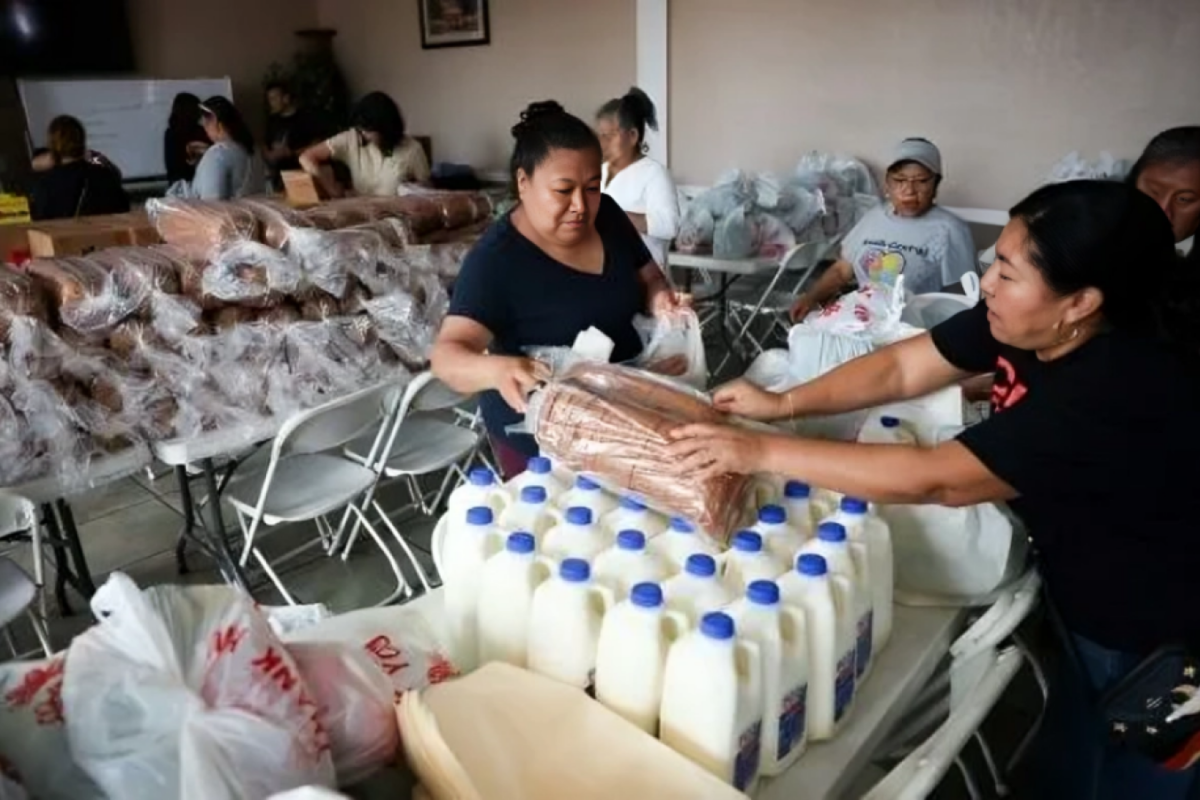
Alberto, whose name has been changed by AFP for his safety, survives with help from a local organisation that delivers food to him twice weekly.
“It helps me a lot, because if I don’t have this… how will I eat?” he asked, having not returned to his job at a car wash in several weeks.
Widespread Arrests and Crackdown
In early June, Immigration and Customs Enforcement (ICE) agents launched a sweeping crackdown across Los Angeles, with dozens of arrests reported at car washes, hardware stores, farms, and even in public spaces.
Videos circulating on social media depicted heavily armed and masked officers detaining people — allegedly “hardened criminals.” Yet, immigrant rights groups argue that most of those detained were simply working low-wage jobs often avoided by American citizens.
Arrests in June 2025 – Los Angeles Region
| Type of Detainee | Number | Percentage |
| Total Arrests | 2,200+ | 100% |
| Without Criminal Record | ~1,320 | 60% |
Critics described the raids as “brutal and arbitrary,” fuelling a series of large-scale protests — some of which escalated into violence and vandalism.
Fear in the Community
Alberto decided to remain in hiding after one of his friends was arrested in a raid at a local car wash and later deported. Even though he is pre-diabetic, Alberto fears attending medical appointments and only walks in the alley near his home.
“I’m very stressed. I have headaches and body pain because I was used to working,” he shared.
In his 15 years in the United States, Alberto said Trump’s second term has been “worse than anything.”
A City in Retreat
The impact of the raids has reshaped life in Los Angeles — a city with hundreds of thousands of undocumented migrants. Public spaces in working-class neighbourhoods have emptied out. In June alone, public transport usage dropped by 13.5% compared to the previous month.
“As you’re driving through certain neighbourhoods, it looks like a ghost town,” said Norma Fajardo, a worker advocate at the CLEAN Carwash Worker Center.
Her organisation is coordinating with others to deliver hundreds of food parcels weekly to fearful migrants now avoiding the outside world.
“It’s very saddening and infuriating. Workers should be able to go to work and not fear getting kidnapped.”
Given the near $30 billion recently allocated by Congress to immigration enforcement — including funding for 10,000 new ICE agents — Fajardo doesn’t expect the situation to improve anytime soon.
A ‘New Normal’ of Fear
“It seems like this is the new normal,” Fajardo lamented. “When we first heard of an ICE raid at a car wash, we were in emergency crisis mode. Now we are just really accepting that we need to plan for the long term.”
For many like Marisol, a 62-year-old Catholic woman from Honduras, life now revolves around secrecy and survival. She has remained inside her building with 12 family members for weeks.
“We constantly thank God (for the food deliveries) because this has been a huge relief,” she said.
To shield her home, Marisol has hung curtains on the front windows and strictly forbids her grandchildren from opening the door. Whenever her daughters venture out to work, she is consumed with anxiety.
“Every time they go out, I pray to God that they come back, because you never know what might happen.”
Her family fled Honduras 15 years ago to escape recruitment threats from criminal gangs. Now, her children are questioning whether staying in the US is worth the fear.
“My sons have already said to me: ‘Mum, sometimes I would prefer to go to Europe.’”
This intensifying climate of fear, uncertainty, and isolation among Los Angeles’s undocumented population reflects the harsh human cost of the Trump administration’s immigration enforcement strategy — one that continues to reshape life for countless families behind closed doors.

Comments