Sunday, 5th April 2026

Khabor Wala Desk
Published: 26th January 2026, 9:36 AM

In Bangladesh, under the prevailing Muslim family law, a man may unilaterally divorce his wife without any requirement for accountability. This is known as talaq. Legally, the husband must register the divorce and send a notice to the local chairman, who may then convene a reconciliation meeting between the parties. If such a meeting does not take place, the divorce becomes effective three months after the chairman receives the notice (Muslim Family Laws Ordinance 1961, Section 7).
However, Muslim women do not possess the legal right to divorce on their own. A woman may only initiate divorce if her husband grants her the authority to do so, or she may petition the court under the Muslim Divorce Act 1939. In practice, many modern marriage contracts assign this power to the wife, allowing her, in theory, to seek divorce at will. Yet, this ostensibly equitable provision contrasts sharply with reality, as men retain disproportionate control over the termination of marriages, often resulting in severe social, economic, and psychological consequences for women.
| Name (Pseudonym) | Age | Marriage Duration | Key Issues | Current Status |
|---|---|---|---|---|
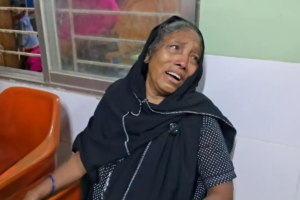
| Latifa Begum | 55 | ~30 years | Physical abuse, threats of divorce | Seeks legal aid; may only receive past-due mahr (dowry) |
| Kulsuma Akter | N/A | 18 years | Financial contributions to home, husband’s infidelity, loss of property | Lives with father; seeks compensation and child support through court |
| Naima Rahman | 25 | 2 years | Husband divorced without explanation | Court petition ongoing; seeks clarity and rights |
| Sophia | N/A | 12 years | Husband’s extramarital affair; three children | Working to support family; seeks mahr and child maintenance |
| Mimer | 0 (infant) | N/A | Divorced on second day of life | Mother petitions for child maintenance; father remarried |
The stories of Latifa, Kulsuma, Naima, Sophia, and newborn Mimer illustrate the structural vulnerabilities faced by women. Decades of investment—financial, emotional, and domestic—can be rendered worthless in an instant. Legal provisions such as the mahr and maintenance are often insufficient, delayed, or contested, leaving women destitute.
Currently, there is no mandatory legal framework ensuring equitable division of marital property or long-term protection of women and children post-divorce. In many Muslim-majority countries, including Indonesia and Turkey, divorce is adjudicated through family courts, which mandate resolution of all related issues—maintenance, child custody, property division—before the divorce is finalized. Indonesia’s Family Law explicitly requires that a husband cannot marry a second wife unless the first wife’s rights are secured and her welfare ensured.
Bangladesh has taken steps to strengthen family courts, with district-level and appellate family courts now operational. Yet, legal reforms must go further to protect women and children effectively, ensuring:
Payment of mahr and maintenance during the iddat period and beyond
Custody and long-term support of children
Equitable distribution of marital assets
Compensation for losses caused by divorce
Legal safeguards against arbitrary second marriages
Without such reforms, women will continue to endure systemic injustice. A structured, enforceable, and humane family law system is essential—not only for women’s welfare but also for the integrity of society.
Bangladesh has the legal infrastructure to act. What remains is the political and social will to ensure that the vulnerable—mothers, daughters, and children—are not left to navigate the consequences of arbitrary divorce alone.

Comments