Sunday, 5th April 2026

Khabor Wala Desk
Published: 11th February 2026, 2:47 PM
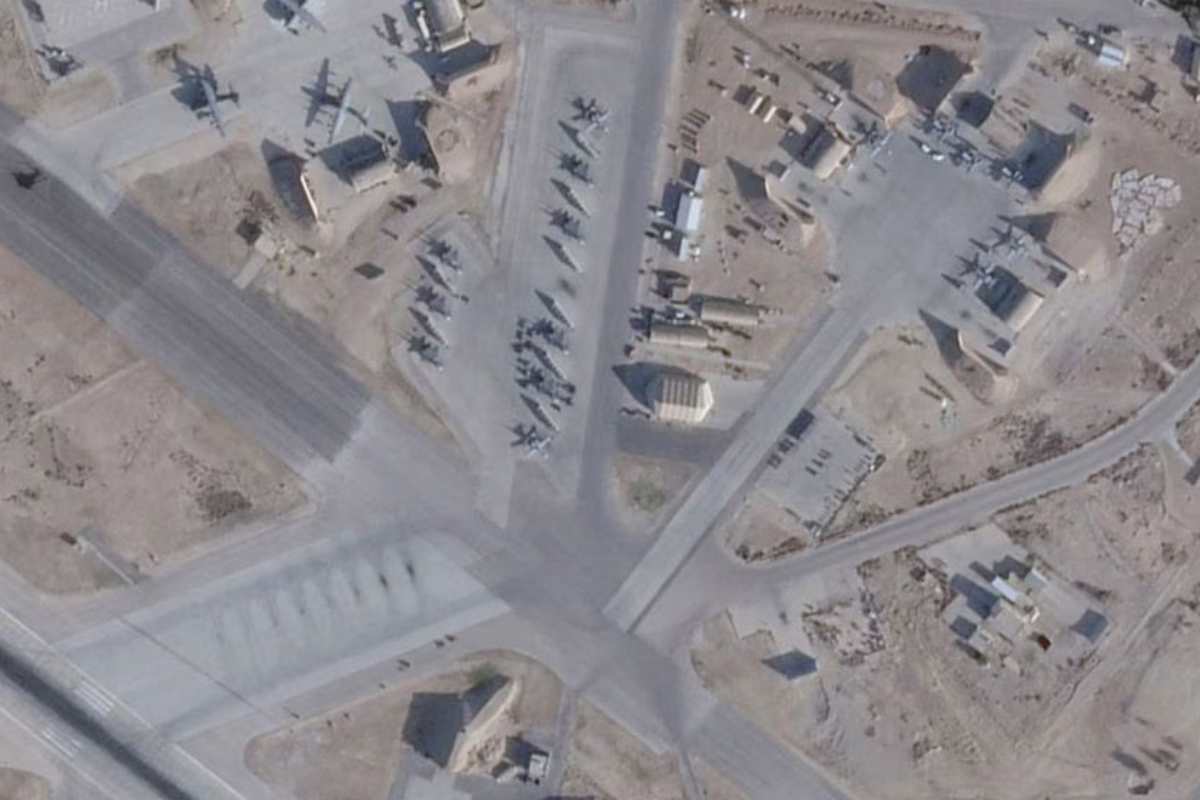
Against the backdrop of heightened tensions with Iran, the United States has deployed mobile missile launchers to Qatar, reinforcing its air and missile defence posture in the Gulf. The move, confirmed by Reuters citing the Pentagon, signals Washington’s intent to strengthen the protection of its forces and regional partners at a time when security risks across the Middle East have intensified.
Defence officials in Washington noted that mobile launch systems offer a decisive operational advantage over semi-static platforms. Their mobility allows rapid repositioning, reduced vulnerability to pre-emptive strikes, and swift activation in response to emerging threats. In practical terms, these launchers can be dispersed, concealed, and brought online far more quickly than conventional fixed batteries—an increasingly important capability in an era marked by the proliferation of drones, cruise missiles and precision-guided munitions.
According to Pentagon sources, the deployed systems are capable of firing long-range Patriot interceptor missiles at short notice. The Patriot air and missile defence system—developed in the United States and fielded by numerous allied nations—has become one of the most widely recognised defensive platforms in modern warfare. It is designed to intercept tactical ballistic missiles, cruise missiles and hostile aircraft, providing layered protection for critical military installations and civilian infrastructure alike. In recent conflicts across the region, air defence systems have assumed renewed importance as asymmetric threats and saturation attacks have become more common.
The decision to station mobile launchers in Qatar reflects the strategic significance of the country within the United States’ Middle Eastern posture. Washington maintains military facilities across several states in the region, including Iraq, Jordan, Kuwait, Saudi Arabia, Qatar, Bahrain, the United Arab Emirates, Oman and Turkey. Among these, Qatar’s Al Udeid Air Base stands out as the largest and most consequential hub for US operations in the Gulf, hosting key command-and-control functions as well as air assets supporting missions across the wider region.
Al Udeid’s prominence has also made it a symbolic and practical focal point for regional security planning. During the hostilities of June 2025, the base reportedly sustained damage following missile fire attributed to Iran, underlining its exposure to long-range strike capabilities and reinforcing the imperative to bolster its defences. The selection of Al Udeid as the deployment site for mobile launchers suggests a deliberate effort to enhance survivability and resilience at a location central to US and allied operations.
The broader geopolitical context remains shaped by nearly two decades of friction between Washington and Tehran over Iran’s nuclear programme. Periodic diplomatic initiatives, coupled with sanctions and military signalling, have failed to produce a durable settlement, and relations deteriorated further after 2016 as the United States adopted a more confrontational posture. Recent instability along vital maritime routes in the Gulf and Red Sea has added urgency to efforts by Washington to reassure partners and deter potential escalation.
Analysts observe that the deployment is not merely a defensive adjustment but a calibrated strategic message. By investing in mobile, rapidly deployable air defence assets, the United States is signalling both resolve and adaptability—assuring allies of its commitment to regional security while cautioning adversaries against miscalculation. In a volatile security environment where speed, flexibility and deterrence increasingly define military effectiveness, the reinforcement of Qatar’s defences marks a significant development in the evolving balance of power in the Gulf.
| Category | Details |
|---|---|
| Host country | Qatar |
| Deployment site | Al Udeid Air Base |
| System deployed | Mobile missile launchers (Patriot air and missile defence capable) |
| Primary purpose | Rapid-response air and missile defence |
| US regional military hubs | Iraq, Jordan, Kuwait, Saudi Arabia, Qatar, Bahrain, UAE, Oman, Turkey |
| Strategic context | Heightened US–Iran tensions; protection of regional forces and partners |


Comments