Sunday, 5th April 2026

Khabor Wala Desk
Published: 3rd February 2026, 5:36 AM
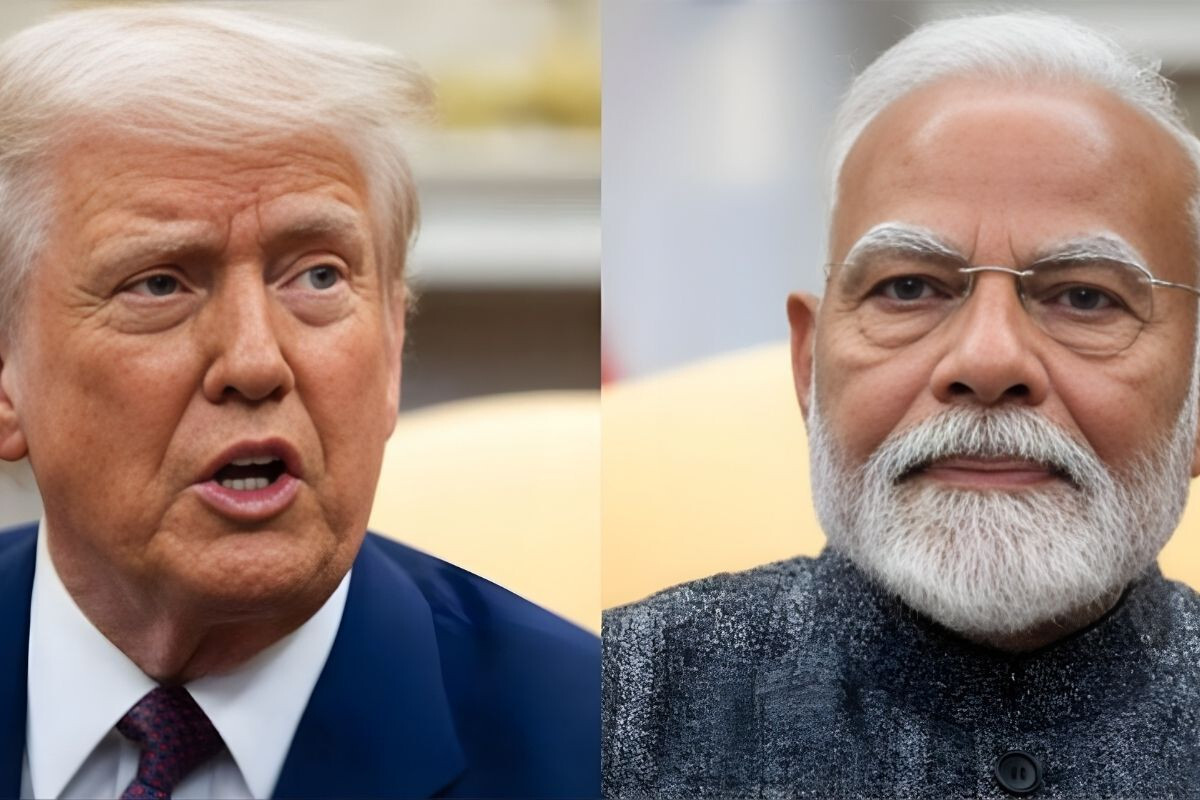
On Monday, US President Donald Trump announced a landmark trade agreement with India, marking a major development in bilateral economic relations. Under the terms of the deal, the United States will reduce tariffs on Indian goods from 50 per cent to 18 per cent. In return, India has agreed to cease purchasing oil from Russia, while also easing trade barriers for American products entering the Indian market—a long-standing demand of the United States.
President Trump made the announcement via his social media platform, Truth Social, as has become customary for major policy declarations. Earlier, he had discussed the deal in a telephone conversation with Indian Prime Minister Narendra Modi. Trump indicated that, as part of the agreement, India will now purchase oil from the United States—most likely sourced from Venezuela. On Saturday, he had previously stated that India would buy Venezuelan oil rather than Iranian supplies.
The agreement also resolves questions surrounding the punitive 25 per cent tariffs previously imposed on Indian goods due to purchases from Russia. While Trump did not provide detailed clarifications during his announcement, a White House official told Reuters that the United States will revoke all additional tariffs related to Russian oil imports. Following the announcement, Prime Minister Modi confirmed that the framework of the deal had been finalised.
India’s ambassador to the United States, Sergio Gor, similarly suggested that India’s new tariff rate will stand at 18 per cent, lower than neighbouring Pakistan’s 19 per cent, China’s 30–35 per cent, and Bangladesh’s 20 per cent. The original 50 per cent US tariffs on Indian goods consisted of 25 per cent retaliatory tariffs and 25 per cent imposed as a penalty for purchasing Russian oil.
Prime Minister Modi shared his reaction on X, formerly Twitter: “I am delighted to have spoken to my dear friend President Donald Trump today. I am pleased that tariffs on Indian products have been reduced to 18 per cent. On behalf of 1.4 billion Indians, I thank President Trump for this excellent announcement. When two major economies and the world’s largest democracies collaborate, ordinary citizens benefit. This agreement creates numerous avenues for bilateral cooperation.”
Modi added that Trump’s leadership is crucial for global peace, stability, and prosperity, and he looks forward to working closely with him to elevate the India–US partnership to unprecedented levels.
As part of the deal, India has committed to substantially increasing purchases of US products, including energy commodities such as coal and oil, valued at over $500 billion. In addition, India will expand imports of technology, agricultural produce, and other goods. Trump emphasised that India will reduce tariff and non-tariff barriers, aiming to bring them close to zero.
Economic analysts, including Madhavi Arora of MK Global, suggest that the agreement will bring India’s average tariffs in line with other Asian economies, which generally range between 15 and 19 per cent. She noted that this is likely to reduce pressure on Indian exports and the rupee.
However, several details remain unclear. Trump’s post did not specify the effective date of the tariff reductions, the timeline for halting Russian oil imports, the exact nature of reduced trade barriers, or which US goods India has committed to purchasing. Unlike other US trade agreements with Japan, South Korea, and other Asian partners, India’s deal did not include explicit investment commitments from the United States.
Comparative Tariff Rates (Post-Deal)
| Country | US Tariff on Goods (%) |
|---|---|
| India | 18 |
| Pakistan | 19 |
| China | 30–35 |
| Bangladesh | 20 |
Formal procedures to implement these changes, including a presidential proclamation or Federal Register notice, had not been completed by Monday afternoon. Both the White House and Indian ministries had not provided further details, and the Russian embassy in Washington declined to comment immediately.



Comments