Sunday, 5th April 2026

Khabor Wala Desk
Published: 2nd August 2025, 1:33 PM
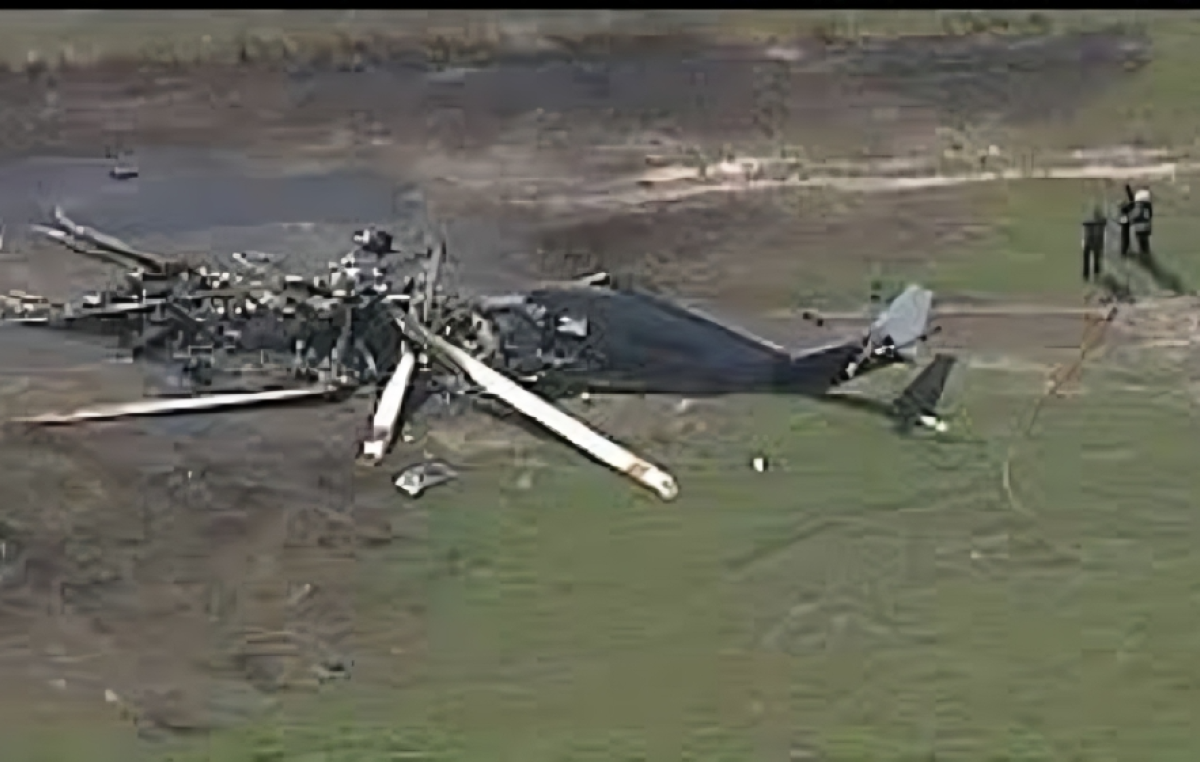
A recent investigative hearing into a tragic mid-air collision between a US Army Sikorsky Black Hawk helicopter and a passenger aircraft has revealed serious technical discrepancies in the military chopper’s altitude measurement systems. The crash, which took place on 29 January, resulted in the deaths of 67 individuals, marking it as the deadliest aviation incident in the United States since 2009.
Summary of Incident
| Date | 29 January |
| Location | Near Reagan National Airport, Washington D.C. |
| Aircraft Involved | Sikorsky UH-60 Black Hawk (US Army) & Bombardier CRJ700 (American Airlines subsidiary) |
| Fatalities | 67 |
| Survivors | None |
| Flight Origin | Wichita, Kansas |
| Destination | Reagan National Airport |
The Bombardier CRJ700 was approaching landing just miles from the White House when the Army helicopter, engaged in a routine training flight, collided with it.
Altitude Discrepancy Discovery
The National Transportation Safety Board (NTSB), the lead agency investigating the crash, hosted a three-day hearing from Wednesday to Friday, during which flight data and expert testimonies shed light on a concerning inconsistency in the helicopter’s altitude instrumentation.
Findings from the Investigation:
| Instrument | Reading Discrepancy |
| Radar Altimeter vs Barometric Altimeter | 80 to 130 feet (24–40 metres) in actual flights |
| Discrepancy during test flights | 20 to 55 feet (controlled environment) |
Marie Moler, NTSB investigator, highlighted that when the rotors of the helicopter were active, the altimeter readings dropped noticeably and remained consistently lower throughout the flight duration.
“Once the helicopter rotors were turning and producing lift and thrust, the altimeter readings lowered significantly and stayed lower throughout the flights.” — Marie Moler, NTSB Investigator
Official Reactions and Concerns
Jennifer Homendy, Chair of the NTSB, expressed serious concern regarding the discrepancies in the altimeter systems.
“I am concerned. There is a possibility that what the crew saw was very different than what the true altitude was.”
“A 100-foot difference is significant.”
Given the flight took place over the Potomac River region, where helicopters are restricted to fly below 200 feet, such errors in altitude display could prove catastrophic — as they may have in this case
Political Commentary
Despite the severity of the findings, former President Donald Trump controversially blamed diversity hiring policies for the tragedy, although no evidence has emerged linking such policies to the collision.
Meanwhile, Clark Allen, a Federal Aviation Administration (FAA) air traffic control specialist, assured the hearing that adequate supervisory personnel were present in the control tower at the time of the accident
Historical Perspective
This incident marks the first major aviation disaster in the United States since 2009, when 49 people were killed in a crash near Buffalo, New York. It has sparked renewed scrutiny over military-civilian airspace coordination, instrument calibration, and safety protocols for low-altitude helicopter flights near busy airports.
As the investigation continues, the NTSB has vowed to examine the engineering, procedural, and oversight aspects that may have contributed to the fatal event, with particular emphasis on whether instrument faults misled the helicopter crew about their altitude moments before impact.




Comments