Sunday, 5th April 2026

Khabor Wala Desk
Published: 9th February 2026, 11:46 PM
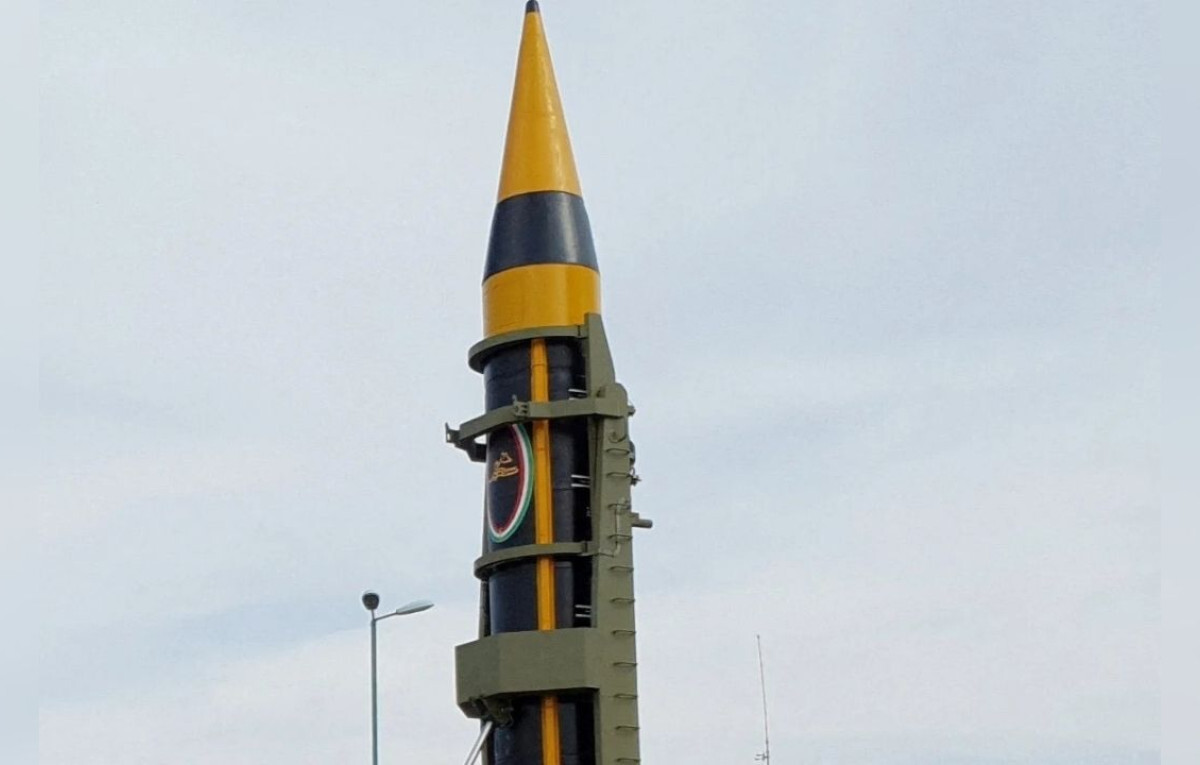
Amidst escalating geopolitical friction between Tehran and Washington, Iran has issued a stark ultimatum regarding the extensive network of United States military installations scattered across the Middle East. Iranian Foreign Minister Abbas Araghchi has delivered a direct warning: should the United States initiate any military action against Iranian sovereignty, every American base in the region will be designated as a primary target for Tehran’s ballistic missile arsenal.
In a candid interview with Al Jazeera, Araghchi acknowledged that while the American mainland remains beyond Iran’s conventional reach, the “regional footprint” of the US military is entirely vulnerable. This statement follows President Donald Trump’s recent decision to deploy a formidable naval strike group to the Persian Gulf—a move the White House describes as “peace through strength,” but which Tehran views as an intolerable provocation.
Iran currently commands the largest and most diverse missile inventory in the Middle East, estimated at over 2,000 short and medium-range ballistic missiles. Military analysts often describe this stockpile as Iran’s “Swiss Army Knife”—a versatile tool designed for both strategic deterrence and precision retaliation.
| Base Name | Location | Strategic Significance |
|---|---|---|
| Al Udeid Air Base | Qatar | Largest US airbase in the Middle East |
| NSA Bahrain | Bahrain | Headquarters for the US Navy’s 5th Fleet |
| Al Dhafra Air Base | UAE | Major hub for air operations and surveillance |
| Incirlik Air Base | Turkey | Strategic NATO/US tactical asset |
| Camp Arifjan | Kuwait | Major logistics and ground force hub |
Tehran’s advanced missile variants, such as the Khorramshahr and the Sejjil, possess operational ranges of approximately 2,000 kilometres. This puts every significant US facility from Iraq and Syria to Jordan and Saudi Arabia under what experts call Iran’s “missile shadow.”
The Pentagon has taken these threats with renewed gravity following Iran’s massive barrage of nearly 500 missiles launched toward Israel last year. While damage was contained, the sheer volume demonstrated Tehran’s ability to oversaturate even sophisticated air defence umbrellas. In response, the US has bolstered its regional posture by deploying THAAD (Terminal High Altitude Area Defense) and Patriot missile batteries across allied nations including Jordan and Kuwait.
Despite the bellicose rhetoric, back-channel negotiations are reportedly continuing in Oman regarding Iran’s nuclear programme. However, Araghchi has remained steadfast, asserting that Tehran will not compromise on uranium enrichment or its missile development. He clarified that these programmes, along with support for regional allies, are “non-negotiable pillars of national security.”
As President Trump maintains a posture of maximum pressure, the Middle East finds itself in a state of profound uncertainty. With Iran’s “finger on the trigger” and American carrier groups patrolling the Gulf, the margin for error has narrowed significantly, leaving analysts fearful that a single miscalculation could ignite a broader regional conflagration.



Comments