Sunday, 5th April 2026

Khabor Wala Desk
Published: 21st March 2026, 2:37 PM
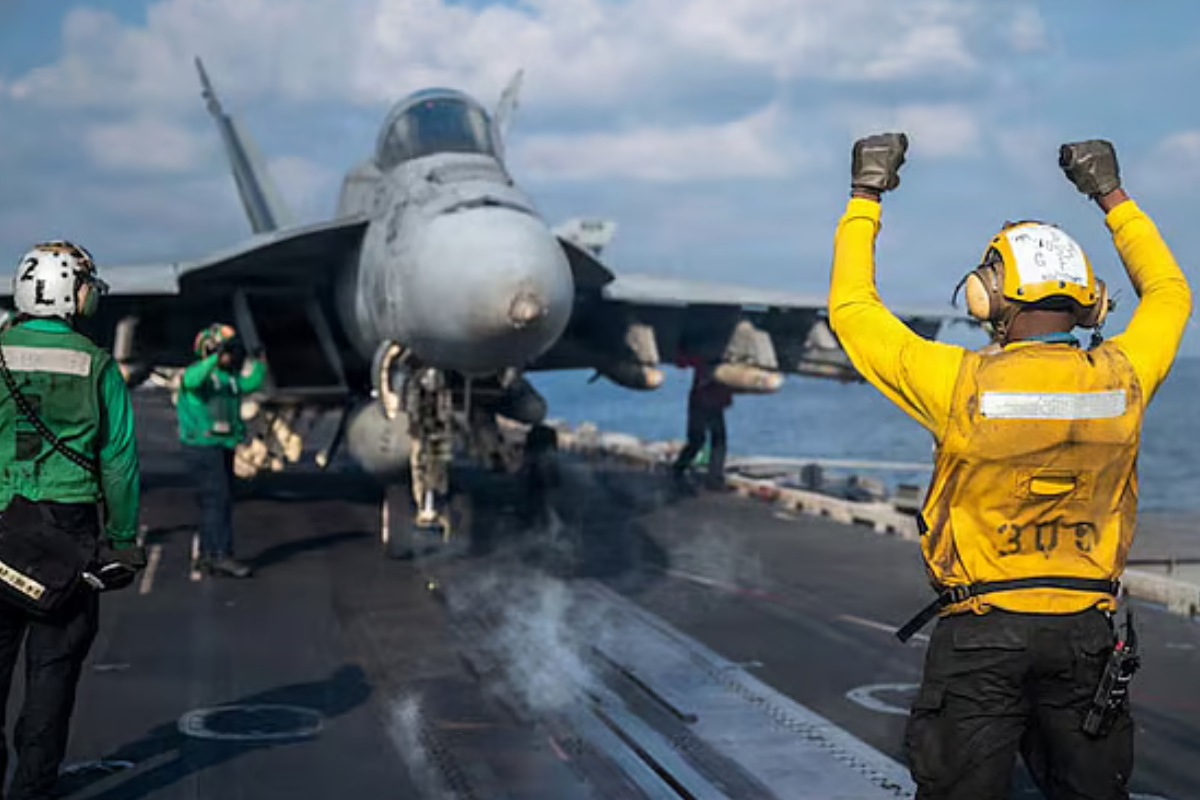
The United States is moving to reinforce its military posture in the Middle East by deploying amphibious warships and several thousand additional troops, amid ongoing tensions with Iran. According to three US officials who spoke to Reuters, the deployment is part of a broader effort to enhance operational readiness in the region rather than an immediate prelude to a ground invasion.
Officials emphasised that no final decision has been taken بشأن sending US ground forces directly into Iran. Instead, the current strategy focuses on strengthening capabilities for potential future operations, ensuring that American forces can respond swiftly to evolving threats across both maritime and land domains.
Central to this deployment is the amphibious assault ship USS Boxer, accompanied by a Marine Expeditionary Unit (MEU) and supporting naval vessels. An MEU typically comprises around 2,500 Marines, trained to conduct rapid-response missions ranging from humanitarian assistance to full-scale combat operations. Their versatility allows for coordinated air strikes from sea-based platforms as well as amphibious land assaults.
The timing of the move is notable, coinciding with deliberations within the administration of Donald Trump over whether to expand military operations in the region. Despite reports suggesting a possible escalation, President Trump publicly downplayed the prospect, remarking to journalists that he was not sending troops anywhere—while adding that, if he did, he would not necessarily disclose it in advance.
Sources speaking on condition of anonymity indicated that the precise role of the newly deployed troops remains undefined. However, one official confirmed that the forces departed from the US West Coast approximately three weeks earlier than originally scheduled, suggesting a heightened sense of urgency within military planning circles.
Neither the White House nor the Pentagon has issued an official statement regarding the deployment. The additional forces will augment an existing US military presence of roughly 50,000 personnel across the Middle East. With the arrival of the new unit, the number of Marine Expeditionary Units in the region will increase to two, significantly boosting rapid-response capabilities.
Below is a summary of the current and projected US military presence in the region:
| Component | Current Status | After Deployment |
|---|---|---|
| Total US Troops | ~50,000 | Expected to increase |
| Marine Expeditionary Units | 1 | 2 |
| Personnel per MEU | ~2,500 | Unchanged |
| Amphibious Assault Ships | Limited presence | USS Boxer added |
Strategically, the deployment aligns with contingency plans developed after hostilities escalated on 28 February. Among the options under consideration is positioning US forces near Iran’s coastline to ensure the safety of shipping lanes through the Strait of Hormuz—a critical artery for global energy supplies.
Another potential targets is Kharg Island, a vital Iranian oil hub in the Persian Gulf, responsible for processing approximately 90 per cent of the country’s oil exports. Securing or monitoring this A look at the region would carry significant economic and geopolitical implications.
However, any decision to send ground troops into Iran carries substantial political risk for the Trump administration. Public support for military escalation remains limited. A recent Reuters/Ipsos poll found that around 65 per cent of Americans believe the President may authorise a large-scale ground war, yet only 7 per cent support such action.
This apparent disconnect underscores the delicate balance facing US policymakers—between projecting abroad and maintaining domestic political legitimacy. As tensions persist, the evolving US military posture in the Middle East is likely to remain under close international scrutiny.



Comments