Sunday, 5th April 2026

Khabor Wala Desk
Published: 4th March 2025, 9:35 AM
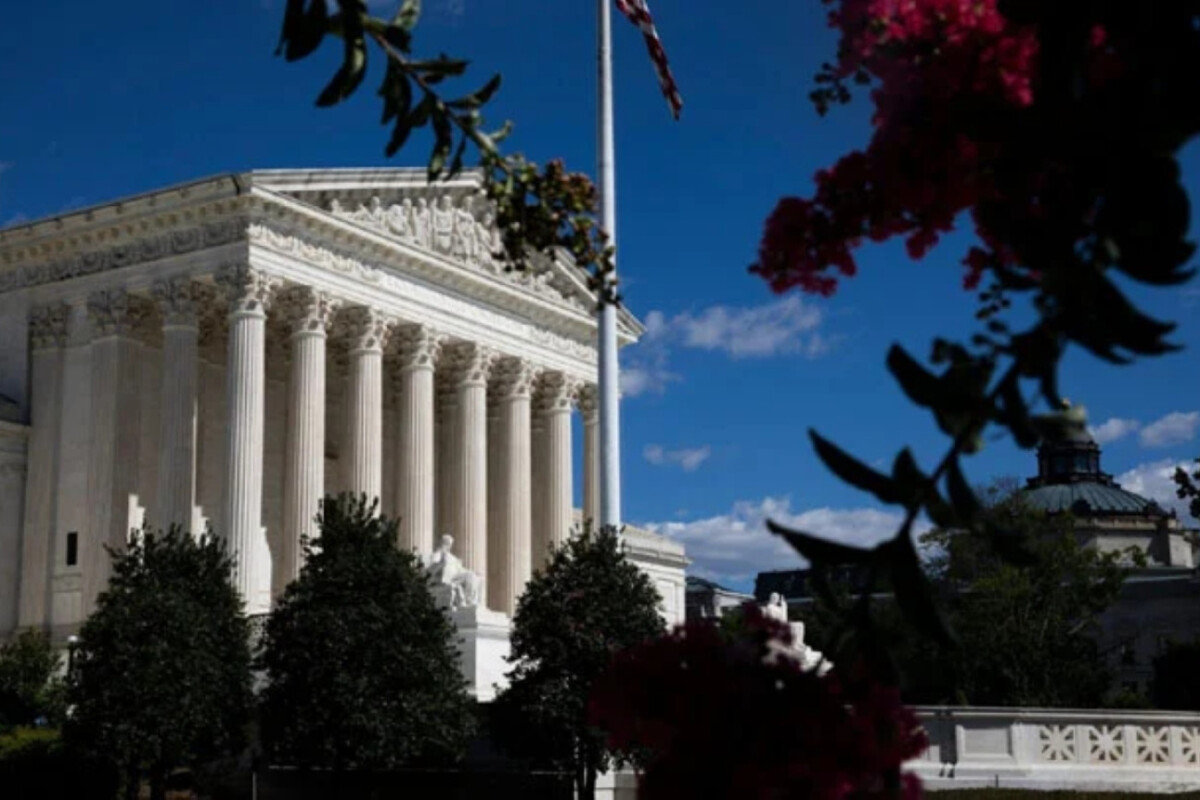
WASHINGTON, 4 March 2025 (BSS/AFP) – The United States Supreme Court is set to hear arguments on Tuesday in a $10 billion lawsuit filed by Mexico, accusing American gun manufacturers of exacerbating drug trafficking and violence.
The lawsuit, first filed in 2021, alleges that companies such as Smith & Wesson and the US firearms distributor Interstate Arms have engaged in “negligent and illicit” practices that enable weapons to flow illegally into Mexico, fuelling cartel-related violence.
Legal Battle Over Gunmakers’ Liability
Smith & Wesson and Interstate Arms are seeking the dismissal of the case, which was initially thrown out by a federal judge in 2022. The judge ruled that Mexico’s claims failed to overcome the extensive protections granted to US gun manufacturers under the Protection of Lawful Commerce in Arms Act (PLCAA), a 2005 law that shields firearm producers from liability when their products are used in crimes.
However, an appeals court later revived the case, citing an exception to the PLCAA, prompting the gun manufacturers to seek relief from the Supreme Court. The court, with a 6-3 conservative majority and a history of broad support for gun rights, will now determine whether the lawsuit can proceed.
Mexico’s Claims and the US Response
Mexico, under increasing pressure from US President Donald Trump to curb drug trafficking, maintains that between 200,000 and 750,000 US-made firearms are smuggled into the country each year, with an estimated 70-90 per cent of weapons recovered from crime scenes originating from the United States.
The Mexican government argues that these weapons play a critical role in cartel-related violence, which has resulted in approximately 480,000 deaths since the country deployed military forces to combat drug trafficking in 2006.
“Mexico simply seeks to halt the unlawful flow of guns into Mexico,” stated lawyers representing the government, emphasising that the lawsuit is “not a platform for a debate about Americans’ right to bear arms.”
In response, Smith & Wesson and Interstate Arms contend that manufacturers cannot be held responsible for the criminal misuse of their legally produced firearms.
“When a company engages in routine business practices to supply lawful products to market, it is not responsible for downstream crimes involving those products,” their lawyers argued. They warned that a ruling in Mexico’s favour could “eviscerate” the PLCAA and set a precedent for future lawsuits against US gunmakers.
Rising Diplomatic Tensions
The case comes amid growing diplomatic tensions between the United States and Mexico over gun violence and drug trafficking.
Last month, Mexican President Claudia Sheinbaum warned US gunmakers that they could face further legal action and be deemed “accomplices” if Washington proceeded with plans to designate Mexican drug cartels as terrorist organisations.
Despite this warning, on 20 February, the US State Department officially designated Mexico’s two most powerful drug trafficking organisations—the Jalisco New Generation Cartel (CJNG) and the Sinaloa Cartel—as foreign terrorist groups, alongside several smaller criminal syndicates.
Sheinbaum reacted strongly to these developments, rejecting accusations from Washington that her government had ties to drug cartels.
“We categorically reject the slander made by the White House against the Mexican government about alliances with criminal organisations,” she wrote on social media. “If there is such an alliance anywhere, it is in the US gun shops that sell high-powered weapons to these criminal groups.”
Trade and Security Concerns
Tensions between the two nations further escalated when President Trump imposed a 25 per cent tariff on Mexican imports, citing concerns over illegal immigration and the flow of fentanyl into the United States. Although Sheinbaum initially vowed retaliatory tariffs, Trump agreed to pause the measure for one month—a deadline that expires today—in exchange for Mexico deploying an additional 10,000 troops to its northern border.
In a significant move last week, Mexico extradited several high-profile cartel leaders to the United States, including a notorious drug lord wanted for decades over the murder of a US undercover agent.
With both trade and security relations at stake, the Supreme Court’s ruling on Mexico’s lawsuit could have far-reaching implications—not only for US gun manufacturers but also for broader diplomatic ties between the two nations.



Comments