Sunday, 5th April 2026

Khabor Wala Desk
Published: 1st February 2026, 2:25 PM
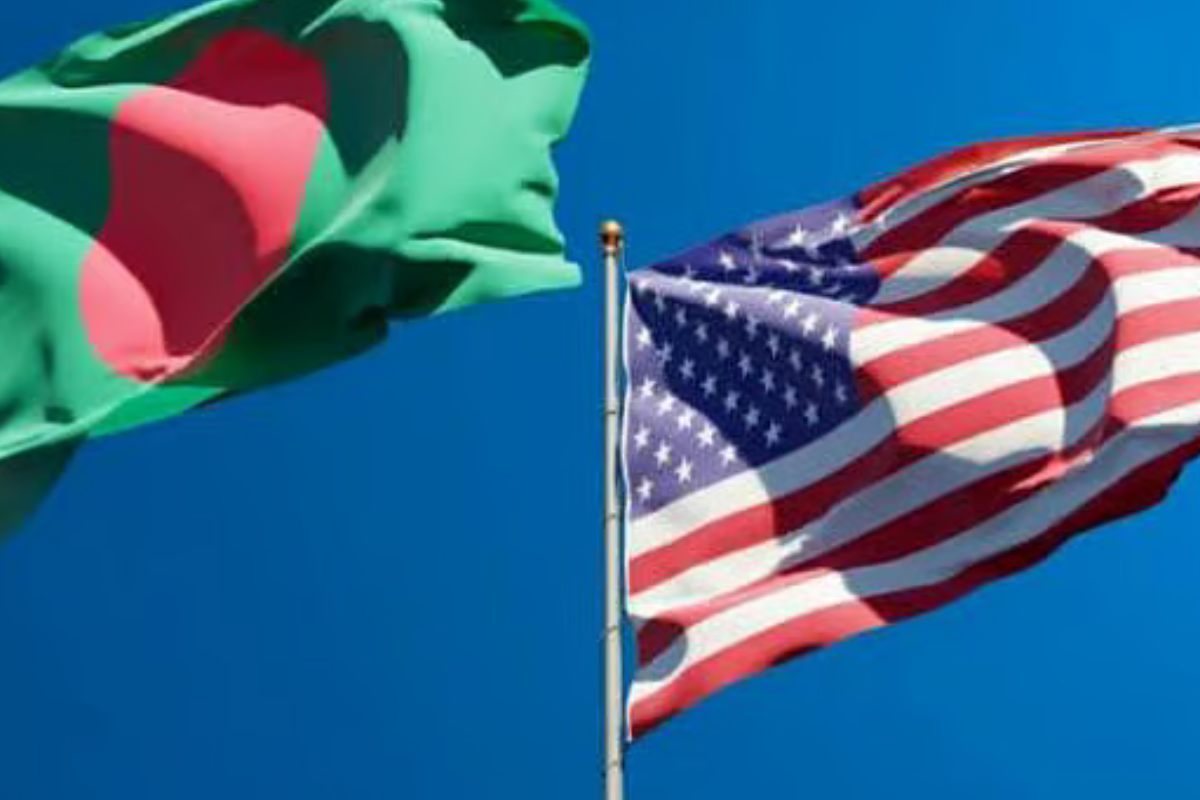
Bangladesh’s interim government is set to conclude a tariff agreement with the United States just three days before the forthcoming national parliamentary election, underscoring an assertive push to stabilise external trade relations amid political transition. The signing ceremony is scheduled for 9 February in Washington, DC, with the Bangladeshi delegation to be led by the Adviser for Commerce, Sheikh Bashir Uddin.
Officials said the agreement would formalise understandings reached in August regarding a 20 per cent reciprocal tariff imposed by the United States on certain Bangladeshi exports. Although the two sides previously settled the broad framework of the tariff structure, the accord was not signed at the time. The forthcoming ceremony is expected to convert that political understanding into a binding arrangement, potentially creating scope for adjustments to the tariff rate and procedural relief for exporters.
The Bangladeshi delegation, comprising the commerce adviser and Commerce Secretary Mahbubur Rahman, is due to depart Dhaka on 5 February. The visit forms part of a wider trade diplomacy itinerary. The delegation will first travel to Tokyo, where Bangladesh and Japan are scheduled to sign a bilateral Economic Partnership Agreement (EPA) on 6 February. From Japan, the delegation will proceed to Washington to conclude the US tariff accord. Officials at the Ministry of Commerce said the twin engagements reflect Dhaka’s effort to diversify market access while navigating a challenging global trade environment marked by protectionist measures and tighter compliance requirements.
Speaking to reporters at the Secretariat, Commerce Secretary Mahbubur Rahman confirmed that Washington had proposed 9 February as the signing date. He said the draft agreement and a summary note seeking formal approval had already been submitted to the competent authorities. On the likely tariff outcome, he noted that the current reciprocal rate stood at 20 per cent. “Some countries face the same rate, while others are subject to higher duties. We are hopeful of securing some reduction, but nothing can be confirmed until the agreement is finalised,” he said. The government has yet to issue a detailed public briefing on the final terms.
The Tokyo agreement is expected to deliver immediate commercial gains. According to the Ministry of Commerce, upon entry into force, 7,379 Bangladeshi products will receive duty-free access to the Japanese market, while 1,039 Japanese products will enjoy similar treatment in Bangladesh. The EPA is viewed as particularly significant for Bangladesh’s export diversification strategy, given Japan’s high-value consumer market and stringent standards.
Projected Market Access under Bangladesh–Japan EPA
| Direction of Trade | Products with Duty-Free Access |
|---|---|
| Bangladesh to Japan | 7,379 |
| Japan to Bangladesh | 1,039 |
Responding to questions about whether India’s recently concluded free trade agreement with the European Union could undermine Bangladesh’s competitiveness, the commerce secretary played down any immediate risk. He noted that Bangladesh has established itself as the world’s second-largest exporter of ready-made garments, while India also maintains a strong global presence in textiles. “There is room for both countries in international markets. Moreover, Bangladesh sources a substantial volume of raw materials from India, which underscores the interdependence of regional supply chains,” he said.
Analysts suggest that, taken together, the US tariff accord and the Japan EPA could help cushion Bangladesh against shifting trade preferences and intensifying competition, while providing exporters with clearer rules and potentially improved market access at a politically sensitive moment for the country.


Comments