Sunday, 5th April 2026

Khabor Wala Desk
Published: 25th March 2025, 8:39 AM
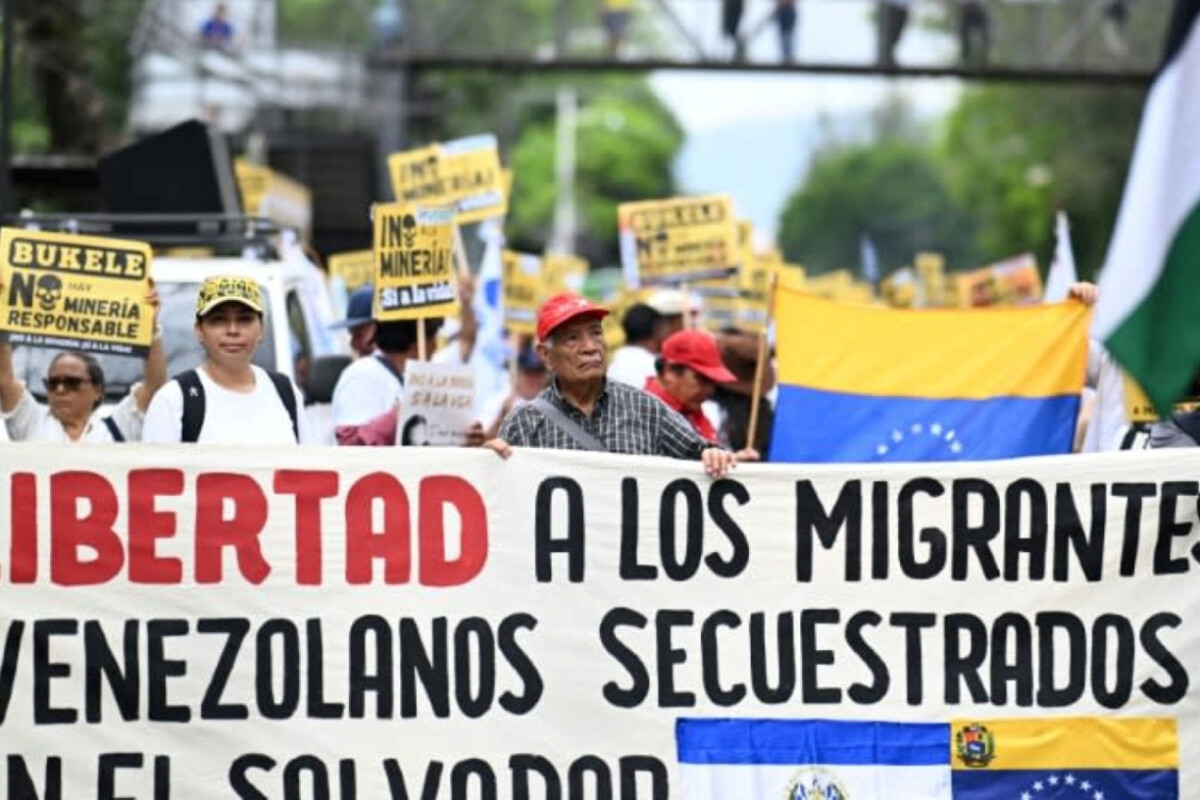
SAN SALVADOR, 25 March 2025 (BSS/AFP) – A legal team commissioned by Caracas has submitted a petition to El Salvador’s Supreme Court, seeking the release of 238 Venezuelans who were deported from the United States and detained in a high-security prison in the Central American nation.
Invoking rarely-used wartime legislation, US President Donald Trump ordered the transfer of the men to El Salvador on 16 March without a court hearing, accusing them of belonging to the violent Tren de Aragua gang. Their families and legal representatives have strongly denied these allegations.
Despite a US federal judge issuing a temporary suspension of the deportation order, the men were forcibly taken in chains, with their heads freshly shaven, to El Salvador’s maximum-security Terrorism Confinement Centre (CECOT).
On Monday, lawyer Jaime Ortega filed a habeas corpus petition, demanding justification for the continued detention of the migrants.
“They have not committed any crimes in our country,” Ortega stated at the court, while hundreds of demonstrators gathered elsewhere in San Salvador to demand the release of the Venezuelans.
Ortega confirmed that his services had been retained by the Venezuelan government and a committee of the detainees’ relatives. While he officially represents families of 30 detainees, he expressed commitment to securing the release of the entire group.
Venezuelan President Nicolás Maduro has condemned the detentions, claiming the men were “kidnapped.”
“A week after being sent to concentration camps, neither the United States government nor Nayib Bukele has published a list of who they have abducted in El Salvador,” Maduro said during a televised address, referring to the Salvadoran president.
President Bukele, widely praised domestically for his stringent measures against gang violence, has overseen the incarceration of tens of thousands of suspected criminals at CECOT, a facility built specifically for his anti-crime campaign. However, human rights organisations have raised concerns about alleged abuses in his crackdown.
Numerous habeas corpus petitions have been submitted to El Salvador’s Supreme Court over detentions linked to Bukele’s anti-gang operations, but very few have received a response.
Following his rise to power, Bukele reshaped the judiciary by replacing senior judges and the attorney general. The reconstituted Supreme Court, now aligned with his administration, overturned constitutional limits to allow his reelection bid, which he won last year.
“Bukele already violates the human rights of thousands of Salvadorans… and now he is preparing to do the same to these Venezuelans, who have not been proven guilty of any crime,” said protester Antonio Medrano, 47, at Monday’s demonstration in the capital.
Context:
El Salvador’s Terrorism Confinement Centre (CECOT) has been at the centre of global scrutiny due to its harsh conditions and mass incarceration policies. President Bukele’s aggressive anti-gang measures have significantly reduced violent crime in the country, earning him widespread support at home. However, human rights organisations, including Amnesty International and Human Rights Watch, have frequently criticised his administration for alleged abuses, including arbitrary detentions and lack of due process.


Comments