Sunday, 5th April 2026

Khabor Wala Desk
Published: 7th January 2026, 12:24 PM
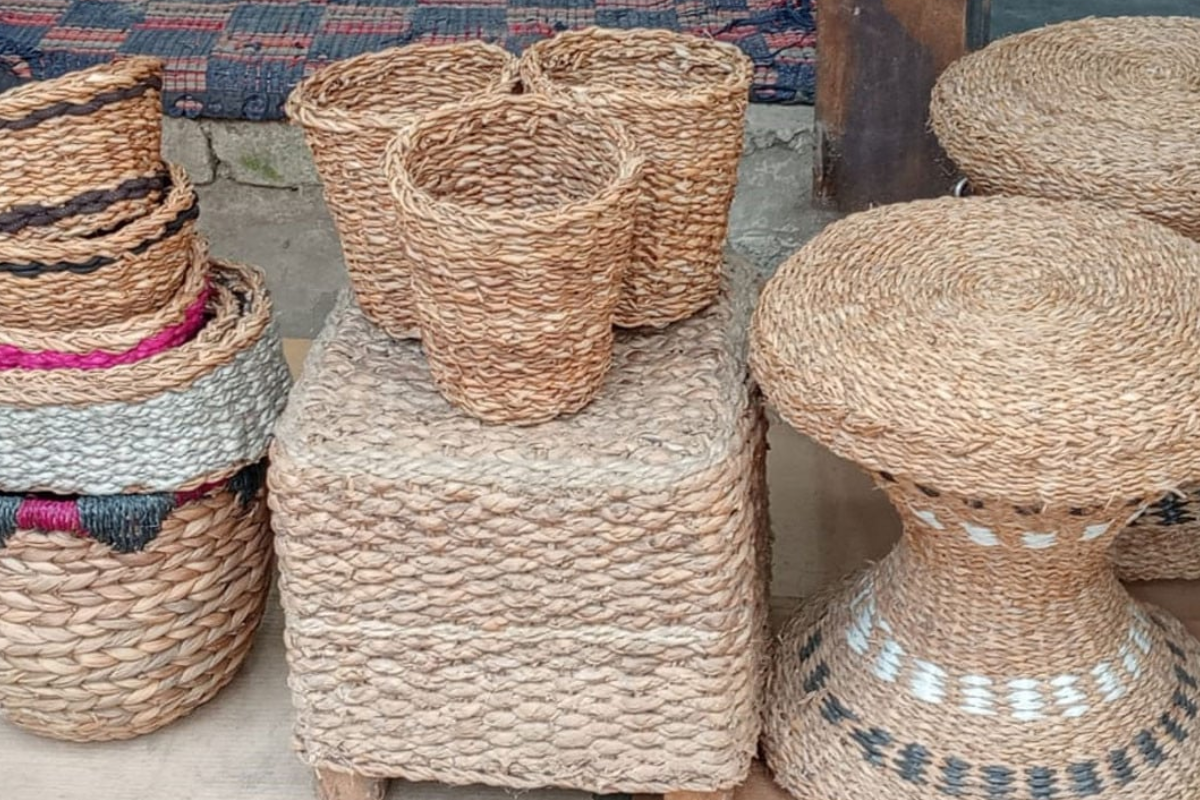
Once considered a nuisance in Bangladesh’s ponds and wetlands, the water hyacinth—locally known as kachuripana—has now transformed into a source of livelihood and opportunity for many. Resembling delicate orchid flowers, the plant remains relatively unfamiliar to most citizens, yet it is steadily gaining recognition for its multifaceted uses.
Historical records suggest that the water hyacinth was introduced to Bengal in the late 18th century by a Brazilian traveller. Within a short period, it spread rapidly across almost all ponds and water bodies in the country. Its fast proliferation initially led locals to view it as a burden, but this perception is gradually changing in regions such as Khord Muradpur village, Paikraband, Mithapukur Upazila, Rangpur District.
At the Begum Rokeya Memorial Handicrafts Showroom, situated beside the birthplace of the renowned social reformer Begum Rokeya, artisans are now producing a wide range of handicrafts using the stalks of the water hyacinth. These include decorative baskets, flower pots, mats, and souvenir items, all crafted meticulously by local women and unemployed youths.
| Product Type | Price Range (BDT) | Purpose / Use |
|---|---|---|
| Decorative Basket | 150–250 | Home decoration, souvenirs |
| Flower Pots | 200–400 | Indoor and outdoor décor |
| Fruit Baskets | 300–550 | Storage and gifting |
| Miscellaneous Handicrafts | 200–500 | Household and artistic items |
Parveen Begum, the showroom manager, explained that many impoverished women and unemployed youths are becoming self-reliant through this craft, transforming their livelihoods in the process. Visitors to the Begum Rokeya Memorial often purchase these products as mementos.
Abid Karim Munna, Deputy Director of the Begum Rokeya Memorial under the Ministry of Cultural Affairs and managed by the Bangla Academy, highlighted the plant’s extensive utility. “The flowers, leaves, and roots of the water hyacinth have multiple applications. It is highly effective in water purification,” he said.
He added that across Asia, the plant is increasingly being incorporated into culinary practices—either boiled or cooked in various dishes. It is also used in aquaculture, as animal fodder, organic fertiliser, and even in civil engineering applications, such as filling road potholes, retaining water on newly paved roads, and reinforcing concrete posts.
Medical experts and herbal practitioners further emphasise the plant’s health benefits, which include improving skin glow, treating eczema, enhancing hair health, alleviating dental and throat pain, regulating cholesterol, boosting lactation, addressing irregular menstruation, aiding weight management, and reducing haemorrhage.
Rafiqul Islam Dulal, General Secretary of the Begum Rokeya Memorial Library, observed that in different parts of Bangladesh, dried water hyacinth stalks are now being transformed into bags, mats, and other artisanal products. “What was once considered a weed is now an economic asset,” he said.
Today, the water hyacinth exemplifies how an environmental challenge can evolve into a sustainable source of income, health benefits, and creative enterprise.




Comments