Sunday, 5th April 2026

Khabor Wala Desk
Published: 24th January 2026, 12:39 AM
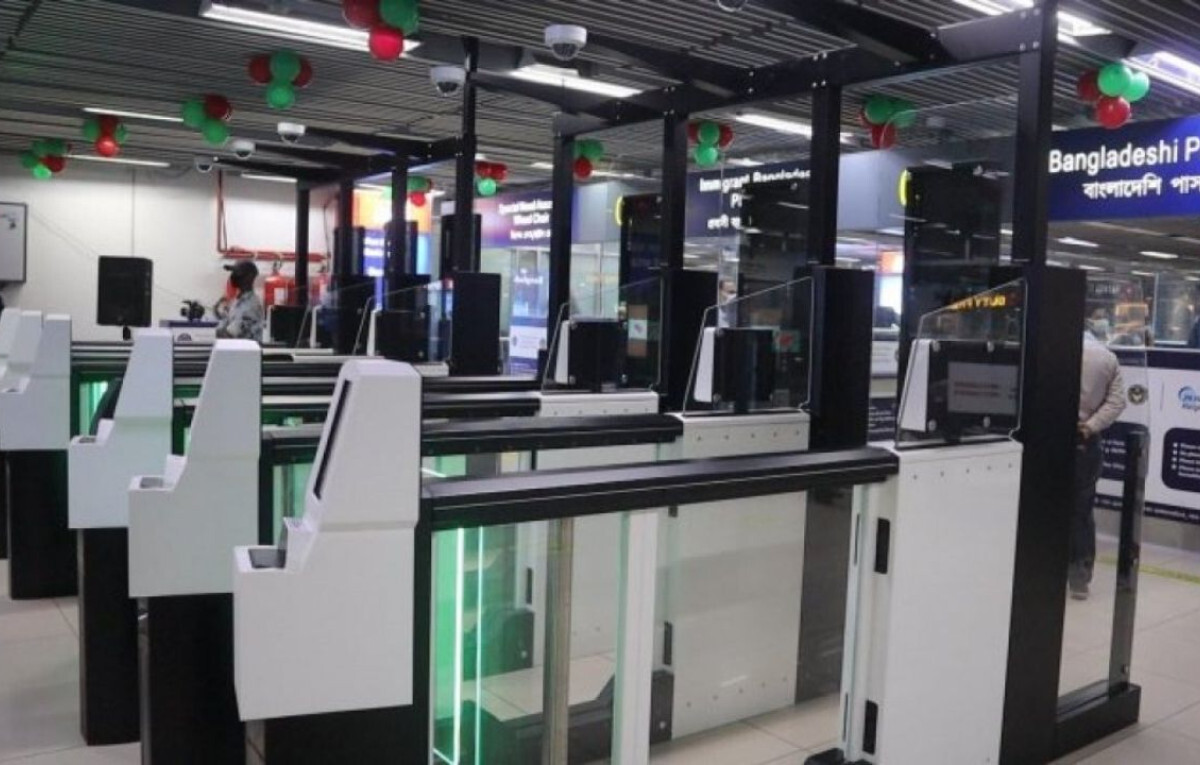
Despite a staggering investment of 34.56 crore BDT, the 44 electronic gates (e-gates) installed at Bangladesh’s premier international airports and land ports have become a symbol of systemic inefficiency. Designed to revolutionise border control, these high-tech installations are currently gathering dust, forcing passengers with biometrically enhanced e-passports to endure the very manual queues the system was intended to eliminate.
The e-gates, installed by the German firm Veridos GmbH, were marketed with the promise of completing immigration formalities in just 18 seconds. However, recent field visits to Hazrat Shahjalal International Airport (HSIA) in Dhaka reveal a starkly different reality. The gates are largely non-functional, and travellers are redirected to traditional desks where manual verification of visas and entry permits continues as it did decades ago.
“We were told e-passports were the future,” said Liton Kabir, a passenger bound for Singapore. “Public money was spent on these gates, yet we are still standing in lines for hours. It is a heartbreaking waste of national resources.”
| Location | Number of E-Gates | Current Operational Status |
|---|---|---|
| HSIA (Dhaka) | 26 | Suspended (Departure) |
| Shah Amanat (Chattogram) | 6 | Inactive |
| Osmani (Sylhet) | 6 | Inactive |
| Benapole Land Port | 4 | Partially Active |
| Banglabandha Land Port | 2 | Inactive |
| Total Project Cost | 9,038 crore BDT | (Escalated from 4,635 crore) |
| Specific E-Gate Cost | 34.56 crore BDT |
The e-gate installation was part of the broader “Introduction of E-Passport and Automated Border Control Management” project. Originally budgeted at 4,635 crore BDT, the project cost inexplicably ballooned to 9,038 crore BDT.
The primary technical hurdle lies in a lack of data integration. While the e-gates can verify the authenticity of an e-passport, they are not linked to a comprehensive visa database. Consequently, immigration officers must still manually check a passenger’s visa, airline details, and destination—information the e-gate software currently fails to process autonomously.
“If a passenger uses the e-gate, they end up having to go to a manual desk anyway to verify their visa,” explained a senior immigration official. “It creates a double burden. Often, the data from the gate fails to sync with our primary immigration software, causing delays that leave passengers furious.”
Group Captain S.M. Ragib Samad, Executive Director of HSIA, confirmed that the gates remain closed largely due to a directive from the Ministry of Home Affairs. “The gates currently only verify passport data, not visas. We have pushed for a reactivation, but for now, they remain shut following orders from the Home Advisor,” he stated.
Aviation expert Kazi Wahidul Alam criticised the lack of foresight. “In countries like Singapore, digital immigration is seamless and requires almost no manpower. Our authorities invested billions without ensuring the software was fit for purpose. If these gates remain unused, the hardware will deteriorate, leading to even higher maintenance costs in the future.”
While Benapole Land Port maintains a limited functional service, the nation’s primary air gateways remain stalled. For a country that prides itself on being the first in South Asia to adopt e-passports, the silent e-gates at Dhaka airport serve as a poignant reminder of the gap between technological ambition and administrative execution.




Comments