Sunday, 5th April 2026

Khabor Wala Desk
Published: 14th December 2025, 12:23 PM
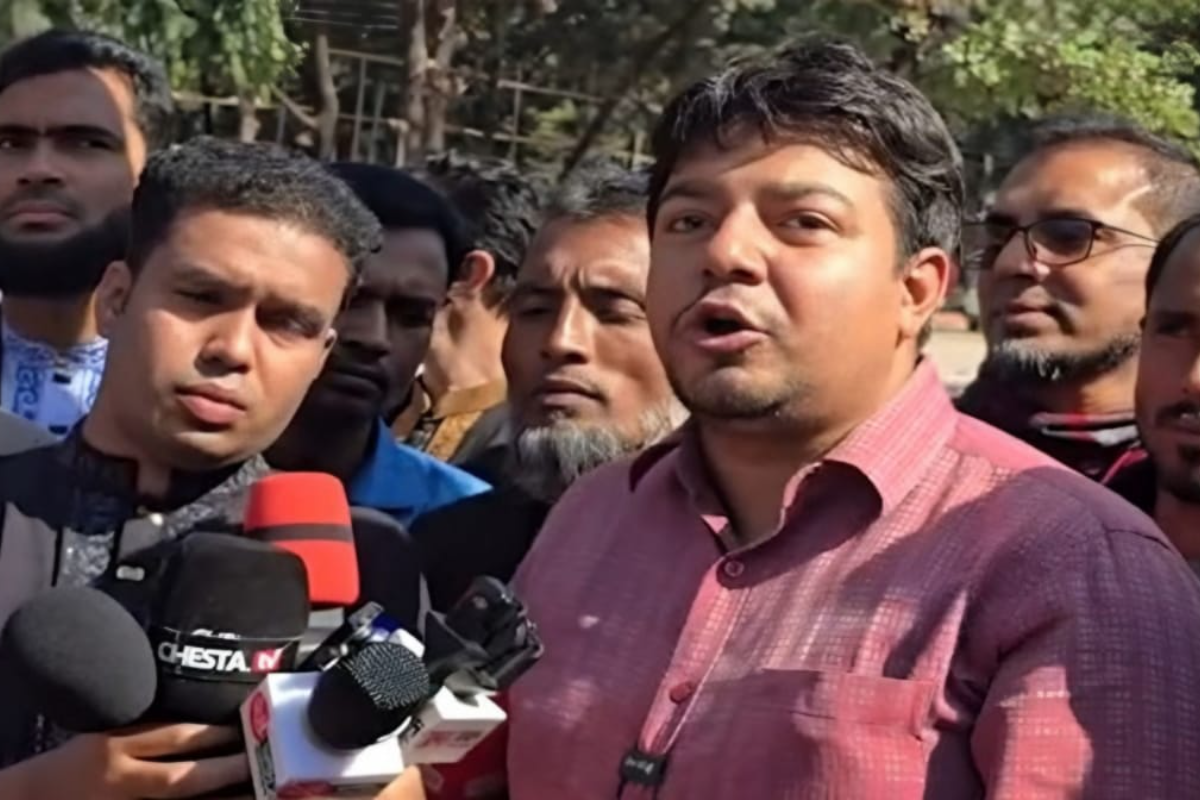
Fresh controversy has emerged surrounding one of the darkest chapters of Bangladesh’s Liberation War, as senior political figures renew allegations concerning the systematic killing of intellectuals in 1971. Tarik Rahman, Member Secretary of the Amjanata Party, has asserted that Jamaat-e-Islami and its affiliated student organisation, Islami Chhatra Sangha, played a direct role in supplying the Pakistani occupation forces with a list of Bengali intellectuals—individuals who were later executed in a calculated campaign of terror.
Speaking on Sunday, 14 December, at a discussion meeting and wreath-laying ceremony held near the National Martyrs’ Memorial in Dhaka to mark Martyred Intellectuals’ Day, Rahman described the killings as neither spontaneous nor incidental. Rather, he characterised them as part of a deliberate strategy aimed at crippling the emerging nation by eliminating its finest minds at the final stage of the Liberation War.
According to Rahman, the names found in the diary of Pakistani army officer Rao Farman Ali—long cited in historical discourse—did not appear by chance. “These lists were compiled with local collaboration,” he said, alleging that Jamaat-e-Islami and Chhatra Sangha were instrumental in identifying and handing over prominent academics, physicians, journalists, writers, and cultural figures to the Pakistani military. Many of those named were subsequently abducted and killed in the days leading up to Bangladesh’s independence.
Rahman further accused certain quarters of attempting to obscure or dilute historical responsibility even decades after independence. He claimed that narratives are being deliberately constructed to minimise the crimes of the Pakistani army and their local collaborators, thereby distorting the historical record of the Liberation War.
“Martyred Intellectuals’ Day should be a moment of collective mourning, reflection, and moral reckoning,” Rahman observed. “Yet regrettably, it has become an occasion for some to engage in historical revisionism. This is not merely an insult to the martyrs—it is a betrayal of the nation itself.”
He also drew attention to the enduring trauma borne by the families of the slain intellectuals, emphasising that their sacrifices cannot be denied or forgotten. Rahman urged the state to adopt a more proactive role in countering misinformation related to the Liberation War, stressing the importance of academic research, preservation of archival evidence, and the dissemination of verified historical facts to younger generations.
The remarks have once again brought the issue of accountability and historical memory to the forefront of public debate, reinforcing the call for truth, documentation, and education as essential components of national reconciliation.
| Category | Details |
|---|---|
| Speaker | Tarik Rahman |
| Position | Member Secretary, Amjanata Party |
| Occasion | Martyred Intellectuals’ Day |
| Date | 14 December |
| Venue | National Martyrs’ Memorial area, Dhaka |
| Core Allegation | Supplying lists of intellectuals to Pakistani forces |
| Accused Groups | Jamaat-e-Islami, Islami Chhatra Sangha |
| Historical Context | Bangladesh Liberation War, 1971 |
Rahman’s statement has renewed scrutiny of unresolved historical questions surrounding the intellectual killings of 1971. As debates continue, many argue that safeguarding historical truth and confronting uncomfortable realities remain essential to honouring those who paid the ultimate price for Bangladesh’s independence.

Comments