Sunday, 5th April 2026

Khabor Wala Desk
Published: 11th September 2025, 3:45 AM
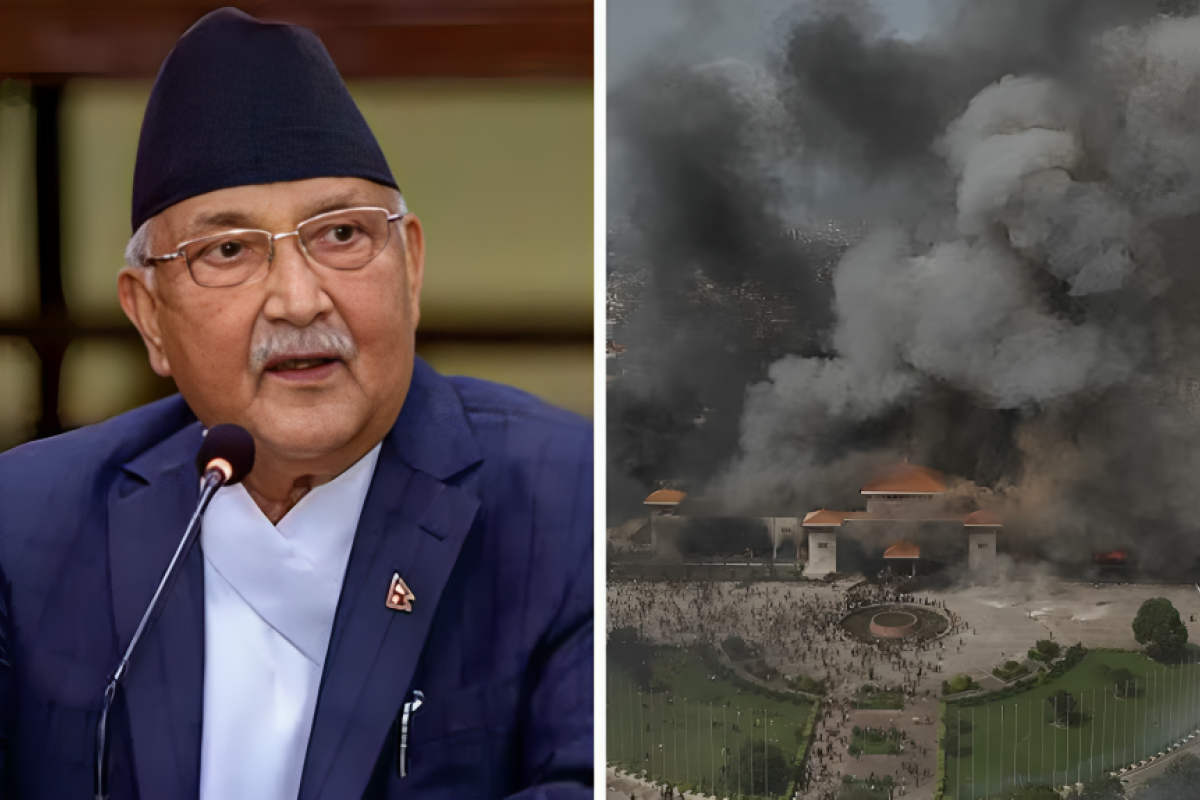
Nepal’s former Prime Minister, K. P. Sharma Oli, has claimed that he lost his premiership because he challenged India on sensitive issues.
On Wednesday, 10 September, Oli sent a letter to the General Secretary of his own party, directly blaming India for his removal from power.
A day earlier, on Tuesday, 9 September, Oli was forced to resign amid Gen-Z protests. Rumours spread that he had fled the country, but he remains in Nepal, currently staying at the Shivapuri military barracks.
Oli stated: “Had I not raised questions regarding the Lipulekh region, and had I not spoken about Ayodhya and Lord Ram, I might have remained in power. I lost my position because I opposed the claim that Lord Ram was born in Ayodhya.”
The dispute between India and Nepal centres on the Lipulekh mountain pass, rooted in the territorial conflict over the Kalapani region.
During Oli’s premiership, his government adopted a firm stance, declaring: “Limpiyadhura, Lipulekh, and Kalapani, east of the Mahakali River, are inseparable parts of Nepal.”
Following this declaration:
In July 2020, Oli sparked major controversy by claiming that Lord Ram was born in Nepal, not India.
He argued:
Oli further remarked: “We hold a misconception that Sita married an Indian Ram. But Ram was not Indian; he was Nepalese. How could Ram have travelled from Uttar Pradesh in India to Janakpur to wed Sita, when in ancient times long-distance marriages were unheard of? There were no telephones either, so how could they have communicated? Back then, marriages took place between neighbouring kingdoms, not across distant lands.”
These statements provoked widespread criticism in India, adding fuel to the already tense diplomatic relations.
| Issue | Oli’s Position | Reaction |
| Lipulekh, Kalapani, Limpiyadhura | Declared as inseparable parts of Nepal | India rejected the claim; continued road-building and trade |
| Lord Ram’s birthplace | Claimed Ram was born in Nepal (Birgunj) not India (Ayodhya) | Triggered strong backlash in India |
| Reason for losing power | Said he was ousted for opposing India’s narrative on Ram and Lipulekh | Blamed India in a party letter |
Source: India Today


Comments