Monday, 6th April 2026

Khabor Wala Desk
Published: 2nd March 2026, 2:18 PM
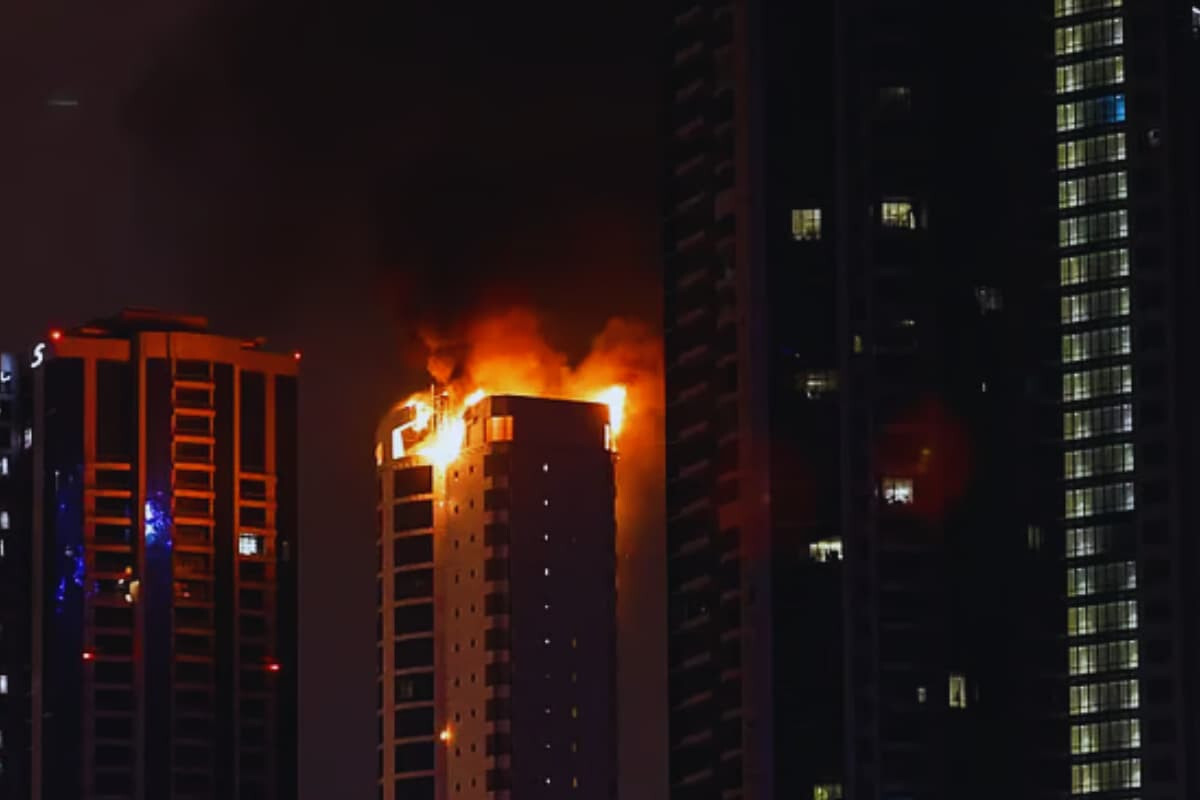
A succession of Iranian missile strikes on Doha, Abu Dhabi, Dubai and Manama has shaken not only glass towers and airport terminals, but also the carefully cultivated image of stability that Gulf states have projected to the world for decades. Qatar, the United Arab Emirates and Bahrain had long sought to insulate themselves from the turbulence of the wider Middle East. That ambition now appears increasingly difficult to sustain.
The region faces an unenviable choice: retaliate and risk open alignment with Israel in a widening war, or refrain from escalation while absorbing further strikes on their own soil. The strategic calculus is complicated by the presence of American military installations across the Gulf, which Tehran has cited as legitimate targets.
Monica Marks, a professor of Middle East politics at New York University Abu Dhabi, observed that for citizens and policymakers alike, witnessing bombardments in Manama, Doha or Dubai feels as surreal as Americans seeing missiles fall on Charlotte or Seattle. In her assessment, Gulf leaders had anticipated a gradual escalation and worked diplomatically to prevent it.
Last Saturday, Israel and the United States launched coordinated strikes inside Iran, reportedly killing senior figures including Ali Khamenei and other high-ranking military officials. Iranian military and governmental infrastructure was targeted, and reports indicate heavy civilian casualties, including children, after a strike on a school. Tehran responded with missile and drone attacks directed at Israel and at US-linked military facilities across the Gulf.
Initial casualty figures suggest three fatalities and at least 58 injuries in the United Arab Emirates. Qatar has reported 16 injured, Oman five, Kuwait 32 and Bahrain four. Saudi Arabia stated that missiles struck Riyadh and parts of its Eastern Province. Debris from intercepted projectiles has damaged key buildings and airports in Dubai, Manama and Kuwait City, while smoke was seen rising in parts of Doha.
| Country | Reported Casualties | Notable Damage |
|---|---|---|
| United Arab Emirates | 3 dead, 58 injured | Airport and commercial structures damaged |
| Qatar | 16 injured | Smoke and limited infrastructure damage |
| Kuwait | 32 injured | Airport struck by falling debris |
| Bahrain | 4 injured | High-rise buildings partially damaged |
| Oman | 5 injured | Minor infrastructure impact |
| Saudi Arabia | Not specified | Missiles reported in Riyadh and East |
The Gulf states had sought to avert precisely this scenario. In the weeks preceding the escalation, Oman facilitated indirect talks between Tehran and Washington. Badr Albusaidi, Oman’s Foreign Minister, described peace as “within reach” only hours before hostilities intensified, suggesting Iran was prepared to curb its enriched uranium stockpile.
Marks argues that Gulf Cooperation Council states recognised that a cornered Iran might retaliate against its neighbours before conceding defeat. Their immediate concern now centres on vulnerable infrastructure: electricity grids, desalination plants and energy facilities. In a region defined by extreme heat and aridity, disruption to water purification and power supplies would constitute a humanitarian and economic nightmare.
Rob Geist Pinfold of King’s College London suggests the Middle East may be witnessing a return to overt state-versus-state warfare, rather than proxy conflicts and “grey zone” tactics that dominated recent decades.
Gulf capitals are urgently recalibrating their strategies. Much depends on Tehran’s next move. Remaining outside the conflict is the preferred option, yet repeated missile strikes on their glittering skylines are narrowing that space. Whether restraint or retaliation prevails may determine if the region slides into a broader interstate war.


Comments