Monday, 6th April 2026

Khabor Wala Desk
Published: 8th February 2026, 5:29 AM
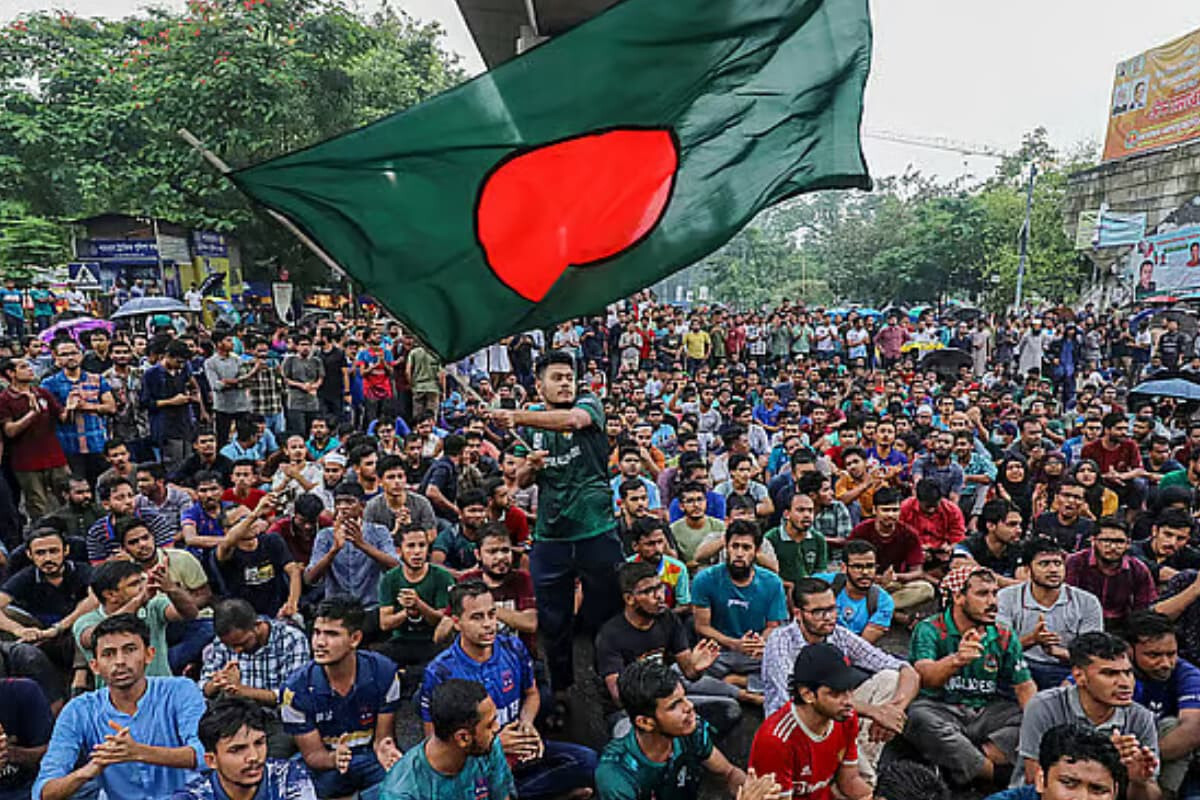
Political analysts in Bangladesh believe that the role of young voters in the upcoming national election is set to be decisive. Across online forums, social media platforms, and offline debates, the country’s youth are actively engaging in discussions, scrutinising policies, and even stepping forward as candidates themselves. First-time voters, in particular, are approaching the election with a strong sense of civic responsibility and awareness of their democratic duty.
Arpa Barua, a student at the Institute of Education and Research, University of Chittagong, reflected on her experience: “Casting my vote is both a new and significant experience. Although I have some concerns regarding safety, it is also an exhilarating moment and an opportunity to participate responsibly.”
A survey of twenty first-time voters from various universities indicates that eight have already made their voting decisions, while twelve remain in the process of observation and analysis. The primary factors influencing these decisions include social media, peer and family advice, and candidates’ policies and activities.
| University | Student | Voting Decision | Primary Influence |
|---|---|---|---|
| University of Chittagong | Arpa Barua | Observing | Sense of duty, safety concerns |
| Jagannath University | Mahbubul Hasan | Decided | Political context, future expectations |
| North South University | Suraiya Safia | Observing | Social media, teacher guidance |
| Canadian University | Nusrat Jahan | Observing | Verification of information, personal judgment |
| Hazi Mohammad Danesh University | Jannatul Ferdous | Observing | Parents’ advice |
| Bangladesh University of Business and Technology | Zahid Hossain | Decided | Candidate and party performance |
Young voters are primarily evaluating candidates based on personal merit, integrity, and proven track records. While party ideology and symbols play a role, many students emphasise that selecting the right individual is key to driving tangible societal and national change.
Usman Gani, a student at Chittagong University, stressed: “Elections alone cannot bring change. Without social and political reform, even the most well-intentioned electoral outcome will have limited impact. Infrastructure can change, but shifts in values and ethics are essential.”
Students like Fatin Nawal of Rajshahi University and Maymuna Sharmin of Chittagong argue that gradual, positive change is achievable if responsible and informed young voters actively participate in the electoral process. Their awareness, accountability, and evidence-based decision-making are expected to form a strong foundation for Bangladesh’s political and social future.




Comments