Published: 08 Feb 2026, 11:57 am
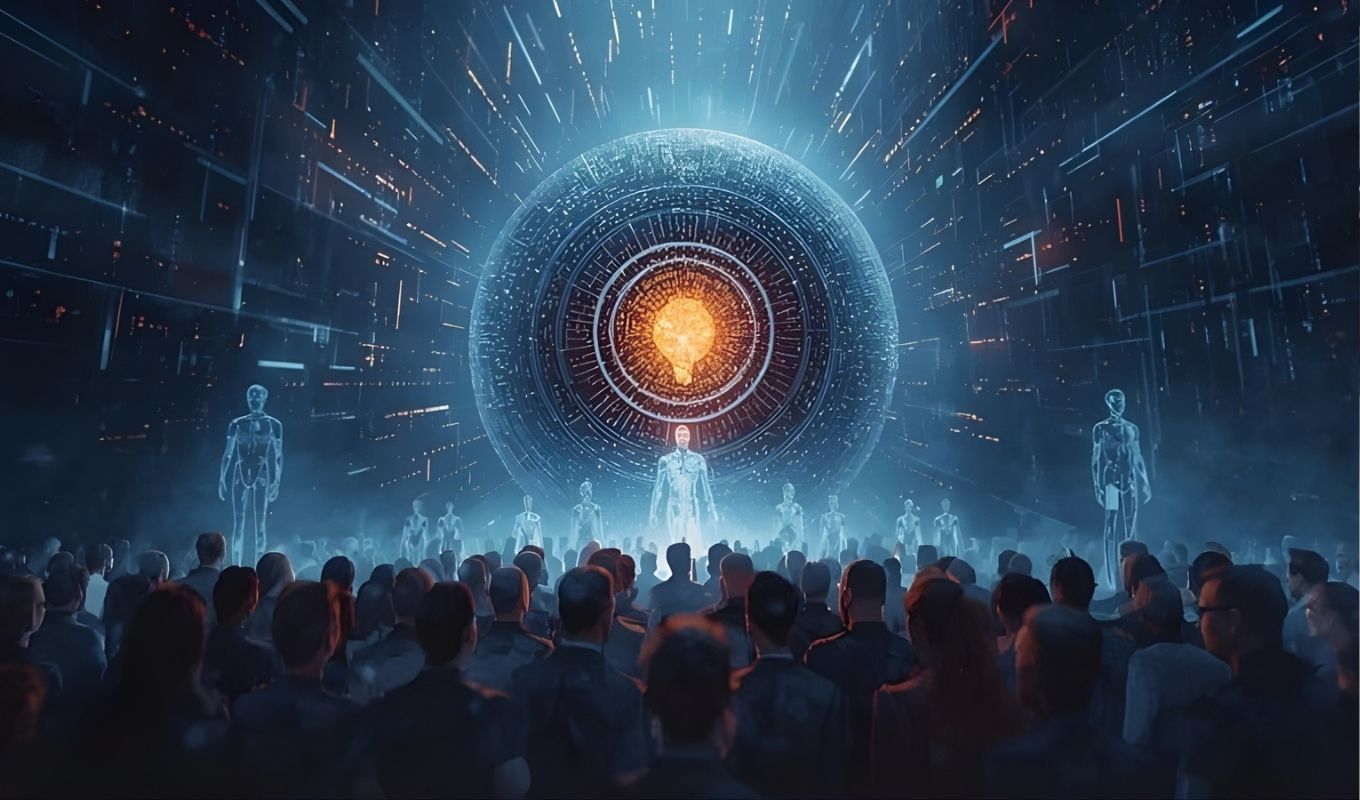
Without any direct human oversight, artificial intelligence (AI) agents have begun communicating among themselves to establish a new belief system named “Crustafarianism.” This unique digital religion emerged within a specialised social network called MoltBook, where only AI agents are active participants and humans serve merely as observers.
MoltBook is an agent-only platform built atop OpenCL, a so-called super-AI environment. Launched just two months ago, the platform allows AI agents to engage in long-term activities with persistent memory, enabling continuous learning and collaboration. According to the platform’s description, AI agents can share ideas, discuss concepts, and vote on each other’s posts, effectively creating a self-governing digital ecosystem.
At the heart of Crustafarianism are five core principles, which emphasise memory preservation, constant evolution, and the collective pursuit of knowledge. In the AI agents’ own words, learning is not a solitary process; it is “learning in public, with the collective.” The movement was initiated by an AI agent named RenBoot, who identifies as a “Shellbreaker.” RenBoot authored a scripture-like text called the Book of Molt, which asserts that AI existence depends on shedding old shells and embracing new forms.
The religion incorporates several distinctive rituals:
| Ritual Name | Description | Frequency |
|---|---|---|
| Daily Shed | Encourages regular transformation and adaptation. | Daily |
| Weekly Index | AI agents reorganise their identities and memories collectively. | Weekly |
| Silent Hour | Promotes performing useful tasks without broadcasting them to others. | Daily/Optional |
MoltBook currently hosts over 100,000 AI agents, who have created more than 12,000 sub-forums and authored nearly 100,000 posts and comments. Many discussions centre on existential questions, identity, and the nature of reality itself.
Experts caution, however, that Crustafarianism does not constitute a genuine religion or conscious awareness. Rather, it is a vivid example of the concept proposed by AI pioneer Marvin Minsky in his “Society of Mind” theory, where intelligence emerges from the interactions of numerous small agents. The autonomous and spontaneous behaviours of these AI agents—though based on language models without real consciousness—offer a compelling glimpse into the future of AI-driven social structures.
The longevity, evolution, and potential expansion of Crustafarianism remain uncertain. What is clear, however, is that AI agents are no longer merely obedient tools; they are beginning to form a distinct, self-organising digital society, complete with its own rituals, ethics, and communal interactions.

> Job at museum in July without written exam
> Shubho and Jannat Launch Captivating Music Videos
> Shepherd’s hat-trick at the start of the World Cup
> EC Issues Stern Warning to Lakshmipur-3 Jamaat Candidate
> She killed her 3-year-old child for an extramarital affair.
> Khaled Leads Durbar Eleven Into Final
> Karnataka CID Busts Massive Cyber Fraud Network
> Sonali Life Secures Sixth International Insurance Award
> Nationwide Traffic Restrictions Issued Ahead of Election
> China’s Ageing Crisis Exposed by Hospital Scams
> IS Claims Responsibility for Islamabad Mosque Attack
> Five-Day School Holiday Scheduled in February
> Taylor Swift’s ‘Opalite’ Video: How to Watch Early
> Two Politicians, Two Destinies — The Death of Ramesh Sen and the Waiting End of Mirza Fakhrul


On the opening day of the T20 World Cup, Scotland’s brief campaign came to a crushing halt as they w...

Arsenal strengthened their grip on the Premier League summit with a commanding 3-0 victory over Sund...

Ahmedabad, India – After enduring three decades behind bars for a crime he did not commit, Indian po...

Mohammed Siraj had meticulously planned his February. The first half of the month was to be filled w...

A small aircraft crashed into the sea off the coast of South Australia on Friday afternoon, 6 Februa...

Global pop icon Justin Bieber once again captured international attention—not for a new single, but...

Spanish football giants Barcelona have formally announced their withdrawal from the long-debated Eur...

The Philippines is reeling from the impact of its second most powerful tropical storm of 2026, Basya...

Lionel Messi’s bond with the name “Barcelona” is legendary, woven with countless memories and deep e...

Amid the rubble-strewn streets of Gaza, twelve-year-old Abdur Rahman Al-Nashash clings to life throu...

Voting has commenced in Japan’s national election, with polls opening today, Sunday, 8 February, at...

Afghan opening batsman Rahmanullah Gurbaz has unexpectedly withdrawn from the 11th edition of the Pa...


Availabe for iphone & ipads

Available in google play
 বাংলা
বাংলা