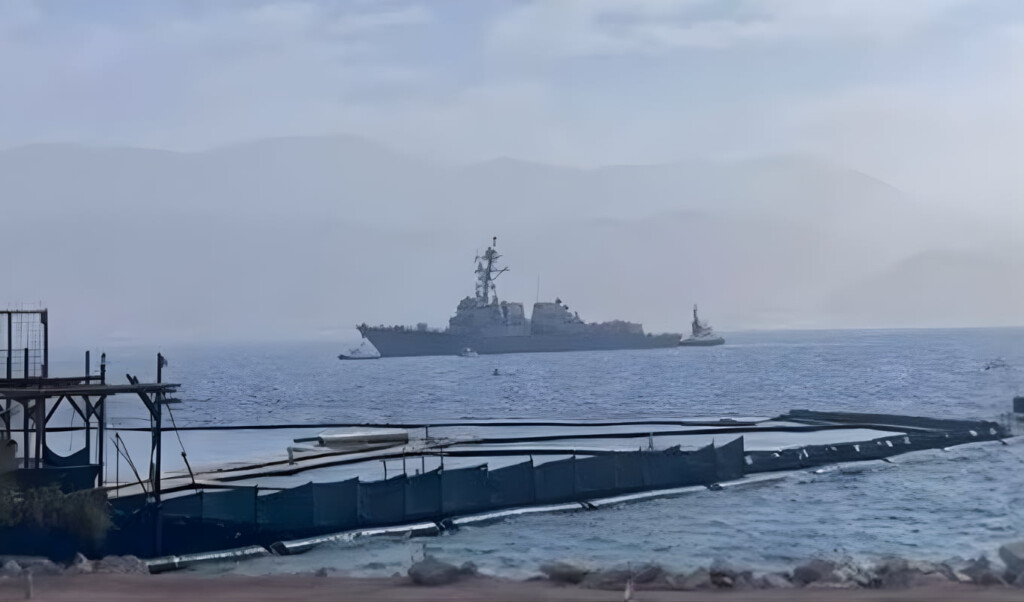
Tensions in the Middle East are escalating, with Israel’s southern port city of Eilat now hosting a United States warship, sparking concern among local and international analysts. According to Israeli media reports, the deployment was premeditated and forms part of ongoing US–Israeli military cooperation. Experts suggest that the move represents not merely diplomatic signalling but a visible demonstration of military power in the region.
Yonat reports indicate that the vessel’s presence in the Gulf of Aqaba serves both surveillance and preparedness purposes. Analysts contend that the deployment aims to increase pressure on Iran while ensuring the security of critical maritime routes and energy supplies.
US President Donald Trump has previously warned that the United States could undertake military action if Iran fails to comply with nuclear agreements or resorts to violent suppression of internal protests. Iran’s Supreme Leader, Ayatollah Ali Khamenei, has countered, stating: “We do not initiate aggression, but if attacked, a powerful response will follow. Any US military action will not remain limited and could escalate into a regional conflict.”
Currently, US naval forces in the Middle East are deployed as follows:
| Type of Warship | Number Deployed |
|---|---|
| Destroyers | 6 |
| Aircraft Carrier | 1 |
| Other Warships | 3 |
Regional security specialists note that this deployment is intended not only as a warning to Iran but also as preparation for potential future land or naval operations. Trump has asserted that the United States is engaged in “significant discussions” with Tehran, yet following Tehran’s stern warnings, fears of a broader conflict in the Middle East are rising.
International observers caution that any miscalculation between the US and Iran could escalate into a regional confrontation. Through its naval presence in Israel, the United States is underlining its Middle East strategy while maintaining diplomatic and military pressure on Iran.
Experts predict that the coming weeks will be pivotal, with the region likely to remain under intense global scrutiny. Analysts emphasise that the current situation represents a critical juncture in US–Iran relations, with the potential to reshape the geopolitical landscape of the Middle East.