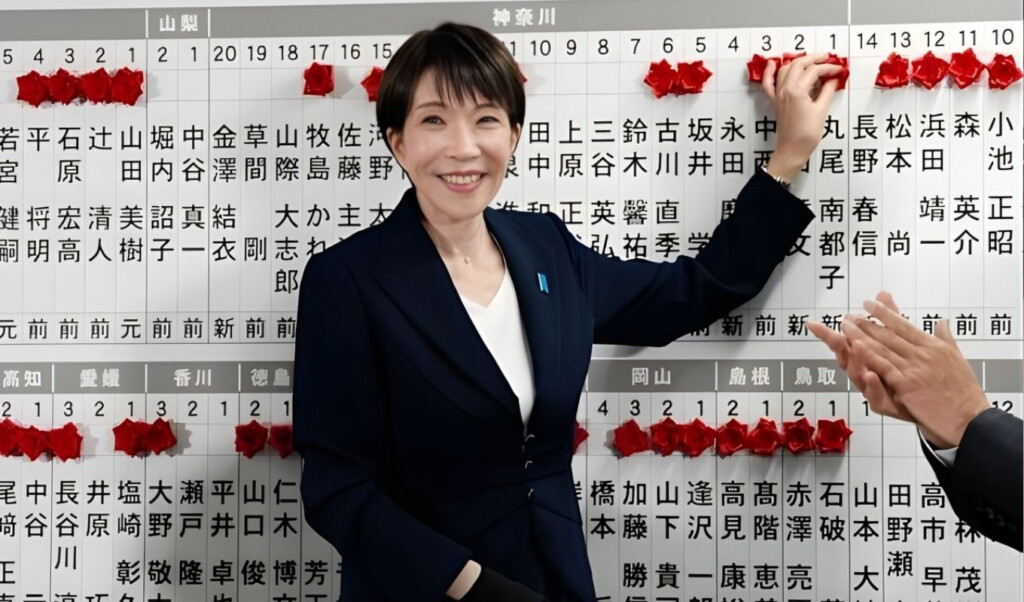
In a decisive outcome in Japan’s general election, Prime Minister Sanae Takaiichi’s Liberal Democratic Party (LDP) has secured a commanding victory, gaining a two-thirds majority in the country’s lower house of Parliament.
According to results compiled by Japan’s state broadcaster NHK, the 465-seat lower house now counts 352 LDP victories, far exceeding the 233 seats required to form a government. While official results have yet to be formally announced, the party’s dominance in this election has already been confirmed.
Reacting to the projected win, Prime Minister Takaiichi told reporters: “We have consistently emphasised the importance of responsible and proactive economic policy. We will prioritise fiscal stability while ensuring that necessary investments are made to support growth.”
Despite Takaiichi’s personal popularity, the LDP has faced significant challenges in recent years due to scandals involving financial irregularities and religious controversies. In a bold political move, Takaiichi called for an early election just three months after assuming the premiership, seeking to restore public confidence in her party.
The BBC reported that Takaiichi, Japan’s first female Prime Minister, moved swiftly to secure a clear public mandate only four months after becoming party leader. Her success contrasts sharply with the experiences of her two immediate predecessors, under whom the LDP lost its parliamentary majority due to corruption scandals and rising living costs.
The LDP has been a dominant force in post-World War II Japanese politics, largely due to the relative weakness of opposition parties. Many observers viewed Takaiichi’s decision to call an early election as a risky gamble, especially since the LDP had previously lost its majority in both houses of Parliament and the party’s long-standing coalition with Komeito had fractured.
Nonetheless, Takaiichi’s strong personal approval ratings—consistently above 70%—appear to have provided the party with a crucial advantage, securing voter confidence and ensuring a clear electoral mandate. Political analysts note that this victory may strengthen the LDP’s ability to pursue its economic agenda while solidifying Takaiichi’s position as a transformative figure in Japanese politics.
Lower House Election Results (NHK Preliminary Data)
| Party | Seats Won | Notes |
|---|---|---|
| Liberal Democratic Party (LDP) | 352 | Clear majority; forms government |
| Other Parties & Independents | 113 | Combined opposition, fragmented |
| Total Seats | 465 | Majority requires 233 seats |
With this resounding win, Takaiichi’s administration is expected to continue its focus on economic reform, fiscal responsibility, and strategic investments, while maintaining Japan’s political stability amid regional and global challenges.