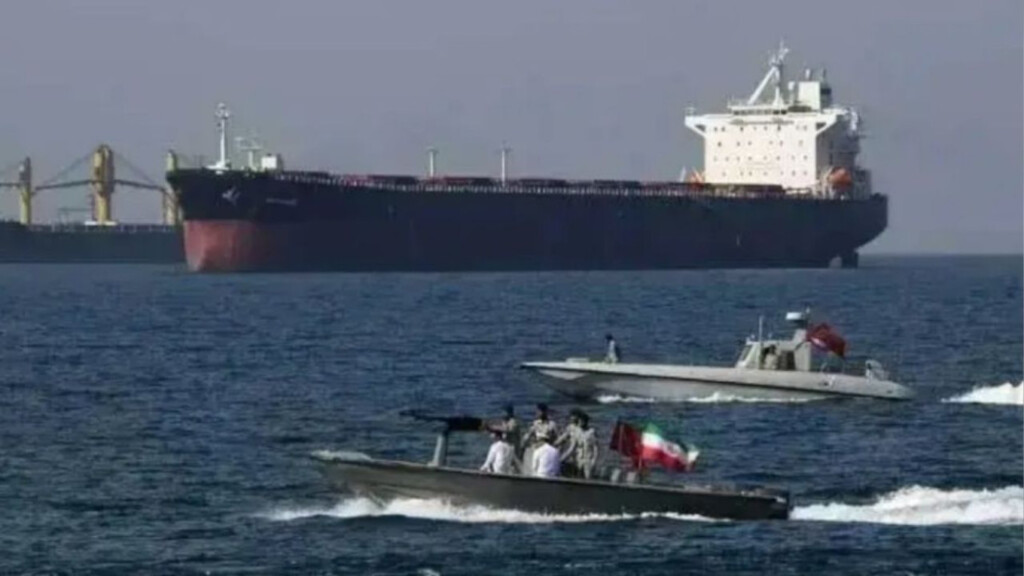
The Islamic Republic of Iran has formally shuttered the Strait of Hormuz, the world’s most critical maritime chokepoint for global energy supplies. This dramatic escalation, executed by the Islamic Revolutionary Guard Corps (IRGC), has effectively severed the primary artery connecting the Persian Gulf to the Gulf of Oman and the Arabian Sea.
An official from the European Union’s naval mission, Operation Aspides, confirmed the blockade on Saturday, quoting IRGC commanders who declared that “no further vessel traffic will be permitted to traverse the Strait.” This move is widely viewed as a strategic masterstroke—or a desperate gamble—intended to paralyse the global economy in response to ongoing military pressures.
The World’s Most Vital Chokepoint
The Strait of Hormuz is a narrow waterway that, at its thinnest point, spans only 21 miles. Despite its diminutive width, it carries a disproportionate weight in global geopolitics. Approximately 20 million barrels of crude oil and liquefied natural gas (LNG) pass through this corridor every single day. This constitutes roughly one-fifth of the world’s total liquid energy consumption.
For the powerhouse oil producers of the Middle East, there is no viable immediate alternative to this route. Nations such as Saudi Arabia, Iraq, the United Arab Emirates, and Kuwait rely on the Strait to reach markets in Asia, Europe, and North America.
Global Economic Implications
The immediate suspension of transport through these waters has sent shockwaves through international commodity exchanges. Analysts warn that a prolonged closure could lead to a catastrophic spike in energy prices, potentially pushing crude oil toward the $200-per-barrel mark. Such an event would likely trigger a global inflationary spiral, affecting everything from domestic heating bills in Europe to the cost of food production in developing nations.
| Metric | Estimated Volume/Impact | Key Stakeholders |
|---|---|---|
| Daily Oil Flow | ~21 Million Barrels | Global Energy Markets |
| LNG Traffic | ~20% of Global Supply | Qatar, Japan, EU |
| Minimum Width | 21 Nautical Miles | Maritime Navigators |
| Primary Alternative | East-West Pipeline (KSA) | Saudi Arabia |
| Projected Price Impact | +50% to 100% Increase | Global Consumers |
A Geopolitical Standoff
The IRGC’s decision to weaponise the Strait marks a transition from conventional skirmishes to economic warfare. By holding the world’s energy supply hostage, Tehran seeks to exert maximum leverage over the United States and its allies. However, the move also risks alienating neutral trading partners, particularly in Asia, who depend on uninterrupted access to Gulf crude.
Military analysts suggest that the international community, led by the US Fifth Fleet and EU naval assets, may be forced to consider a “freedom of navigation” operation to forcibly reopen the waterway—a scenario that would almost certainly lead to a direct and bloody naval confrontation.