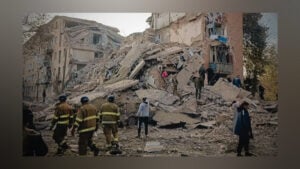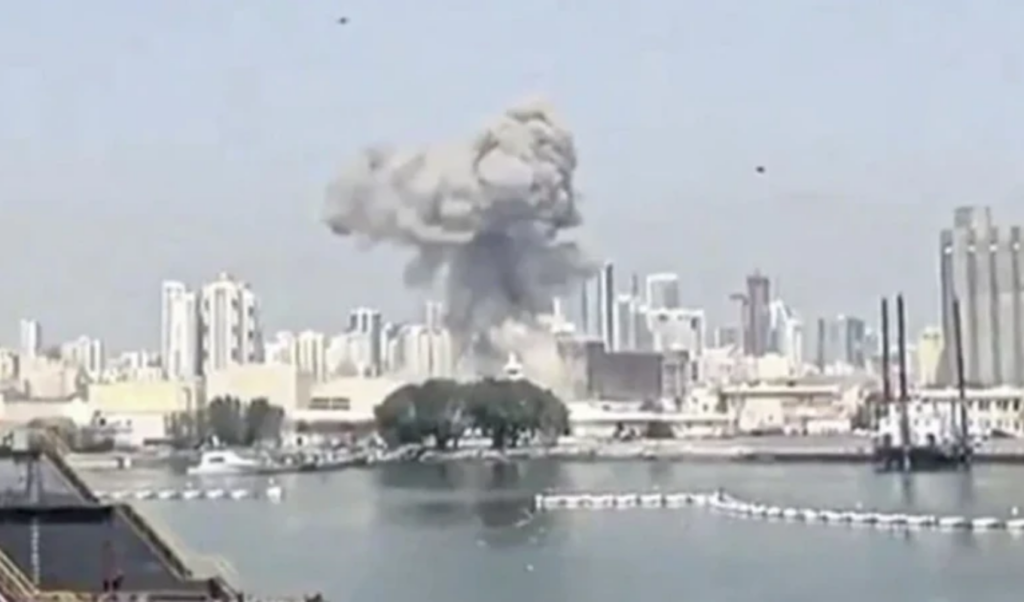
In response to U.S.–Israeli military actions, Iran has launched a series of drone and missile strikes across the Middle East, targeting American installations and allied infrastructure. According to The New York Times, at least 17 U.S. facilities have suffered damage, with several sites hit multiple times since the conflict began. The assessment draws on commercial satellite imagery, verified social media footage, and statements from U.S. officials and Iranian state media.
Scope of Damage
Iranian attacks have struck U.S. military bases, embassies, and air defence infrastructure, demonstrating a high degree of operational planning. While many attacks were intercepted, at least 11 military installations sustained damage—representing nearly half of U.S. bases in the region.
| Date | Location | Target | Casualties / Damage | Notes |
|---|---|---|---|---|
| 28 Feb 2026 | Prince Sultan Air Base, Saudi Arabia | Military base | Buildings & comms damaged | First wave of Iranian attacks |
| 28 Feb 2026 | Ali Al Salem Air Base, Kuwait | Military base | Buildings & comms damaged | Repeated attacks reported |
| 28 Feb 2026 | Al Udeid Air Base, Qatar | Largest U.S. base in region | Radar & infrastructure hit | Multiple strikes |
| 1 Mar 2026 | Shuwaiba Port, Kuwait | U.S. personnel quarters | 6 U.S. soldiers killed | Drone strike |
| 1 Mar 2026 | Saudi Arabia | U.S. base | 1 U.S. soldier killed | Separate Iranian strike |
| 4 Mar 2026 | Incirlik Air Base, Turkey | Missile interception | Threat neutralised | Iranian ballistic missile destroyed by NATO |
Pentagon assessments indicate that the 28 February attack on the U.S. Navy’s Fifth Fleet HQ in Bahrain caused damages estimated at nearly $200 million. In total, seven U.S. personnel have been killed and 140 wounded, of whom 108 have returned to duty. Iranian sources estimate around 1,300 deaths within Iran, mostly civilians, and at least 30 fatalities in the broader Middle East.
Air Defence and Communication Targets
Iran has focused on U.S. air defence and radar systems, including components of the Terminal High Altitude Area Defence (THAAD) network, aiming to exploit perceived vulnerabilities. Recent attacks damaged early-warning radar systems at Al Udeid Air Base, and radar domes at Camp Arifjan, Kuwait. Satellite imagery shows extensive damage to at least six buildings near Ali Al Salem Air Base.
Senior U.S. military officials note that Iran’s tactical shift indicates an understanding of U.S. strengths and weaknesses. General Dan Keane, Chairman of the Joint Chiefs of Staff, confirmed that Iran is adapting its military approach. While U.S. airstrikes have reduced Iranian missile launches by 90% and drone attacks by 83%, the threat persists due to undisclosed launch sites and remaining missile stockpiles.
Strategic Implications
Analysts observe that Iran’s sustained capability to strike critical targets—even after high-profile leadership was reportedly at risk—demonstrates operational resilience. Experts from Johns Hopkins University, including Iran specialist Vali R. Nasr, note that Iran has rapidly applied lessons from previous clashes, potentially preserving advanced and hypersonic missile capabilities for future high-value targets.
This ongoing confrontation underscores the limitations of conventional U.S.–Israeli military strategy. Despite superior firepower, the coalition faces a resilient adversary capable of strategic disruption, threatening U.S. installations, regional allies, and broader energy and security interests.