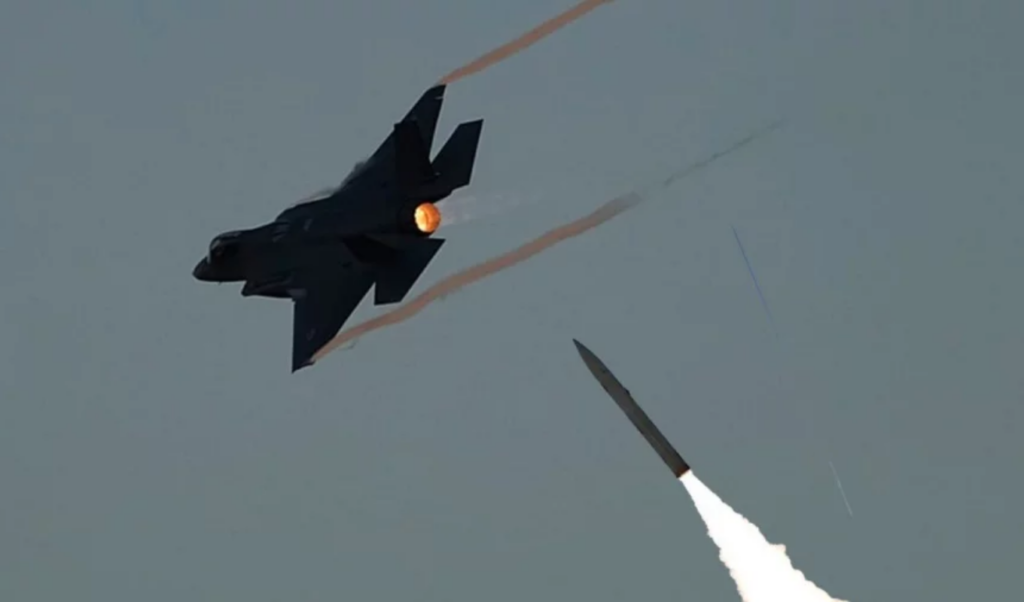
Tehran, Iran – Iran’s air defence forces reportedly engaged an advanced U.S. F-15E Strike Eagle fighter jet over the southern skies near the strategic Strait of Hormuz, Iranian military sources confirmed on Sunday, 22 March. The announcement appeared on the Iranian army’s official website and was reported by international news agencies including Xinhua.
Incident Details
According to the Iranian military statement, the aircraft was detected and tracked while flying over southern coastal waters near Hormuz Island. Subsequently, a ground-based air defence missile system was activated to target the F-15E. Officials have confirmed that investigations are ongoing to ascertain the current status and operational condition of the jet.
This incident follows a series of heightened aerial confrontations in the region involving both American and Israeli aircraft.
Broader Military Context
On Saturday, Iran’s Islamic Revolutionary Guard Corps (IRGC) claimed to have launched an airstrike against an Israeli F-16 fighter jet over central Iran. The IRGC stated that since the onset of ongoing hostilities with Israel and the United States, Iranian forces have tracked and engaged over 200 “enemy” aerial assets, including drones, cruise missiles, tanker aircraft, and advanced fighter jets.
The IRGC also confirmed that, in addition to the recent F-15E, another U.S. F-15 had been targeted in Iranian airspace during the same period, reflecting a sustained aerial defence posture.
| Date | Aircraft Targeted | Location | Action Taken | Notes |
|---|---|---|---|---|
| 22 Mar | U.S. F-15E Strike Eagle | Southern coast, Hormuz Is. | Targeted by ground-based missile system | Status under investigation |
| 21 Mar | Israeli F-16 | Central Iran | Airstrike claimed by IRGC | Part of ongoing U.S.-Israel-Iran tension |
| Ongoing | Multiple drones/missiles | Iranian airspace | Tracked and engaged | Over 200 “enemy” aircraft monitored |
| 28 Feb | Various targets | Tehran and other cities | Joint U.S.-Israel strike reported | Alleged deaths of senior Iranian officials |
Background and Strategic Implications
The recent encounters are part of a broader escalation following the 28 February joint U.S.-Israel strike on Tehran and other Iranian cities, which reportedly resulted in the deaths of senior Iranian officials, including top military commanders and civilians. In retaliation, Iran has launched multiple missile and drone attacks against Israeli targets and U.S. installations in the Middle East.
The repeated targeting of advanced fighter jets highlights Tehran’s focus on defending its airspace and strategic energy corridors, particularly the Strait of Hormuz, a critical global oil transit route. Analysts suggest these incidents underscore the heightened risk of aerial confrontation between Iran, the U.S., and Israel, with potential implications for regional stability and international energy markets.
Outlook
Military experts warn that continued aerial engagements and missile threats could further escalate tensions in the Persian Gulf, complicating diplomatic efforts and raising the risk of wider conflict. Both regional and global actors are closely monitoring Iranian airspace activity, particularly near key strategic chokepoints used by international shipping.
Source: Iranian Army, IRGC, Xinhua