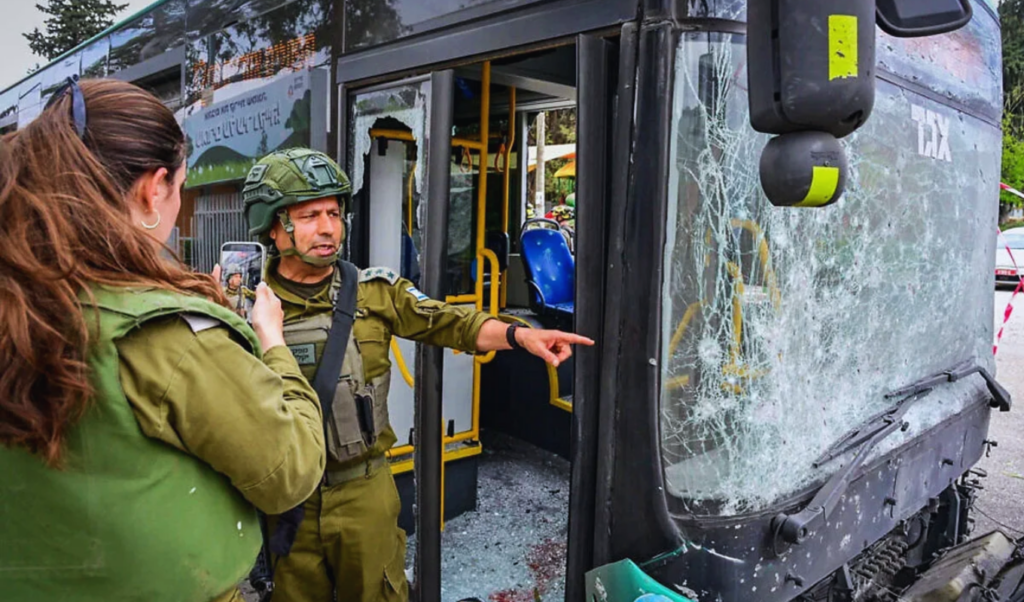
Lebanon’s armed group Hezbollah has claimed responsibility for a missile attack on Israel’s military headquarters, escalating tensions along the northern border. Simultaneously, southern Lebanon has witnessed intensified ground clashes and missile exchanges, adding further complexity to an already volatile situation. Hezbollah has also claimed the destruction of an Israeli Merkava tank.
Targets and Attack Details
The group reported that several “specialised missiles” were fired at the Kiryat complex in central Tel Aviv, which houses the Israeli Defence Forces (IDF) headquarters alongside key government offices. In addition, Hezbollah stated that a military intelligence facility to the north of the city was also targeted in the strike.
Israel has yet to issue an official comment regarding the attack, though military analysts suggest it represents a direct challenge to the country’s internal security apparatus.
Southern Lebanon Confrontations
Hezbollah fighters are said to have engaged Israeli forces in direct combat in the Qantara region of southern Lebanon. The group claims to have struck an Israeli Merkava tank with anti-tank weaponry and engaged advancing troops along key roadways in the area. These clashes indicate a coordinated effort combining both missile and ground operations.
Summary of Reported Incidents
| Location | Target | Attack Type | Hezbollah Claim |
|---|---|---|---|
| Tel Aviv (Kiryat) | IDF Headquarters & government offices | Missile strikes | Specialised missiles fired |
| Tel Aviv (North) | Military intelligence facility | Missile strikes | Targeted by missiles |
| Qantara, Southern Lebanon | Israeli Merkava tank | Anti-tank missile & ground combat | Tank destroyed |
| Qantara roads | Advancing Israeli troops | Ground combat | Direct engagement |
Strategic Implications
Observers note that the missile strikes on the Kiryat complex could temporarily disrupt Israel’s military and administrative operations. The dual front of attacks—both in central Tel Aviv and along the southern Lebanon border—signals a significant escalation in Hezbollah’s operational capabilities.
Analysts warn that continued clashes may increase the risk of a larger confrontation between Israel and Hezbollah, threatening stability along the border. The attacks also highlight the evolving nature of the conflict, combining long-range precision strikes with direct ground engagements.
International and Regional Context
While there has been no immediate international response, regional security experts are monitoring the situation closely, urging restraint to prevent further escalation. The incident underscores the fragile security environment in the region, where a single engagement has the potential to trigger broader hostilities.
Israeli authorities are expected to review defensive and retaliatory measures in the coming days, while Hezbollah’s actions may influence regional alliances and perceptions of military strength.