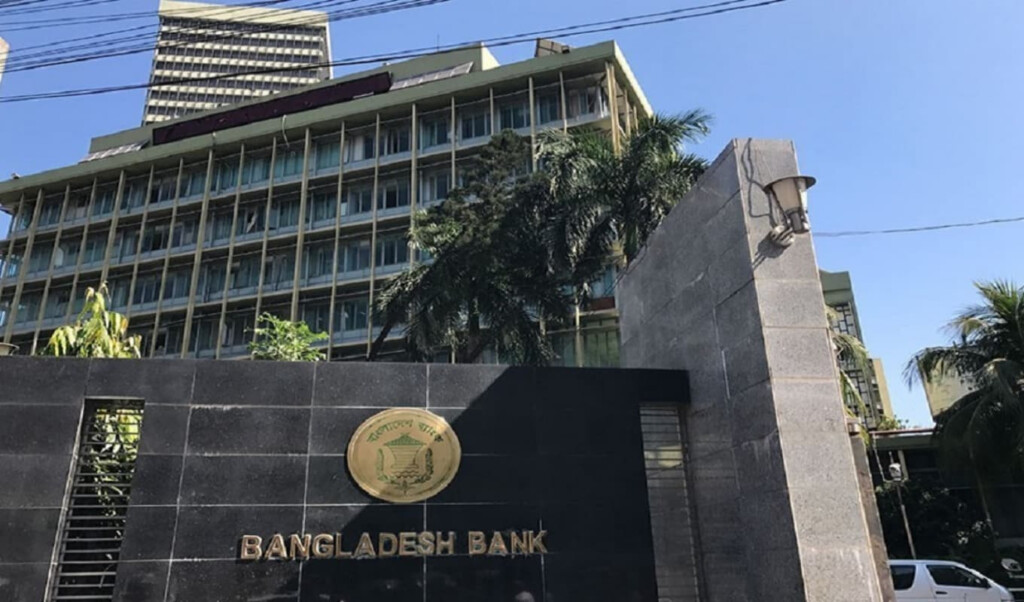
The interim government has increasingly relied on domestic banks to finance its fiscal obligations, borrowing over Tk73,000 crore during the first seven months of the 2025–26 fiscal year. A recent report from Bangladesh Bank highlights a significant shift in borrowing patterns, placing growing pressure on the country’s banking system.
Between July and January, total net government borrowing from both domestic and foreign sources reached approximately Tk90,000 crore, with an overwhelming 81 per cent coming from the banking sector. This heavy reliance on banks reflects the government’s need to fund development projects and rising operational expenditures amid revenue shortfalls.
Economists have warned that such extensive borrowing from banks could crowd out private sector credit, discouraging investment and potentially pushing up interest rates. Private sector credit growth has already slowed to historic lows due to political uncertainty in the lead-up to the 13th national elections.
Central bank officials identified several drivers behind the surge in bank borrowing. A major factor is the government’s capital support for the newly formed Combined Islamic Bank, which was created by merging five financial institutions. In early December, the government injected around Tk20,000 crore into the bank, much of which was financed through domestic borrowing.
At the same time, revenue collection fell short of targets during the first half of the fiscal year, while public spending, especially operational costs, increased significantly. These factors forced the government to rely more heavily on domestic banks to cover the financing gap.
The government’s budget for FY2025–26 projected total expenditures of Tk7.90 lakh crore, with an overall deficit of Tk2.21 lakh crore, equivalent to 3.5 per cent of GDP. To finance this deficit, authorities planned to borrow Tk1.25 lakh crore from domestic sources, including Tk1.04 lakh crore from banks and Tk21,000 crore from non-bank sources. However, actual borrowing trends show a dramatic shift from these projections.
Key Borrowing Figures (July–January)
| Category | FY2025–26 | FY2024–25 |
|---|---|---|
| Net borrowing from banks | Tk73,035 crore | Tk9,442 crore |
| Borrowing from non-bank sources | Tk7,216 crore | Tk25,864 crore |
| Net foreign borrowing | Tk9,832 crore | Tk27,964 crore |
| Total net borrowing | ~Tk90,000 crore | — |
Bank borrowing surged nearly eightfold compared with the same period in the previous fiscal year, while non-bank borrowing fell sharply. Foreign borrowing also declined, accounting for less than 11 per cent of total loans.
The total stock of domestic debt reached Tk10.37 lakh crore by January, up more than Tk1.51 lakh crore from a year earlier. Economists emphasise that a more balanced debt management strategy is critical to safeguard private investment, reduce pressure on banks, and ensure long-term economic stability.