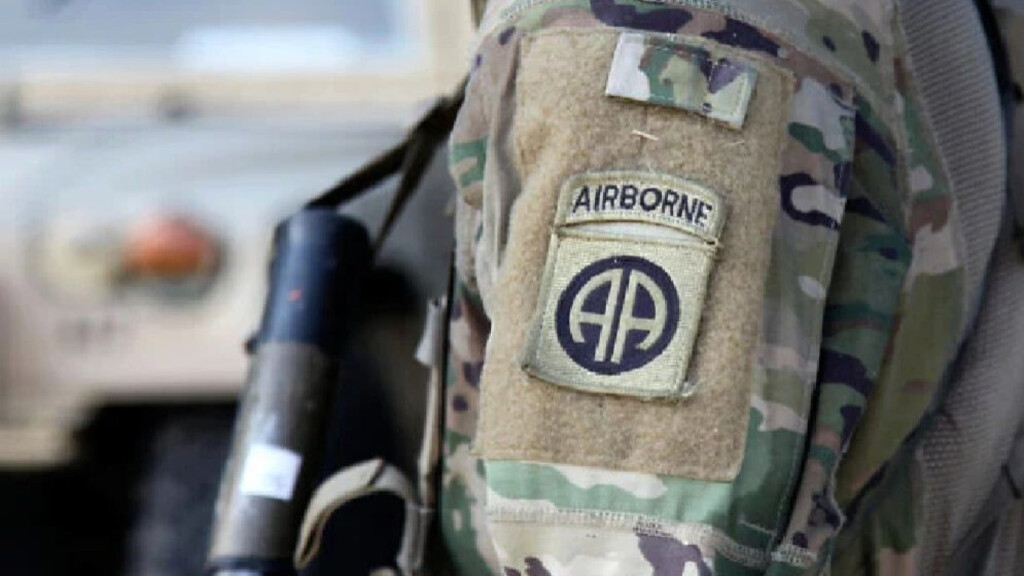
Amid escalating tensions with Iran and a prolonged period of regional instability, the United States has begun deploying elements of its elite 82nd Airborne Division to the Middle East, according to reporting attributed to Reuters and American defence officials. The move forms part of a broader military build-up involving several thousand troops, as Washington reassesses its strategic posture in the Gulf.
Two unnamed US officials have indicated that the deployment of these rapid-response paratroopers follows an announcement by the Trump administration regarding additional troop reinforcements in the region. The forces are being sent at a time when President Donald Trump is reportedly weighing the next phase of US policy towards Iran, including potential military options.
The 82nd Airborne Division, based at Fort Bragg in North Carolina, is one of the United States’ most rapidly deployable combat formations. It is designed for immediate deployment in crisis scenarios, capable of conducting airborne assaults and securing key strategic positions at short notice. According to officials, elements of this division are now arriving in Gulf states and will integrate with existing US naval, marine, and special operations forces already stationed across the region.
Recent deployments also include approximately 2,500 US Marines who arrived over the weekend, further reinforcing American military presence. Additional units being dispatched reportedly include divisional headquarters elements, logistics and support personnel, and at least one brigade combat team. However, specific host nations and exact deployment locations have not been publicly disclosed for operational security reasons.
While Washington has not confirmed any decision to send troops directly into Iranian territory, officials have acknowledged that the current build-up is intended to enhance operational readiness and provide a wider range of military options should the situation deteriorate further.
Strategic analysts suggest that the deployment reflects contingency planning for a variety of scenarios, including the protection of maritime routes and critical energy infrastructure. In particular, attention has been drawn to the security of the Strait of Hormuz, a vital global shipping corridor, as well as nearby strategic installations. However, such operational outcomes remain speculative and have not been officially confirmed.
US Secretary of State Marco Rubio has stated that key objectives related to ongoing military preparations could be achieved within the coming weeks, after which the broader geopolitical and economic consequences—particularly concerning global energy flows—will become clearer.
Overview of deployed and supporting forces
| Unit / Formation | Estimated Strength | Role | Deployment Status |
|---|---|---|---|
| 82nd Airborne Division (elements) | Brigade-level + HQ units | Rapid deployment, airborne operations | Arriving in Gulf region |
| US Marine Corps | ~2,500 personnel | Ground support and regional reinforcement | Recently deployed |
| Naval & Special Operations Forces | Not disclosed | Maritime security, special missions | Already present |
| Logistics & Support Units | Not disclosed | Supply chain and operational support | Gradual deployment underway |
The continuing reinforcement underscores Washington’s intent to maintain a flexible and scalable military presence in the Middle East. As tensions with Iran persist, the situation remains highly fluid, with potential implications for regional security and global energy markets closely monitored by international observers.