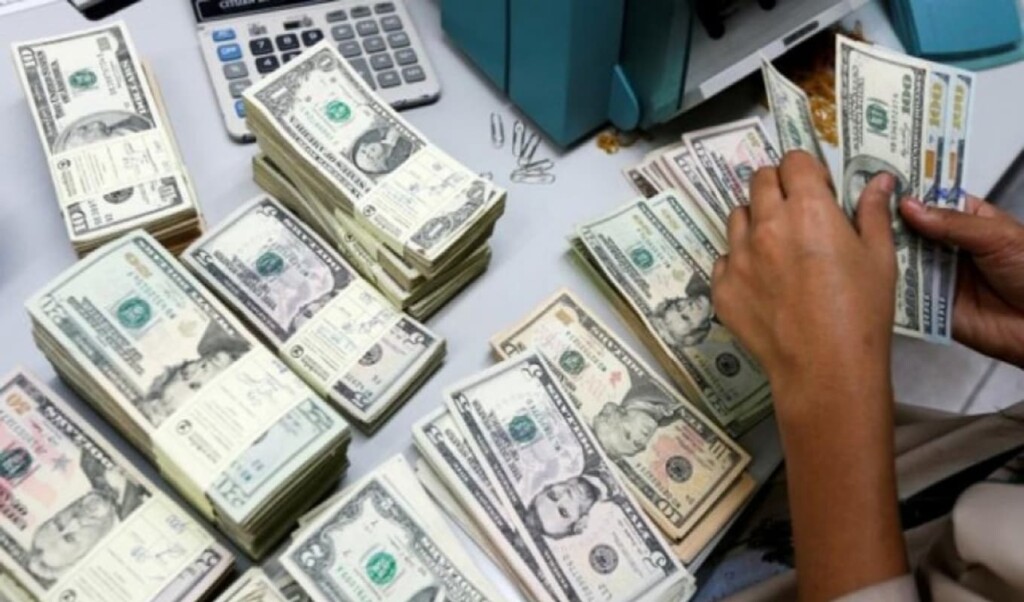
Bangladesh’s foreign-exchange market has come under renewed strain as the central bank investigates what it suspects to be a deliberate attempt by vested quarters to trigger instability and profit from exchange-rate volatility.
Officials at Bangladesh Bank report that rumours predicting a sharp depreciation of the taka—potentially to Tk130 per US dollar—have been circulating widely in recent days. These claims, they believe, are not grounded in economic fundamentals but are instead aimed at creating panic among importers, exporters, and financial institutions.
In response, the regulator has stepped up its monitoring mechanisms and adopted a cautious market stance. Notably, it has refrained from purchasing US dollars from the interbank market, a departure from its usual practice of intervening when banks’ net open position (NOP) rises beyond a certain level. Officials say this restraint is intended to prevent any additional upward pressure on the dollar during a period of heightened sensitivity.
The backdrop to this situation is the escalating geopolitical conflict involving United States, Israel, and Iran. The crisis has rattled global financial markets and raised concerns over energy supply disruptions—an issue of particular importance for Bangladesh, which relies heavily on imported fuel.
Yet, despite the external turbulence, domestic forex indicators remain largely favourable. Commercial banks have seen a notable increase in their foreign-currency holdings, supported by an unprecedented surge in remittance inflows, especially from Gulf countries where a large proportion of Bangladeshi expatriates are employed.
Key Forex Indicators (March 2026)
| Indicator | February 2026 | March 2026 |
|---|---|---|
| Bank Forex Holdings (USD billion) | 2.30 | 3.90 |
| Monthly Remittance Inflow (USD bn) | — | 3.77 |
| Interbank Exchange Rate (Tk/USD) | — | 122.85 |
| Remittance Purchase Rate (Tk/USD) | — | 123.50 |
| Kerb Market Rate (Tk/USD) | — | 125.50 |
In March 2026, Bangladesh recorded its highest-ever monthly remittance inflow of $3.77 billion, pushing commercial banks’ forex holdings up from $2.30 billion in February to $3.90 billion. Analysts note that such strong inflows would typically stabilise, if not strengthen, the domestic currency.
However, market behaviour has diverged from expectations. The US dollar continues to trade at elevated levels, with the interbank rate hovering around Tk122.85 and remittance transactions being settled at up to Tk123.50. In the kerb market, the dollar has climbed further to Tk125.50, reflecting persistent demand outside formal channels.
Central bank officials have identified a sharp rise in forward dollar bookings as a potential source of distortion. These transactions, often used by importers to hedge future payments, may be contributing to artificial demand pressures if conducted excessively or speculatively. The regulator has indicated that it is closely tracking such activities and may dispatch inspection teams to scrutinise suspicious transactions.
Some banking executives have pointed to a handful of institutions that may be engaging in aggressive pricing strategies, thereby amplifying volatility. Others remain perplexed, arguing that there is no significant increase in import demand to justify the current upward trend in the exchange rate.
Economist M Masrur Reaz of Policy Exchange Bangladesh notes that global uncertainty linked to the Middle East conflict has already unsettled financial markets worldwide. He cautions that expectations of higher energy costs could further encourage speculative behaviour, particularly in economies vulnerable to external shocks.
While Bangladesh’s macroeconomic fundamentals remain intact, the central bank’s heightened vigilance signals growing concern that market sentiment—possibly driven by manipulation—may be overshadowing underlying economic realities.