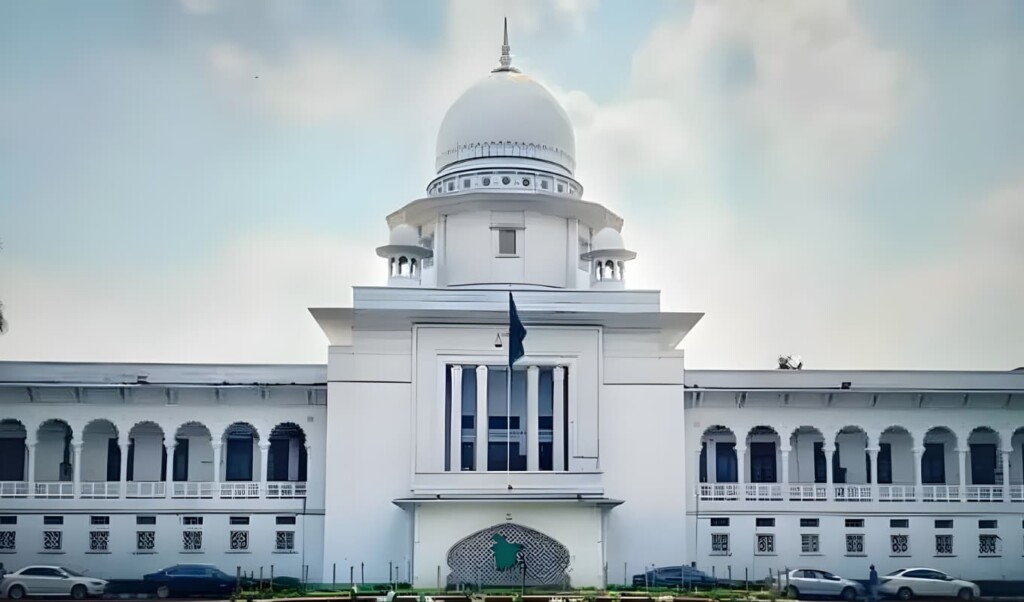
A writ petition has been filed with the High Court seeking the restructuring of the Dhaka Metropolitan Police (DMP) to enhance the efficacy of law enforcement within the capital. The petition specifically requests a directive to appoint two separate police commissioners for the Dhaka North City Corporation (DNCC) and the Dhaka South City Corporation (DSCC).
On Thursday, 16 April 2026, Advocate S. M. Zulfiquar Ali Junu, a practitioner at the Appellate Division of the Supreme Court, submitted the petition as a matter of public interest. The legal move aims to address the administrative disparity between the city’s civil governance and its security apparatus.
Context of the Petition
The petition highlights that while the capital was administratively bifurcated into two distinct entities—North and South—in 2011, the policing system remains under a unified command. Currently, the entirety of the metropolitan area is managed by a single DMP Commissioner. The petitioner argues that this centralised structure is no longer compatible with the logistical realities of a rapidly expanding megacity.
According to the application, several factors necessitate this structural overhaul:
-
Rapid Urbanisation: The physical expansion of the city requires more localised administrative oversight.
-
Population Density: The immense population of Dhaka places an unsustainable burden on a single unified command.
-
Rising Crime and Traffic: The increasing complexity of criminal activities and the persistent issue of traffic congestion require more focused, area-specific strategies.
-
Security Crisis: The petition contends that the current single-unit framework is unable to perform its duties effectively under present conditions.
Legal Targets and Objectives
The writ names several high-ranking officials as respondents, including the Secretary of the Ministry of Home Affairs, the Inspector General of Police (IGP), the Commissioner of the DMP, the Secretary of the Ministry of Local Government, and the Mayors of both city corporations.
The petitioner has sought several specific directives from the High Court:
-
The formal division of the DMP into two independent administrative units.
-
The appointment of two separate Police Commissioners to oversee the North and South jurisdictions.
-
The implementation of urgent measures to ensure public safety and disciplined law enforcement.
-
A declaration from the court to deem the current “ineffective” structure unconstitutional.
Comparative Administrative Overview
The following table illustrates the current unified structure versus the proposed bifurcated model for Dhaka’s law enforcement:
| Feature | Current Unified Structure (DMP) | Proposed Bifurcated Structure |
| Administrative Head | One Police Commissioner | Two Police Commissioners (North & South) |
| Jurisdiction | Entire Dhaka Metropolitan Area | Respective City Corporation Boundaries |
| Governance Alignment | Unified command for two city corporations | Separate commands aligned with DNCC and DSCC |
| Operational Focus | Centralised decision-making | Decentralised, area-specific management |
| Respondents Noted | Ministry of Home Affairs, IGP, DMP | Home Ministry, IGP, Local Govt. Ministry |
Institutional Rationale
The core of the legal argument rests on the premise that decentralisation is essential for modern urban governance. Since the two city corporations operate with independent budgets, mayors, and administrative staff, the petitioner argues that the police force should follow a similar regionalised model. This would theoretically allow for better coordination between the municipal authorities and law enforcement, leading to more efficient public service delivery and swifter responses to security threats.
The High Court is expected to hear the matter in due course to determine whether a rule should be issued upon the respondents to justify why the current unified policing system should not be declared inadequate for the capital’s needs.