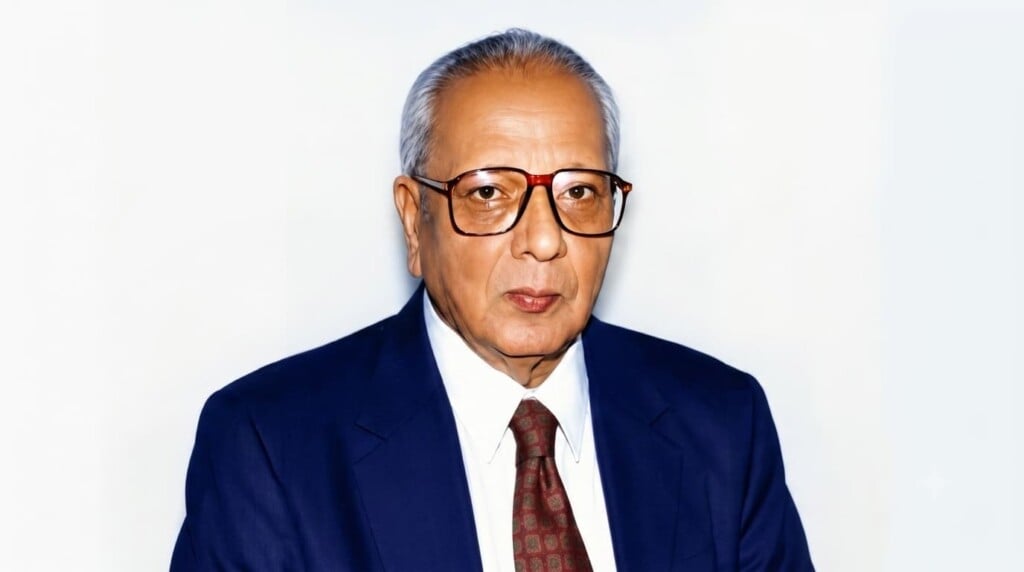
The legal and constitutional history of Bangladesh remains incomplete without the towering legacy of Barrister Syed Ishtiaq Ahmed. Widely revered as a fearless guardian of justice, a constitutional expert, and an astute state theorist, his name is spoken with profound respect across the nation. Throughout a career marked by fierce independence, he consistently rose above partisan political divisions, earning the informal title of ‘Guardian of the Nation’ for his unwavering commitment to the rule of law and professional integrity.
Born on 18 January 1932 in Gazipur, Ahmed came from a distinguished background. His father, Syed Zafar Ahmed, was a prominent businessman and landlord based in the Hili region of Dinajpur. His early education began at Ramnath English High School in Hili, followed by studies at the Calcutta Madrasah. The historic partition of 1947 led his family to relocate to East Bengal, where he completed his matriculation from Mymensingh Zilla School in 1948. He went on to pass his Intermediate Arts (IA) examinations from Dhaka College in 1950, before securing a Bachelor of Arts with Honours in Economics from the University of Dhaka in 1953, followed by a master’s degree in the same discipline a year later.
Driven by an ambition for higher education, he travelled to the United Kingdom, where he qualified as a Barrister-at-Law from the Honourable Society of Lincoln’s Inn in 1958. Simultaneously, he earned a Master of Science in Economics from the London School of Economics (LSE). Upon returning home, he immersed himself in legal practice, rapidly ascending the ranks of the country’s top legal practitioners through his sharp intellect, formidable analytical reasoning, and unparalleled mastery of constitutional interpretation.
His professional journey spanned over four decades, lasting from 1960 until his death. Between 1961 and 1968, he shared his expertise with the next generation as a part-time lecturer at the Department of Law, University of Dhaka. In the nascent years of independent Bangladesh, he was appointed Additional Attorney General in 1972, and subsequently served as the country’s third Attorney General from 1976 to 1977. His legal arguments and constitutional analyses continue to serve as vital reference points in the country’s higher judiciary.
Ahmed holds a rare distinction in Bangladeshi political history, having been called upon to serve as an advisor to two separate non-party caretaker governments during critical transitions. In the 1996 caretaker administration led by Chief Advisor Justice Muhammad Habibur Rahman, he held the portfolios for the Ministry of Law, Justice and Parliamentary Affairs, alongside the Ministry of Local Government, Rural Development and Co-operatives. Later, during the turbulent political climate of 2001, he was again appointed as an advisor to the caretaker government led by Justice Latifur Rahman, overseeing the Ministry of Law, Justice and Parliamentary Affairs, as well as the Ministry of Civil Aviation and Tourism. His inclusion in these interim administrations underscored his widespread acceptance as a neutral and stabilizing figure during national crises.
Beyond the courtroom, Ahmed was deeply intellectual and cultured. In June 1955, he married the distinguished academic Professor Dr Sufia Ahmed, a pioneer in her own right who served as a professor in the Department of Islamic History and Culture at the University of Dhaka and became the country’s first female National Professor. The couple raised two children: a son, Syed Rifat Ahmed, who went on to become the Chief Justice of the Supreme Court of Bangladesh, and a daughter, Dr Raina Ahmed, a highly regarded medical practitioner.
The legal titan passed away on 12 July 2003, leaving behind a profound void in the nation’s intellectual and legal landscapes. On his death anniversary, the country remembers Barrister Syed Ishtiaq Ahmed not just as an exceptional lawyer, but as a symbol of moral leadership whose lifelong defense of constitutional supremacy remains a guiding light for the nation.