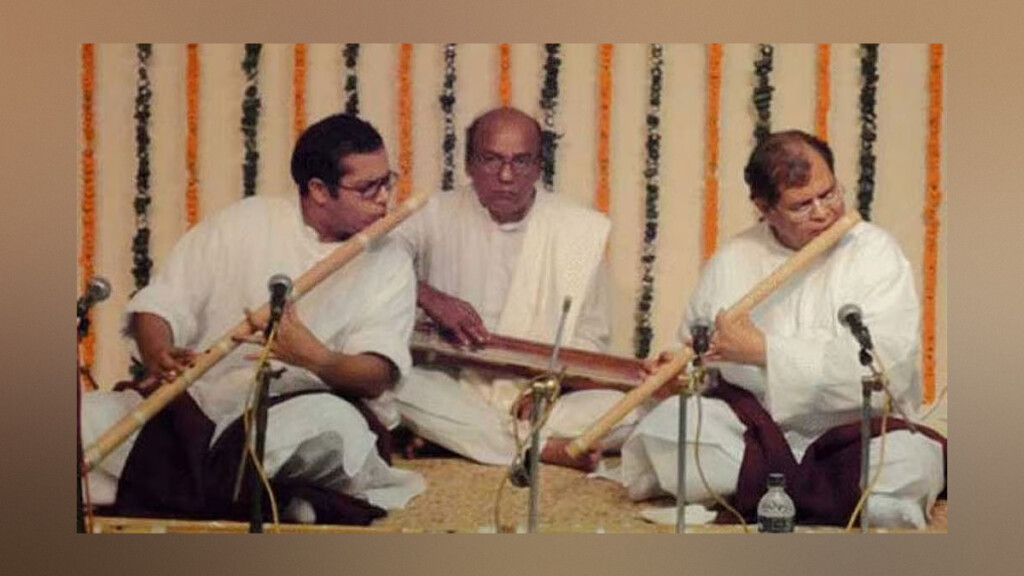
Taufiq Nawaz, a Supreme Court lawyer, accomplished flautist and keen cricketer, has been laid to rest at Banani graveyard in Dhaka. He was the husband of former minister and Awami League leader Dipu Moni.
Nawaz, 76, died on Tuesday night at Continental Hospital in Dhaka, formerly known as United Hospital. He had been suffering from complications involving his kidneys and liver for a prolonged period. He also suffered a stroke in 2019, after which his physical condition deteriorated significantly.
His funeral prayer was held at Azad Mosque in Gulshan after Zuhr prayers on Thursday. He was buried at around 2.45pm in the grave of his father, Aminur Rahman, at Banani graveyard. His mother, Khairun Nesa, is buried nearby.
Although Nawaz was known professionally as a lawyer, childhood friends remember him as a private and multi-talented man whose interests extended well beyond the courtroom. He played cricket and regularly played the flute, an instrument that had a special place in his family.
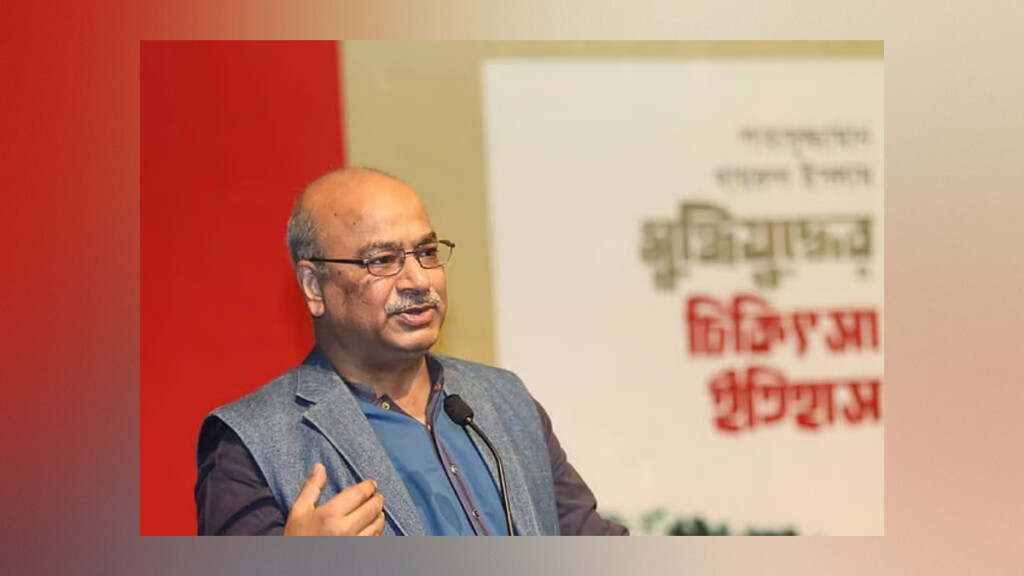
Lawyer and politician Mohsin Rashid, who studied with Nawaz from Class Three at St Gregory’s School in Dhaka, recalled his friend as a quiet person who preferred to remain away from the public eye.
According to Rashid, flute-playing was part of the Nawaz family’s tradition. Nawaz’s father, Aminur Rahman, also played the flute, while his son Touqir Nawaz is likewise a skilled flautist. Taufiq Nawaz himself performed solo flute programmes, reflecting a serious engagement with music rather than a casual hobby.
After completing his early education in Dhaka, Nawaz went on to graduate from Oxford, according to Rashid. He met prominent jurist Dr Kamal Hossain there. After completing his legal studies, Nawaz returned to Bangladesh and began his legal career at Kamal Hossain’s chamber.
Friends and former classmates who attended his funeral described him as honest, talented and deeply committed to his professional responsibilities.
Rashid said Nawaz had a strong attachment to Bangladesh and had remained active on matters involving the country’s interests. He credited Nawaz with playing an important role in Bangladesh’s legal efforts concerning the country’s maritime boundary in the Bay of Bengal.
“He always fought for Bangladesh,” Rashid said, recalling his friend’s professional commitment to issues of national interest.
The maritime boundary disputes involving Bangladesh, Myanmar and India were ultimately settled through international legal and arbitration processes, establishing Bangladesh’s maritime rights in the Bay of Bengal. Nawaz’s friends remember his involvement in that wider legal effort as one of the notable aspects of his professional life.
Several of Nawaz’s school friends attended his funeral, including Rashid, Syed Ashraful Haque and Monirul Alam. One former classmate, who declined to reveal his identity, described Nawaz simply as a very good and honest person.
Another friend, speaking after the funeral without disclosing his name, recalled how Nawaz continued to demonstrate intellectual strength after his stroke. Although his physical abilities had become severely limited, the friend said Nawaz could still communicate through eye movements and remained mentally alert.
Nawaz’s final meeting with his wife came only a few months before his death. On 27 May, relatives took him in a wheelchair to see Dipu Moni, who was then in custody.
Dipu Moni is currently detained at Munshiganj Jail after being arrested in several cases following the 2024 movement. She was granted 12 hours’ parole to attend her husband’s funeral.
On Thursday morning, she was released from Munshiganj Jail at 6.15am and taken to Dhaka in a prison van under heavy security. She arrived at her Kalabagan residence at about 8.15am.
Nawaz’s body was also brought to the Kalabagan house that morning and kept in a freezer van in the garage. Five people, including the muezzin of the local Bashir Uddin Road Mosque, were seen reciting the Quran beside the vehicle.
Security was tightened around the residence, with police questioning people entering the premises.
Relatives who visited Dipu Moni said she was deeply distressed by her husband’s death. A relative from Chandpur, who asked not to be named, said Moni was emotionally devastated and had little appetite.
Zakaria Sultana Shefali of Chandpur Awami League also visited her to offer consolation, accompanied by several other party workers.
After noon, the freezer van carrying Nawaz’s body left for Azad Mosque in Gulshan. Dipu Moni was taken there shortly afterwards in a prison van.
While the funeral prayer was being performed inside the mosque after Zuhr, Moni remained in the prison vehicle outside. Once the prayer ended, she stepped out and saw her husband’s body for the final time.
The burial at Banani took place in the rain. Nawaz’s daughter, Dipanbita Nawaz, placed soil on her father’s grave. Relatives, friends and political figures were also present.
After the burial, a prayer was led by Mawlana Omar Faruk, imam of the Banani graveyard mosque. Dipu Moni later approached the imam and asked him to pray for her late husband.
The entire burial ceremony was conducted under tight security involving Dhaka Metropolitan Police and prison personnel.
Before leaving the cemetery, Moni also visited the grave of her father, MA Wadud, who was among the founding figures of the Awami League.
She was then taken back to Munshiganj Jail in the prison van. Munshiganj District Magistrate Syeda Nurmahal Ashrafi said Dipu Moni returned to the jail at 5.58pm on Thursday, within the stipulated period of her parole.
For those who knew him beyond his public associations, Taufiq Nawaz’s legacy extends across several spheres: law, music, sport and public service. His friends remember a man who lived largely away from the spotlight, yet whose professional work, love of music and commitment to Bangladesh left a lasting impression on those around him.