Bangladesh is entering the tenth year of the Rohingya refugee crisis, with little progress towards repatriation and growing concern over declining international assistance. After years of hosting nearly one million Rohingya refugees in Cox’s Bazar, Bangladesh is now facing increasing pressure as humanitarian funding becomes more difficult to secure.
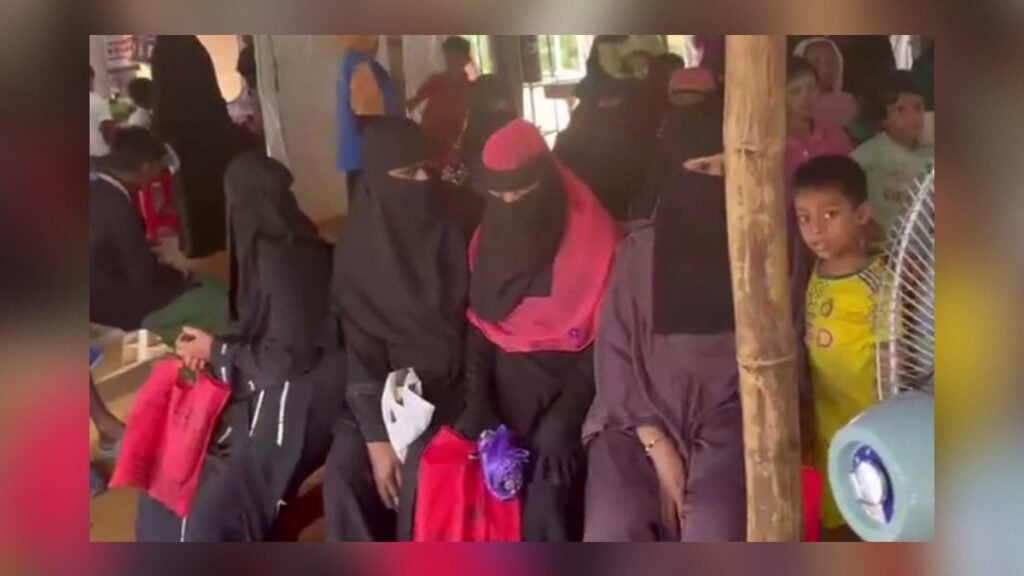
The latest phase of the crisis began on 25 August 2017, when a large number of Rohingya fled Myanmar’s Rakhine State following widespread violence and crossed into Bangladesh. Since then, the refugees have been living in camps across Cox’s Bazar, including the vast settlement around Kutupalong.
Nearly nine years after the mass influx, there has been no significant breakthrough in efforts to facilitate their return to Myanmar. Bangladesh has repeatedly maintained that repatriation must be safe, voluntary and dignified, while also stressing that conditions in Myanmar need to improve before a sustainable return can take place.
Bangladesh Foreign Secretary Asad Alam Siam told news agency ANI that Dhaka continues to exert diplomatic pressure through international and regional forums to create conditions that would eventually allow the Rohingya to return safely to their homeland.
However, funding has emerged as one of the most pressing challenges. Siam said financial support for the Rohingya response was declining and that Bangladesh was engaging with bilateral and international partners in an effort to increase assistance.
The funding shortfall is particularly concerning because humanitarian agencies have been providing essential services to a population that has remained dependent on external assistance for years. Food, healthcare, education and other basic services in the camps require sustained financial support.
Human Concern International, a Canadian charitable organisation that has worked in the Rohingya camps in Cox’s Bazar since the 1990s, has also observed the impact of declining support. Its chief executive officer, Mahmuda Khan, said the Rohingya crisis was receiving less international attention as the world became preoccupied with numerous other crises.
According to Khan, the level of assistance once provided by different countries and donors is no longer being maintained. The reduction is being felt directly in the camps, where living conditions are becoming increasingly difficult.
She stressed the need to keep public attention focused on the Rohingya crisis. If the crisis gradually disappears from the international spotlight, she warned, humanitarian assistance could decline further, making an already difficult situation even more challenging for refugees.
For the Rohingya themselves, the consequences of reduced assistance are becoming increasingly visible. Hossain Johor, a 30-year-old Rohingya who arrived at the Kutupalong camp in 2017, said food rations were no longer sufficient for many people.
He called for increased food assistance, along with better access to education and healthcare. For families who have spent years in the camps, such services are not simply short-term necessities. They are essential to maintaining basic living standards while the refugees remain unable to return home.
Experts have warned that failing to adequately meet the basic needs of the Rohingya could make the situation more complicated. Food insecurity, limited educational opportunities and inadequate healthcare can deepen humanitarian vulnerabilities, particularly among children and other vulnerable groups.
The consequences could also extend beyond the refugee camps. Prolonged displacement places sustained pressure on humanitarian systems and host communities in Cox’s Bazar. A lack of progress towards a lasting solution could also create wider concerns for regional security and stability.
For Bangladesh, the challenge is therefore twofold: maintaining humanitarian support for the refugees while continuing diplomatic efforts to create the conditions necessary for their safe return to Myanmar. With the crisis now approaching its tenth year, the declining flow of international assistance has added another layer of uncertainty to an already protracted humanitarian emergency.