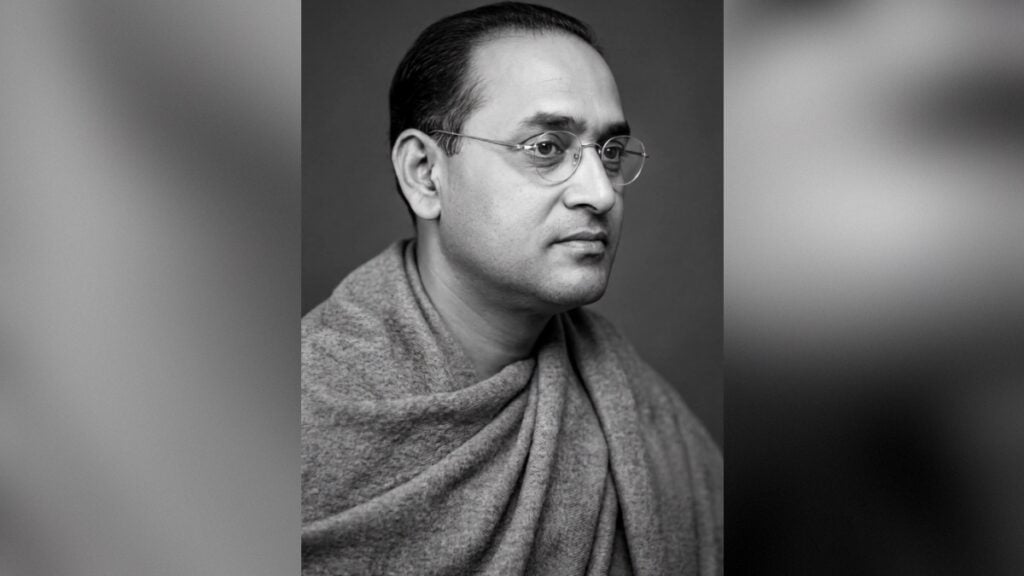
The intellectual landscape of Bengali literature remains profoundly shaped by Prabodh Chandra Sen, a master metrist, literary historian, and Rabindranath Tagore scholar whose rigorous analytical mind transformed the study of Bengali verse. Through a lifetime dedicated to academic excellence, Sen shifted the perception of metre (chhanda) from a rigid mechanical formula into a vital, living resonance of poetic emotion. His legacy endures as the definitive benchmark for prosodic research in the Indian subcontinent.
Born on 27 April 1897 in the quiet village of Moniyand, situated in Comilla (present-day Bangladesh), Sen demonstrated remarkable academic brilliance early in his youth. He completed his secondary schooling at Comilla Zilla School and pursued higher secondary education at Comilla Victoria College. Moving to Kolkata for advanced studies, he earned his Master of Arts in Ancient Indian History and Culture from the University of Calcutta, achieving first class, first position, alongside a gold medal. This deep grounding in classical history provided him with a unique, multi-layered perspective when examining the evolution of Bengali language and verse forms.
Recognising his scholar’s intellect, Rathindranath Tagore invited Sen to join Visva-Bharati University in Santiniketan. His tenure at Santiniketan marked the beginning of a golden era for Bengali rhythm studies. Sen dedicated himself to dissecting poetic structures, formulating terminology, and establishing a systematic grammar for Bengali prosody. He edited Rabindranath Tagore’s seminal work Chhanda, offering invaluable commentary that clarified Tagore’s complex rhythmic experiments.
His prolific bibliography remains foundational for literary scholars. Outstanding works on metre include Chhanda-Parikrama, Chhanda-Jijnasa, Bangla Chhande Rabindranather Dan, Bangla Chhanda-Chintar Kramabikash, and Natun Chhanda-Parikrama. Beyond poetic technique, Sen’s intellectual curiosity spanned history and cultural philosophy, reflected in influential titles like Dharmajoyi Ashok, Ramayan O Bharat Sanskriti, Bharat-Pathik Rabindranath, Bharat-Atma Kabi Kalidas, and Bharatbarsher Jatiya Sangeet.
Sen’s personal philosophy mirrored his academic rigor. Known for his principled, non-communal ethos, and disciplined living, he viewed scholarship as a moral duty. His passing on 20 September 1986 marked the end of an era, yet his methodical insights continue to guide contemporary researchers, ensuring his place among Bengal’s most distinguished intellectuals.