In a concerted effort to enforce lane discipline, reduce casualties, and restore order across Bangladesh’s transit networks, the national police authority has released a comprehensive 12-point advisory for drivers and motorcyclists. Announced via the force’s verified social media channels, the guidelines target the root causes of urban congestion and highway fatalities, demanding strict adherence from all road users.
Traffic accidents remain a severe social and economic drain in Bangladesh, where dense vehicular traffic, aggressive driver behaviour, and routine non-compliance with fundamental regulations routinely lead to fatal collisions. By reiterating core operational rules, law enforcement seeks to instil greater civic responsibility among motorists while curtailing avoidable risks on the roads.
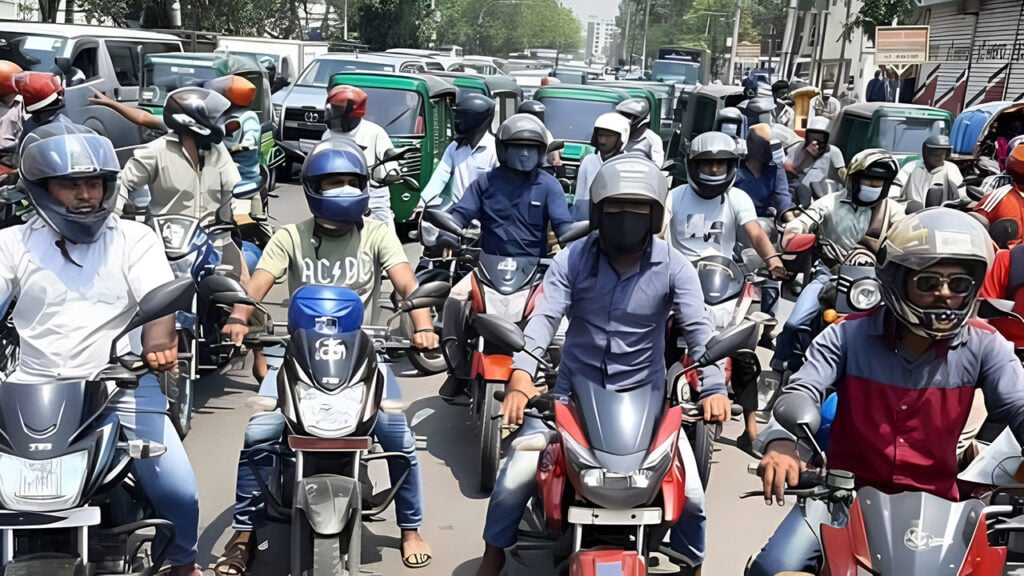
The newly articulated measures outline distinct requirements for both light vehicles and two-wheelers. Motorcycle drivers and their pillion riders must wear standard protective helmets at all times, with total occupancy strictly capped at two persons per vehicle. For four-wheeled motor vehicles, seatbelts must be fastened by both drivers and passengers prior to setting off.
Driver distraction and acoustic pollution feature heavily in the directive. Operating a mobile phone—whether for calls, messaging, or navigation—is strictly forbidden while behind the wheel, as momentary lapses in focus significantly impair reaction times. Drivers are similarly instructed to refrain from excessive or unnecessary hooting, respect designated speed limits, and comply fully with traffic signals, particularly around high-density pedestrian zones and busy intersections.
Navigating around heavy transport poses severe hazards on mixed-traffic corridors. The police advisory specifically instructs drivers to remain cognizant of blind spots surrounding buses and lorries, utilize direction indicators well in advance of lane changes or turns, and avoid risky overtaking maneuvers on highways. Drivers must also maintain a safe braking distance from the vehicle ahead.
Adverse weather conditions form another major focal point. During heavy monsoon rains or dense winter fog, drivers are urged to reduce speed and adapt to diminished visibility. The authorities further advised motorists to exercise emotional restraint, warning that road rage and reckless overtaking during heavy congestion frequently escalate minor delays into catastrophic collisions.
Finally, the directives enforce zero tolerance for driving under the influence of narcotics or alcohol, operating vehicles while fatigued, or travelling against the flow of traffic on one-way streets. Drivers must also ensure they carry a valid driving licence and updated vehicle documentation during every journey, reinforcing the principle that road safety relies entirely on collective vigilance and legal compliance.