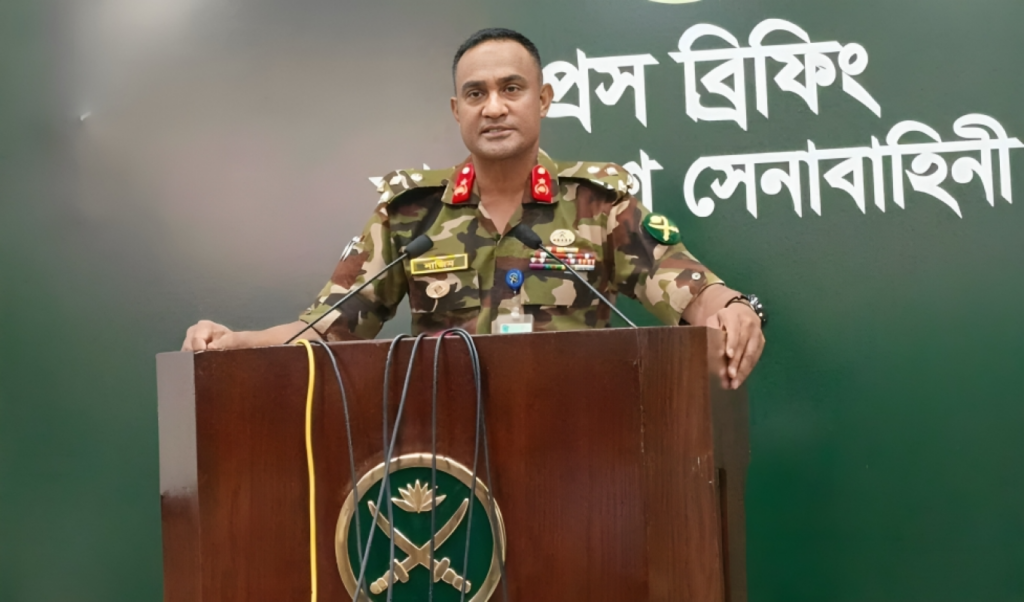
The National Consensus Commission has officially decided to establish a 100-member Upper House through a Proportional Representation (PR) system. The announcement was made on Thursday, during the midday recess on Day 23 of the commission’s second phase of dialogue with political parties.
The decision was declared by the Vice-Chairman of the Commission, Professor Ali Riaz, following prolonged discussions that failed to yield consensus among political parties regarding the method of selecting Upper House members.
“Since no agreement could be reached among the parties, the task of determining the formation method was entrusted to the commission,” Professor Riaz stated.
Features of the Proposed Upper House
| Feature | Details |
| Total Seats | 100 |
| Election Method | Proportional Representation (PR) |
| Legislative Power | Cannot enact laws independently |
| Bill Procedure | All bills (except money bills) must be presented in the Upper House |
| Approval Timeline | Bills stuck for more than one month will be considered automatically approved |
| Review Authority | Upper House will review and analyse bills before deciding approval or rejection |
| Rejection Process | If rejected, bills will be returned to the Lower House with suggested amendments |
| Lower House’s Authority | May accept, partially accept, or entirely reject the Upper House’s recommendations |
| Candidate Declaration Timing | Upper House candidates must be announced concurrently with general elections |
| Women’s Representation | Minimum 10% of candidates must be women |
Political Divisions Over PR Method and Upper House Role
Despite the commission’s decision, sharp divisions remain among participating political entities.
During the morning session of the dialogue, several parties expressed strong opposition to the PR-based Upper House structure:
Parties Opposing PR-Based Upper House:
- Bangladesh Nationalist Party (BNP)
- Labour Party
- National Democratic Movement (NDM)
- 12-Party Alliance
- Nationalist Alliance
In reaction to the commission’s announcement, BNP Standing Committee Member Salahuddin Ahmed stated:
“There are differing opinions regarding both the PR method and the scope of authority of the Upper House.
If our dissent is recorded in writing, we are prepared to sign the final draft.”
Questions Raised Over Relevance of Upper House
Several political parties and organisations questioned the practical relevance of an Upper House in the context of Bangladesh’s socio-economic reality.
Parties Expressing Doubt About Necessity:
| Party/Group | Concern |
| Communist Party of Bangladesh (CPB) | Questioned necessity amid economic constraints |
| Bangladesh Socialist Party (BASAD) | Opposed based on the country’s current political framework |
| Jamiat Ulema-e-Islam | Raised objections on ideological and procedural grounds |
| Amjanatar Dal (People’s Party) | Cited inefficiency and duplication of legislative function |
| Nagorik Oikya (Citizens’ Unity) | Stated that a body without law-making power is redundant |
The commission’s decision marks a pivotal point in the ongoing constitutional reform discussions, but the lack of broad political consensus may present challenges in its implementation. With opposition parties demanding that their reservations be formally documented, the future of the proposed Upper House remains subject to further negotiation and review.