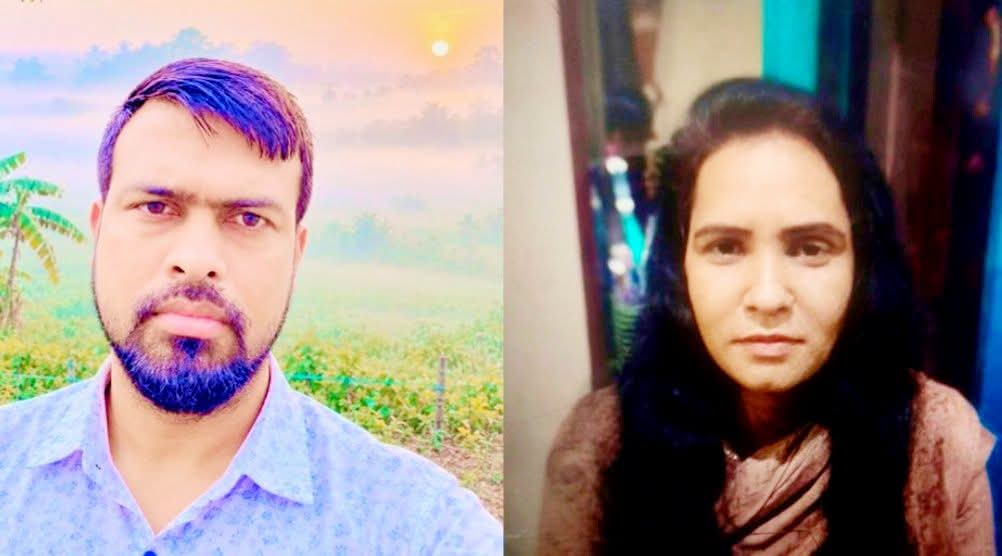
A 43-year-old widow in Mymensingh has denied marrying local Jamaat associate Abdul Quddus, despite a marriage document circulating in her village naming him as the groom.
The woman claims her fingerprint was taken under the pretext of arranging a Family Card, and that the impression was later used to prepare a fraudulent marriage document without her knowledge or consent.
The incident reportedly occurred recently in a village in Fulbaria upazila. Local community leaders have already held two informal arbitration meetings over the matter, although the two men named in connection with the allegations did not attend either session.
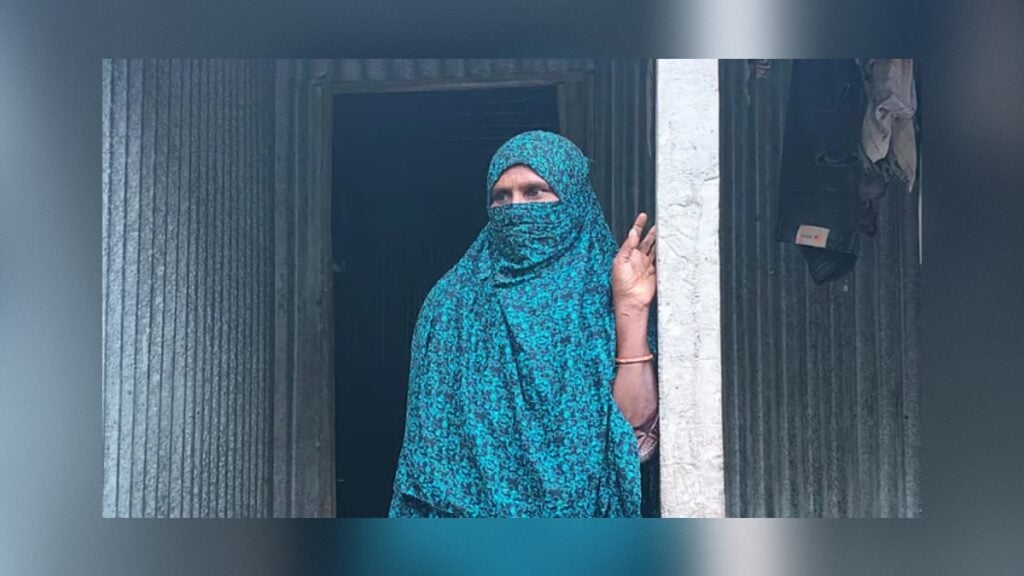
The woman said she was initially asked to provide a photocopy of her National Identity Card and a photograph on the assurance that she would be helped to obtain a Family Card. A few days later, she was called again and asked to place her fingerprint on a piece of paper. She later learned that people in the village were saying she had married and was shown a kabinnama, or Muslim marriage contract.
“I did not go anywhere to get married. I did not even meet any kazi,” she said when speaking to reporters at her home on Wednesday.
The woman’s husband died around 13 years ago. Since then, she says, she has worked on other people’s land to raise her two sons, both of whom are now married. She also has grandchildren.
She has accused local Jamaat associate Abdus Sattar of taking her fingerprint by misleading her about the Family Card. According to her allegation, that fingerprint was subsequently used to create the marriage document.
Sattar, who has a cosmetics shop and identifies himself as an associate member of Jamaat, rejected the allegation. He said he had never taken the woman’s fingerprint on the pretext of arranging a Family Card. He claimed that an existing dispute over land was behind the accusation against him.
Fulbaria upazila Jamaat amir Md Fazlul Haque said the organisation had made preliminary inquiries after learning about the incident. He said Sattar was not an office-bearer of Jamaat, although he had served as an associate member of a centre committee during the previous election. He had previously been involved with BNP politics, Haque said.
According to Haque, the organisation was looking into the matter and wanted anyone responsible for wrongdoing to face justice. At the same time, he said initial information suggested that the incident could have been fabricated or motivated by a dispute.
The kabinnama circulating in the village names Abdul Quddus as the groom. According to people familiar with the matter, Quddus had previously proposed marriage to the woman on several occasions, but she had never accepted his proposals.
Quddus is already married to a woman named Sufia Khatun and has children and grandchildren. He could not be reached at his home when reporters visited. His wife said he had never previously told her about any marriage with the widow.
After the matter became known, Sufia said, Quddus claimed that he had entered into a “court marriage”. Family members, she added, repeatedly tried to persuade him to explain the situation, but he did not listen to them.
The document also names kazi Golam Mostafa as the person who allegedly solemnised the marriage. It states that the dowry was fixed at Tk 250,000, with Tk 50,000 allegedly paid in cash. Abdul Mannan and Saiful Islam are listed as witnesses.
Saiful Islam, however, has denied acting as a witness to any such marriage.
Kazi Golam Mostafa has also rejected the authenticity of the document. He said he did not conduct the marriage and described the circulated paper as completely forged. He added that a similar forged document bearing his name had been produced in 2020, prompting him to file a general diary with the police. He said he would consult police again about possible legal action over the latest incident.
Two arbitration meetings were held in the village on Monday and Wednesday. Neither Sattar nor Quddus attended. The local mediators have given them until Friday to clarify their positions.
Mohammad Rustam Ali, who led the arbitration process, said the circumstances surrounding the document were still being examined. If the matter could not be resolved locally, he said, it would be taken through legal channels.
Fulbaria police station officer-in-charge Mohammad Rashedul Hasan said police had heard about the incident from several people but had not yet received a formal written complaint.
He said police would investigate and take appropriate action if a complaint was submitted.
The competing accounts leave several questions unresolved, including how the woman’s fingerprint was obtained, who prepared the disputed kabinnama and whether the document was genuinely issued by the named kazi. A formal investigation will be needed to establish the authenticity of the document and determine whether anyone used the woman’s personal information or fingerprint without her consent.